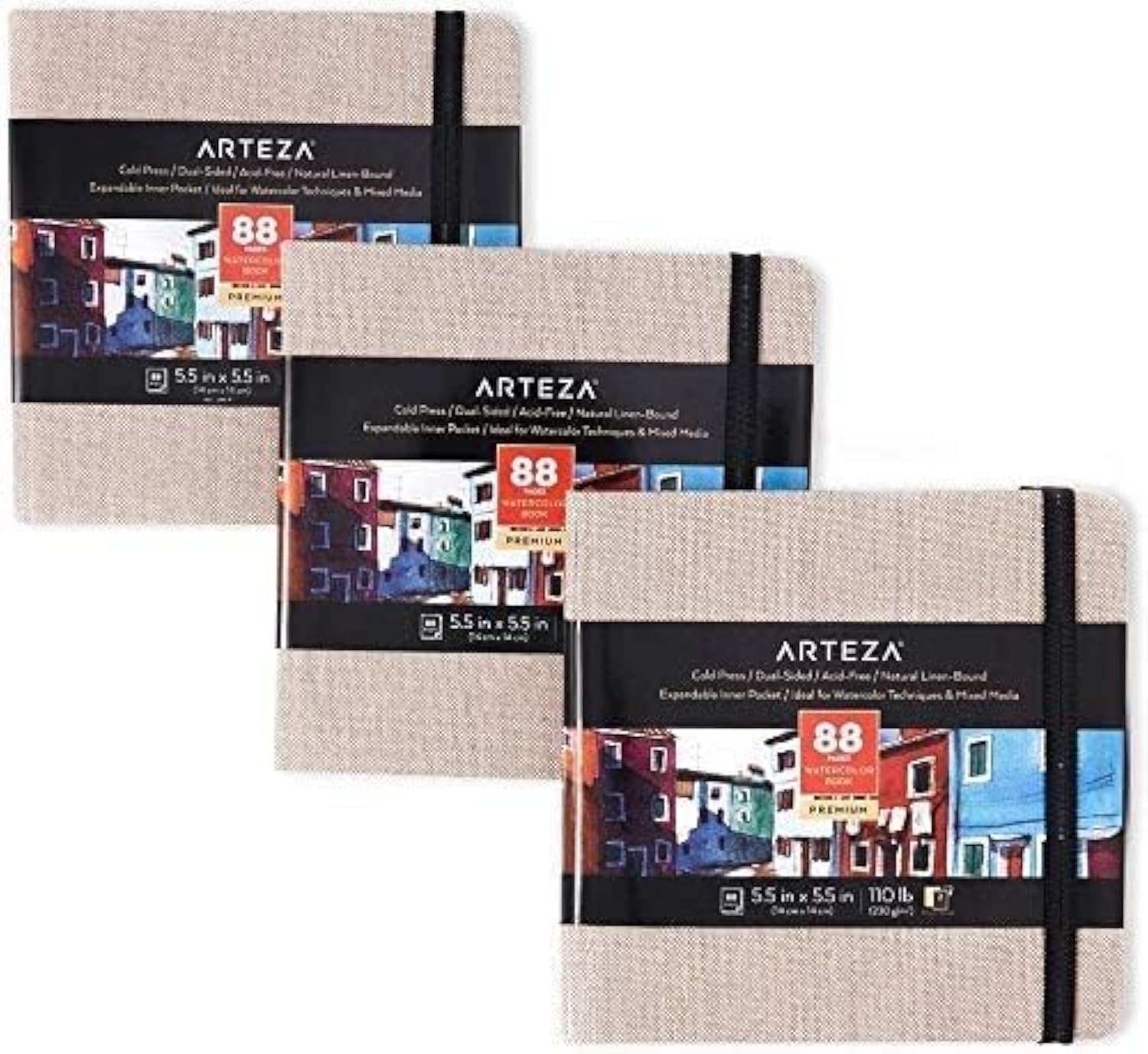
A watercolor sketchbook is simply a bound collection of paper made to handle water-based paint — designed so the sheets don’t buckle violently, bleed through, or pill apart when you lay down a wet wash. The key variable is what the paper is actually made of. Wood-pulp paper (sometimes called “acid-free” student paper) is cheaper to manufacture and widely used in mass-market sketchbooks; it can handle light watercolor work but tends to warp and yellow over time. Cotton-rag paper — the material used in professional watercolor blocks like Arches — is made from textile fibers that absorb and release water more evenly, resist warping, and last archivally for generations. That single material difference explains most of the satisfaction and disappointment patterns you’ll find repeated across reviews of every sketchbook in this category.
If you’re past the beginner stage and actively working through a deliberate painting practice — whether that’s urban sketching, botanical illustration, or looser plein air work — choosing the right sketchbook matters more than most tutorials suggest. This article works through the honest tradeoffs between the ARTEZA watercolor spiral notebook, the Moleskine watercolor album, the tumuarta cotton journal, and the Funto 4.7-inch cotton journal, so you can match the right book to how you actually paint.
| EDITOR'S PICKARTEZA Watercolor Sketchbook 2-… | Mid-tierMoleskine Art Watercolor Album | Budget picktumuarta Watercolor Journal | |
|---|---|---|---|
| Size | 9x12 in | 5x8.25 in | 5.5x5.5 in |
| Pages | 128 total | 72 | 48 |
| Paper weight | 140 lb | — | 300 GSM |
| Paper type | Cold press | — | Cold press |
| Binding | Spiral | Hard cover | — |
| Cover | Hardcover | Hard cover | — |
| Price | $26.99 | $18.08 | $13.99 |
| See on Amazon → | See on Amazon → | See on Amazon → |
What the Paper Is Made Of — and Why It Determines Almost Everything
Before comparing specific books, it’s worth anchoring the decision in one framework that the Handprint.com watercolor supports reference guide lays out clearly: paper fiber type governs wet-handling behavior more than weight (GSM), texture, or brand name alone.
Wood-pulp paper is sized — treated with gelatin or synthetic starch — to create a surface layer that resists immediate water absorption. When sizing is done well, the paper can handle a surprising amount of water before it waves. When it’s done poorly, or when you scrub and lift repeatedly, the sizing breaks down, the paper pills, and you lose the surface. This is why reviewer language about wood-pulp sketchbooks clusters so tightly around the word “sizing.” A well-sized pulp paper can outperform a poorly made cotton paper, at least in the short term.
Cotton-rag paper, as the Jackson’s Art Blog explainer “What Is Watercolour Paper Made Of?” describes, absorbs water more uniformly through the sheet’s entire structure rather than relying only on a surface treatment. That’s why cotton paper buckles less under heavy washes, lifts cleanly without pilling, and granulates pigment more authentically. It also contains no lignin — the organic compound that causes wood-pulp paper to yellow and become brittle over decades — which makes cotton the archival standard for work you intend to sell or keep.
The Artists Network editorial guide “Choosing the Best Watercolor Paper” identifies surface sizing quality as the single most underrated factor in student-grade watercolor papers — a point worth holding onto as we look at the ARTEZA and Moleskine offerings below.
The practical decision split:
- Sketching, journaling, and practice studies → well-sized wood-pulp can work fine
- Work you’ll frame, sell, or expect to last → cotton paper, always
The Four Books, Head to Head
ARTEZA Watercolor Spiral Notebook
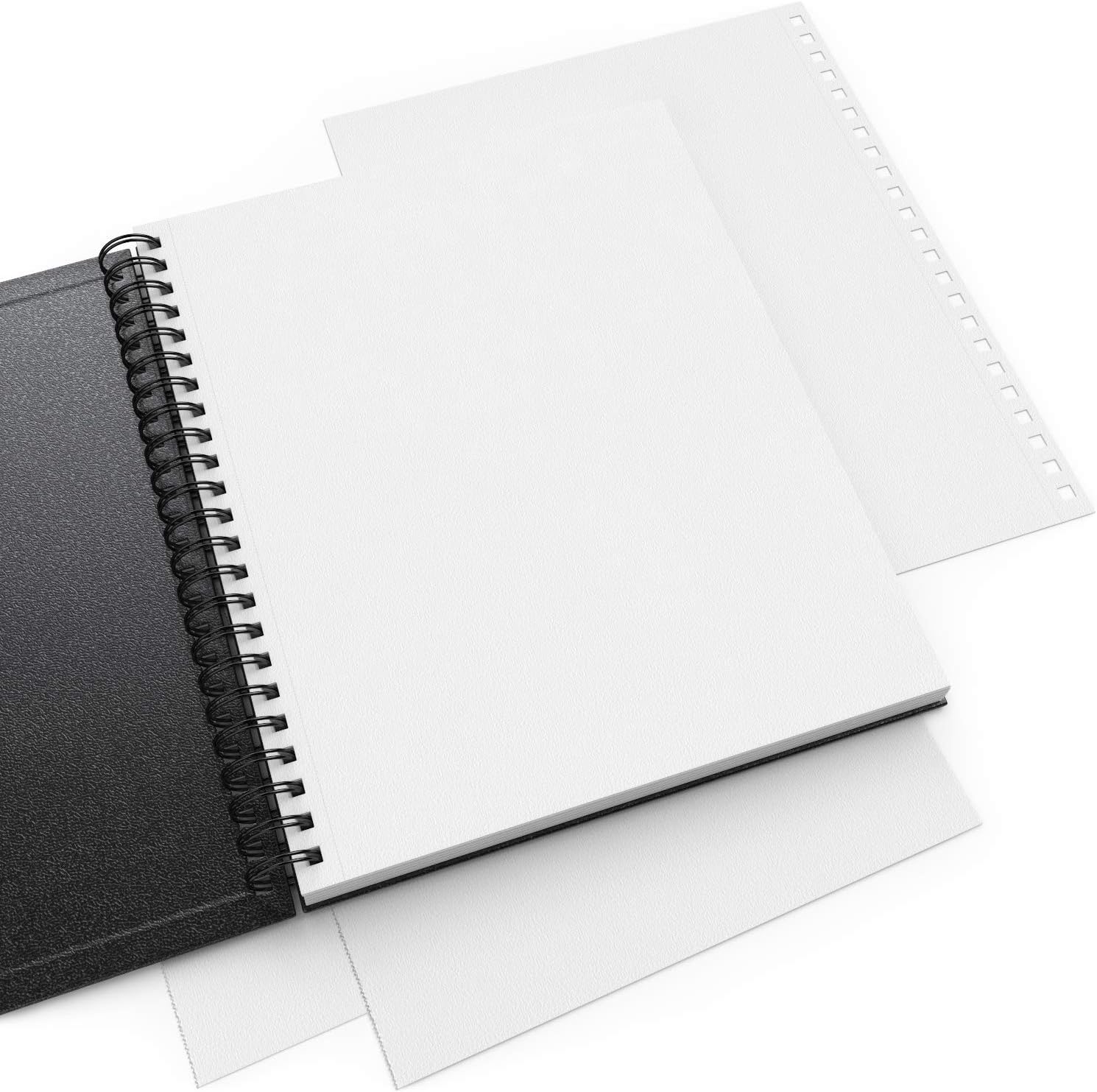
ARTEZA’s watercolor spiral notebooks are wood-pulp paper, not cotton — a fact the brand’s own product descriptions acknowledge when read carefully. At roughly 90–140 lb depending on the specific pad, they’re priced firmly in the student-to-serious-hobbyist tier.
What makes them interesting is the sizing. Across aggregated reviews, a phrase keeps appearing that reads almost like a rallying cry: buyers describe how the paper “can take water — I mean, water” — language signaling genuine surprise at a pulp paper’s wet tolerance. As noted above, the Artists Network editorial guide “Choosing the Best Watercolor Paper” identifies sizing quality as the critical differentiator among student-grade papers, and ARTEZA appears to have invested here.
Where the ARTEZA spiral works:
- Wet-on-wet practice and studies where you’re loading the brush heavily
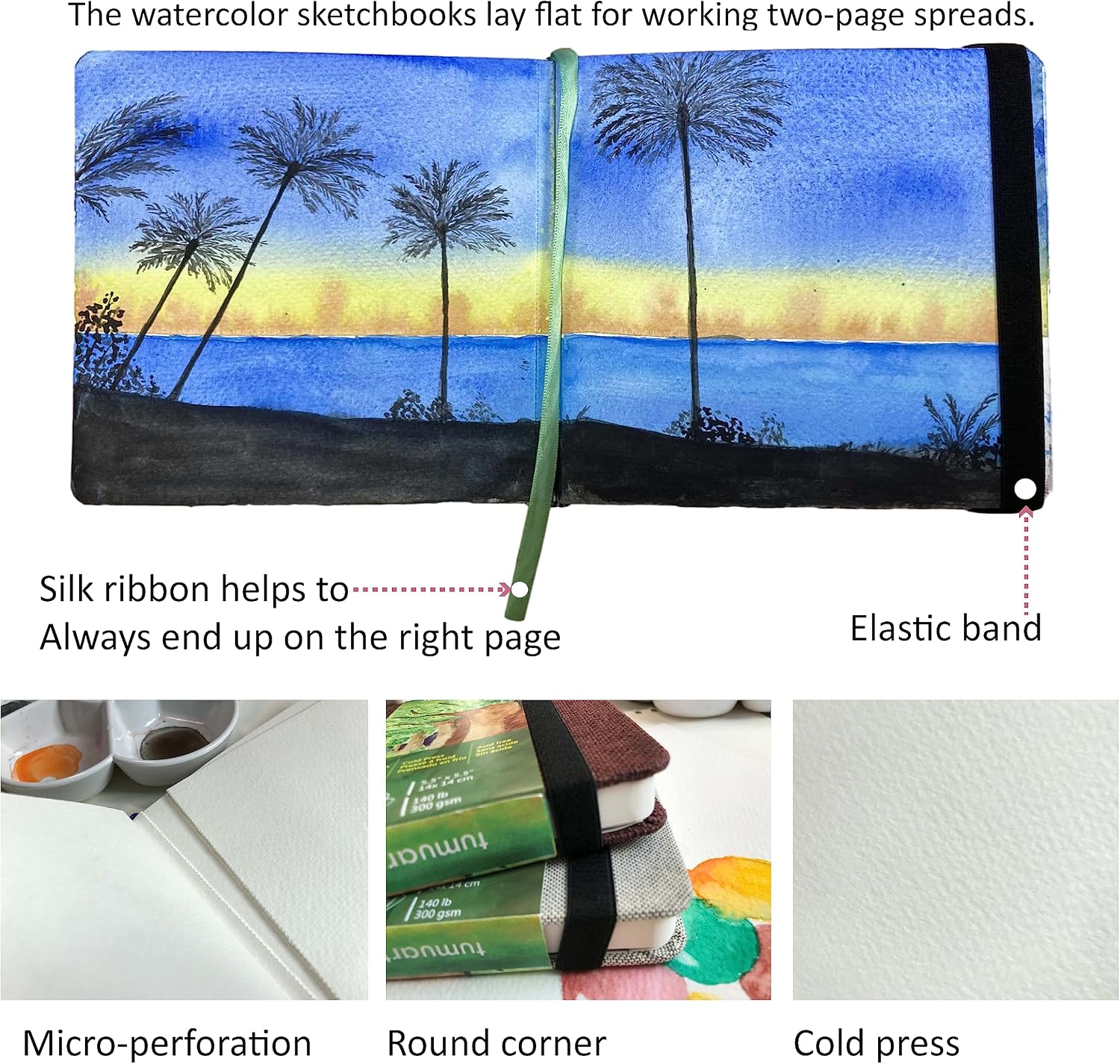
- Sketchbook journaling where spiral binding lets pages lie fully flat — one of the genuine practical advantages of spiral over case-bound formats, because pages rest horizontal without spine tension curving up at the edges
- Artists who work through sketchbooks fast and can’t justify cotton paper costs per page
Where it hits limits:
- Repeated lifting and scrubbing degrades the surface faster than cotton
- Not archival — pigments may shift on acid-containing pulp over years
- Cold-press texture is softer than 100% cotton, which affects granulation of pigments like Daniel Smith Ultramarine or Burnt Sienna
For intermediate painters using the ARTEZA spiral as a daily practice book rather than a finished-work surface, reviewers consistently describe it as punching above its price point. As a substrate for work you intend to frame or sell, the Artwork Archive overview “Archival Best Practices for Artists Who Sell” is unambiguous: wood-pulp paper without archival certification is not a long-term safe choice.
tumuarta
$13.99
In stock on Amazon
Check price on AmazonMoleskine Watercolor Album
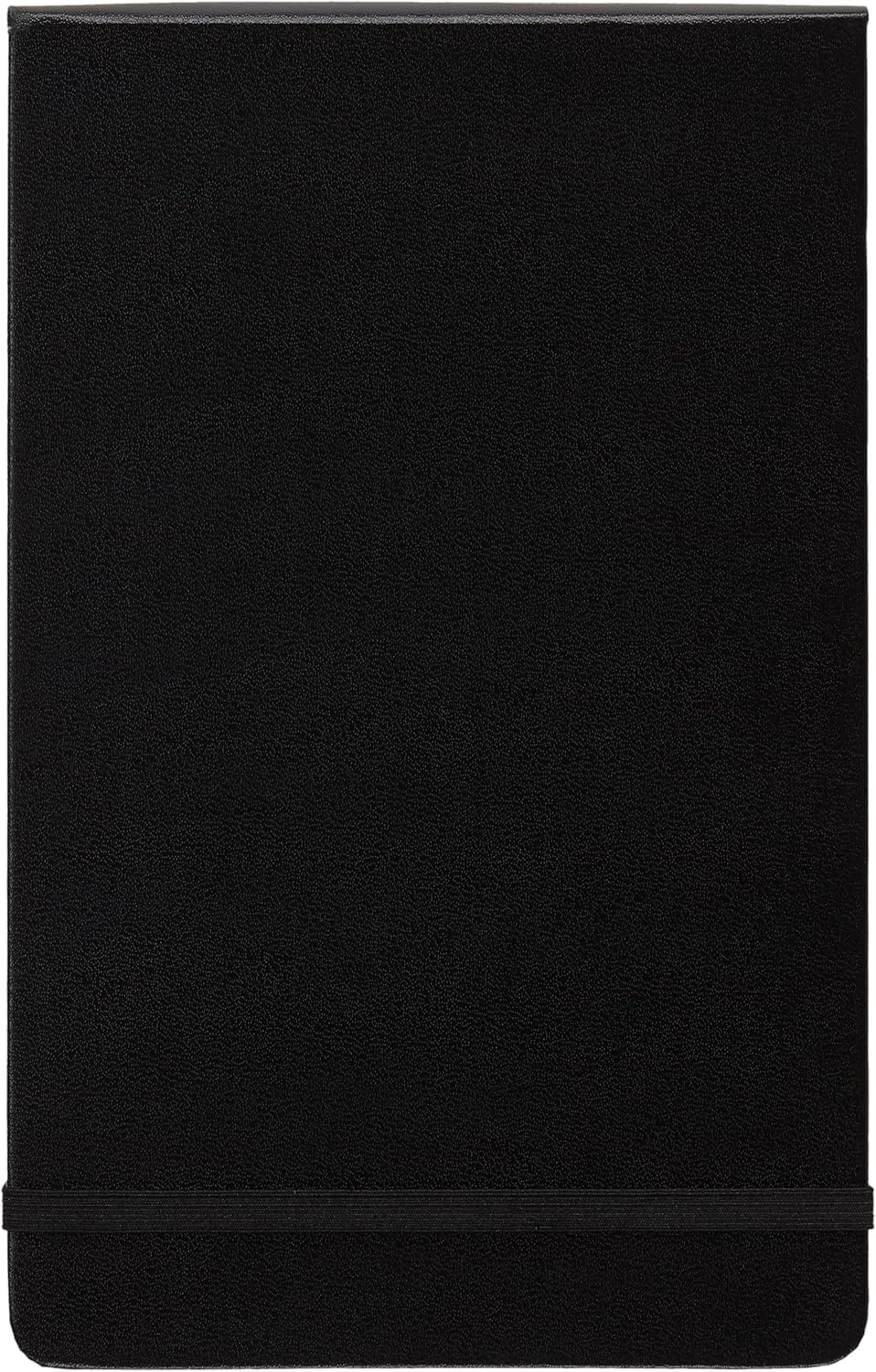
The Moleskine watercolor album has carved out a devoted niche that its competitors haven’t fully managed to capture — and the reason is texture, not fiber content. Like the ARTEZA, it’s wood-pulp, and it isn’t pretending otherwise. What it offers instead is a smooth, slightly compressed surface that gouache painters consistently prefer over more toothy cold-press cotton papers.
Reviewers who approach the Moleskine expecting traditional watercolor behavior — granulation, blooms, soft lifting — are sometimes frustrated. But buyers who use it primarily for gouache, ink and wash, or tight illustrative work keep coming back. The Artists Network editorial guide “Choosing the Best Watercolor Paper” notes that smoother surfaces suit opaque media and fine-line detail work better than heavily textured sheets, and the Moleskine sits at exactly that intersection.
Specific behaviors worth knowing from aggregated reviewer patterns:
- Gouache adhesion is strong — reviewers report no cracking or peeling under normal working conditions when paint is applied at appropriate consistency, not flooded on
- The Moleskine’s signature cream-ivory tone reads warmly in finished gouache work, which some illustrators treat as a compositional asset
- Wet washes do cause some waviness, though less than cheaper pulp alternatives; the binding design helps pages settle as they dry
For commercial illustrators and designers who use gouache as a primary medium and want a sketchbook that travels well and photographs cleanly, the Moleskine watercolor album has earned its reputation. It is not the right choice for painters whose primary concern is archival longevity or cotton-rag wet-handling behavior — but for the niche it serves, it delivers consistently.
Moleskine
$18.08
In stock on Amazon
Check price on Amazontumuarta Cotton Journal
This is where the reviewer language shifts register entirely. The tumuarta cotton journal is 100% cotton-rag paper in a bound journal format, and multiple buyers describe the experience in terms that would be hyperbolic if repeated less consistently: “as good as Arches,” “I can’t believe this is a journal and not a loose-sheet block,” “I stopped buying individual sheets.”
That last phrase is the key signal. Buyers are benchmarking the tumuarta against professional watercolor blocks and individual Arches sheets — not against other sketchbooks. That’s a different product category in the buyer’s mental model, which explains why satisfaction scores land so high.
The Handprint.com watercolor supports reference guide explains that 100% cotton-rag paper at 140 lb (300 gsm) behaves predictably across all the variables that matter to serious painters: wet strength, pigment granulation, lifting capacity, archival longevity, and resistance to buckling under multiple wet layers. When those properties appear in a bound journal format at a price point significantly below buying loose Arches sheets, the value proposition is genuinely strong.
The Artwork Archive overview “Archival Best Practices for Artists Who Sell” identifies cotton-rag paper as the correct substrate choice for any work entering a sales or exhibition context — and the tumuarta’s cotton composition means it clears that bar, which the ARTEZA and Moleskine do not.
Rough cost comparison by format:
| Format | Approx. cost per sheet | Cotton? | Archival? |
|---|---|---|---|
| Arches 140 lb cold-press (loose, 22×30″) | ~$3.50–$5.00 | Yes | Yes |
| tumuarta cotton journal (per page) | ~$0.75–$1.25 | Yes | Yes |
| ARTEZA spiral (per page) | ~$0.20–$0.40 | No | No |
| Moleskine watercolor album (per page) | ~$0.50–$0.80 | No | No |
Estimates based on typical retail price points as of mid-2026; individual packaging and page counts vary.
The tradeoff with any bound cotton journal is that pages aren’t pre-stretched or gummed like a watercolor block — very heavy washes can still cause some wavering, though reviewers report it’s manageable at normal working weights. If you’re laying down extremely wet, full-page washes, a spiral or staple-bound format or a traditional block still has an edge.
ARTEZA
$26.99
In stock on Amazon
Check price on AmazonFunto 4.7-Inch Cotton Journal
The Funto 4.7-inch cotton journal occupies a specific niche that reviewers describe almost affectionately: it’s the sketchbook that fits in a jacket pocket or a small purse, with genuine cotton paper behavior rather than the compromised pulp surfaces that usually appear in pocket-sized books.
“Large enough for anything beyond thumbnail sketches” is a fair question to raise, and the honest answer is: it depends on how you work. Plein air sketchers who use it report that it’s genuinely functional for composition studies, quick value sketches, and color notes — not just thumbnails. But if your practice involves layered watercolor portraits or full botanical studies, 4.7 inches is going to feel tight.
Where the Funto earns its niche: urban sketching where discretion matters, travel journaling where space is at a premium, and as a color-note companion to a larger studio practice. Several reviewers describe using it specifically alongside a larger cotton journal — the Funto handling rapid field notes while the larger book handles developed work. Because it shares the cotton-rag construction that the Handprint.com watercolor supports reference guide identifies as the archival standard, even the field notes you capture in a Funto are preserved correctly — a meaningful advantage over pocket-sized pulp alternatives.
For painters who’ve previously settled for pulp pocket books because cotton options were hard to find in this form factor, the Funto represents a genuine upgrade. It occupies the same cotton-quality tier as the tumuarta but in a radically different form factor optimized for portability over page area.
tumuarta
$13.99
In stock on Amazon
Check price on AmazonFrequently Asked Questions
Is the ARTEZA watercolor sketchbook paper cotton or wood pulp, and does it matter for intermediate painters?
It’s wood pulp, not cotton. For intermediate painters, that matters most if you’re creating work intended for sale, exhibition, or long-term preservation. In those cases, cotton-rag paper is the archival standard, as the Artwork Archive overview “Archival Best Practices for Artists Who Sell” makes clear. For practice, studies, and daily sketching, well-sized wood-pulp like ARTEZA’s can hold up impressively well, and the cost-per-page math makes it easier to fill a book without precious-paper hesitation.
Can you use gouache in the Moleskine watercolor album without the paint cracking or peeling?
Based on aggregated reviewer experience, yes — with one condition. Gouache applied at normal working consistency (creamy, not soupy) adheres well to the Moleskine’s surface without cracking or lifting. Problems appear when paint is applied in very thick, flooded layers that dry with uneven tension. Thin-to-medium application, which is sound gouache practice on any surface, works reliably here.
How does the tumuarta cotton journal compare to buying loose Arches sheets in terms of quality and cost?
Multiple reviewers make this comparison directly and consistently describe tumuarta cotton paper as behaving like professional-grade cotton-rag paper — similar wet strength, granulation response, and lifting capacity. On cost, the per-page math runs significantly in tumuarta’s favor versus individual Arches sheets. The tradeoff is format: loose Arches sheets can be stretched or taped for maximum warp resistance under very heavy washes; bound journal pages cannot.
Is the Funto 4.7-inch journal large enough for anything beyond thumbnail sketches?
It’s larger than it sounds — 4.7 inches is roughly the size of a standard index card, which is functional for quick studies and color notes but genuinely limiting for detailed work. Reviewers who use it for plein air field sketching describe it as adequate for composition captures and value studies. Buyers who expected to do finished paintings at that size were less satisfied. Think of it as a serious field companion, not a primary studio journal.
Do spiral-bound watercolor sketchbooks allow you to lay pages fully flat for wet-on-wet work?
Yes — this is one of the genuine practical advantages of spiral binding over case-bound and perfect-bound formats. Spiral-bound pages lie completely flat without the spine tension that causes case-bound books to curve up at the edges. For wet-on-wet technique, where paint needs to flow freely across a horizontal surface, flat-lying pages make a meaningful difference.
The Decision Rule
If you’re choosing between these four books, here’s the clearest frame:
- Working on practice, studies, or daily journaling where cost-per-page matters: ARTEZA spiral. Better sizing than its price suggests, lies flat, fills fast without guilt.
- Primarily painting with gouache or ink-and-wash for illustration work: Moleskine watercolor album. The surface and format suit opaque media and tight detail work.
- Want cotton paper behavior in a bound journal for work you’ll keep or sell: tumuarta cotton journal. The value-per-page math versus loose Arches sheets is hard to argue with, and it meets the archival standard the Artwork Archive overview “Archival Best Practices for Artists Who Sell” identifies for work entering a sales context.
- Need a pocket-sized field book with real cotton performance: Funto 4.7-inch journal. Specific niche, genuinely delivers for plein air note-taking and travel journaling without sacrificing archival fiber quality.
The bifurcation in sketchbook satisfaction comes down almost entirely to expectations matching materials. Know what the paper is made of, know what you’re asking it to do, and the right choice becomes obvious.