If you’ve ever watched a brushstroke bleed too fast, or tried to lift a highlight and dragged up a fuzzy ball of fiber instead, you’ve already met the paper problem — you just might not have named it yet. Watercolor paper is the surface you paint on, and unlike canvas or a sketchbook page, it’s doing active work: absorbing water, holding pigment in suspension, and releasing color back when you want to correct a passage. The material it’s made from — wood pulp (cheaper) versus cotton fiber (professional grade) — determines almost everything about how your paint behaves. This article is a direct comparison of Canson XL (the wood-pulp pad most of us start on), Arches (the benchmark cotton-rag sheet serious watercolorists treat as a revelation), and Strathmore 500 Series (a genuinely useful middle ground). By the end, you’ll have a clear decision rule for which paper belongs on your desk at each stage of your work.
| EDITOR'S PICKArches Watercolor Paper Block | Mid-tierCanson XL Series Watercolor Pap… | Budget pickStrathmore 300 Series Watercolo… | |
|---|---|---|---|
| Sheet size | 8"x10" | 11"x15" | 9"x12" |
| Sheets | — | 30 | 24 |
| Format | Block | Pad | Pad |
| Binding | — | Tape bound | — |
| Price | $39.79 | $19.69 | $10.83 |
| See on Amazon → | See on Amazon → | See on Amazon → |
What You’re Actually Comparing: Pulp vs. Cotton
The single most important variable in watercolor paper is the fiber it’s made from.
Wood-pulp paper — the category Canson XL sits in — is made from processed wood cellulose. It’s affordable, widely available, and perfectly functional for exercises where the goal is mileage, not permanence. The tradeoff, as documented in Handprint.com’s exhaustive reference “Watercolor Supports: Paper Reviews and Comparisons,” is that wood-pulp sheets have less internal sizing (the gelatin or starch treatment that controls how fast water penetrates), which means wet-on-wet work can spread unpredictably, and scrubbing to lift paint tends to pill the surface rather than release color cleanly.
Cotton-rag paper — the category that includes Arches, Fabriano Artistico, and Strathmore 500 Series — is made from cotton linter or rag fiber. Cotton is naturally long-fibered and takes sizing differently, producing a surface that stays workable longer when wet, releases lifted pigment more cleanly, and resists pilling under a stiff brush. Arches, milled in Arches-sur-Moselle, France since 1492, is the most cited benchmark. Jackson’s Art’s “A Guide to Watercolour Paper” describes its surface as hard-sized in a way that gives painters time to manipulate wet washes before they lock in — a property that feels almost like cheating when you first encounter it after years on wood pulp.
The weight specification — 90lb (190 gsm), 140lb (300 gsm), 300lb (638 gsm) — describes how heavy a ream of the paper is, which correlates loosely with thickness. Heavier paper warps less when wet. But weight is secondary to fiber content: a 140lb cotton sheet performs better than a 300lb wood-pulp sheet for most watercolor applications.
Three Papers, Three Tiers: A Practical Comparison
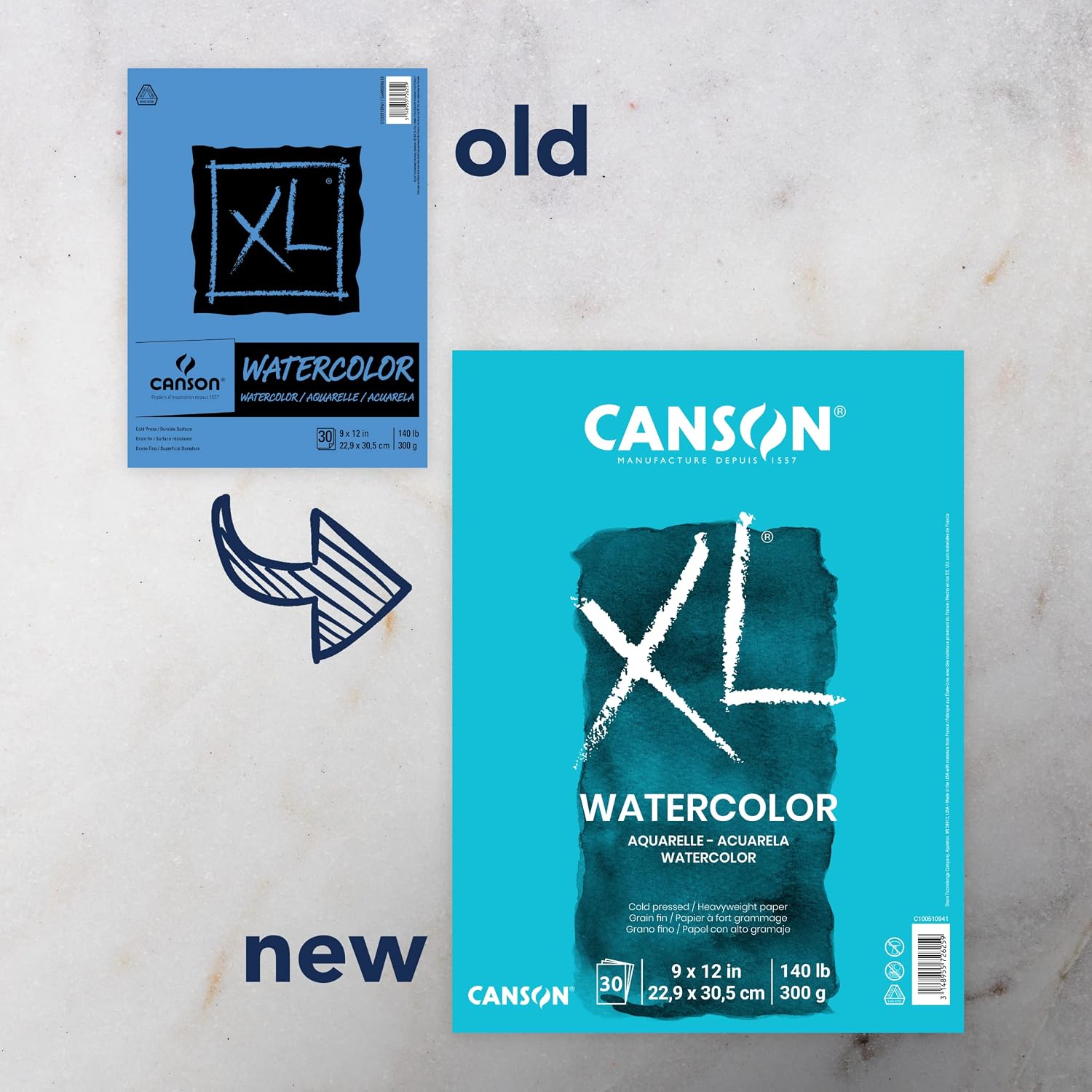
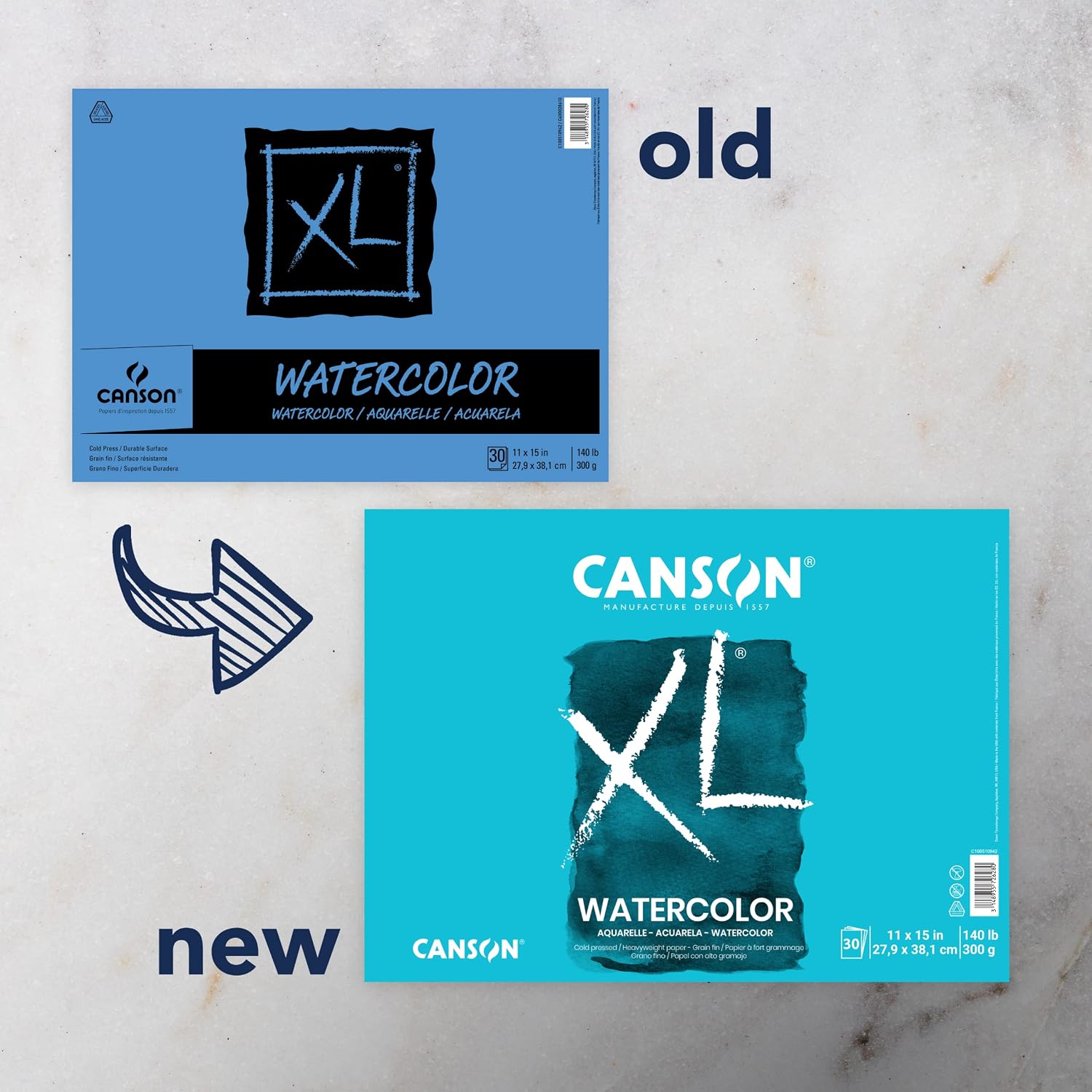
Canson XL 140lb — High-Volume Practice Pad
Reviewers and educators writing for Artists Network’s “How to Choose the Best Watercolor Paper” return to one consistent observation about Canson XL: the low price removes the psychological friction of wasting paper. When a pad costs under $15, you stop protecting each sheet and start actually painting — more frequently, more experimentally, and with less performance anxiety. That psychological unlock has real training value.
The Canson XL 140lb handles light-to-medium washes without immediate crisis. Flat washes, simple wet-on-dry edges, and quick studies all read reasonably well on it. For someone building a daily sketch habit, establishing color mixing intuition, or working through thumbnail compositions before committing to a finished surface, it does the job.
Where it struggles — and where reviewers are consistent — is under pressure:
- Lifting: Scrubbing to lift dried paint tends to disturb the surface fiber rather than releasing clean pigment. You get a fuzzy, pilled texture rather than a recovered white.
- Wet-on-wet control: Water spreads faster and less predictably than on cotton, making soft-edge blending more luck than intention.
- Layering: Multiple glazed layers can begin to look muddy because the surface lacks the depth that cotton fiber provides. The paper “fills up” visually before you’ve built the luminosity you’re after.
- Warping: Even at 140lb, sheets on XL pads warp noticeably under heavy wash loads without tape and a board beneath them.
The honest frame: Canson XL is not a step below Arches — it’s a different tool for a different job. Its job is high-volume practice. The mistake is using it for finished work where the surface limitations become the story.
| Metric | Value |
|---|---|
| Sheets per pad (standard) | 30 sheets |
| Cuttable to 5×7 half-sheets | ~60 usable pieces |
| Fiber content | Wood pulp (acid-free) |
| Weight | 140lb / 300 gsm |
| Archival rating | Acid-free; not museum-archival |
Cutting an 11×15 pad into half-sheets or quarter-sheets extends your practice mileage considerably. Thirty sheets become sixty 5×7 studies with a single straight cut per sheet — a useful calculation if you’re running daily warm-ups.
Strathmore
$10.83
In stock on Amazon
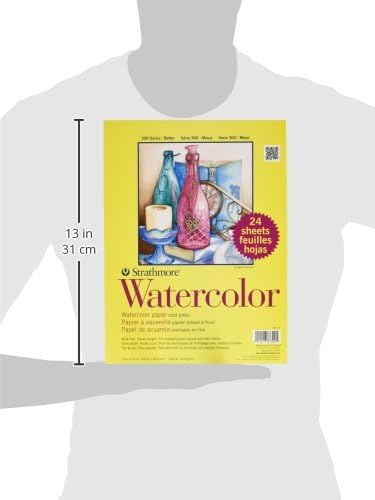
Check price on AmazonStrathmore 500 Series — The Cotton Bridge Paper
Strathmore 500 Series occupies a genuinely useful middle position that gets overlooked in most paper comparisons.
It’s 100% cotton, acid-free, and priced below Arches — making it a logical bridge paper for the stage when you’re ready to practice cotton-rag technique without Arches-level expenditure on every sheet. Handprint.com’s “Watercolor Supports: Paper Reviews and Comparisons” notes that the Strathmore 500 surface behaves more like a traditional cotton sheet than like a coated student paper, and that its sizing holds up reasonably well under repeated wetting.
There’s also a distinctive quirk that multiple long-term painters report: the two-sided surface. One face has a texture closer to cold-press; the reverse is smoother, behaving more like hot-press. Painters who discover this often describe it as getting two papers for the price of one. If you’re exploring the difference between hot-press and cold-press behavior without buying separate pads, the Strathmore 500 provides a legitimate experiment on a single pad.
It’s worth being clear on how Strathmore’s own product lines differ: Strathmore 300 Series is a wood-pulp (cellulose) paper — the same fiber category as Canson XL — while Strathmore 500 is 100% cotton rag. That single difference produces significant performance changes: better lifting, longer wet working time, and more stable granulation. The 500 Series is a professional-grade surface; the 300 Series is a student-grade alternative. They are not incremental improvements — they’re different materials.
The honest gap: most experienced painters do notice a difference between Strathmore 500 and Arches on demanding work — specifically in how the sizing holds up under heavy repeated wetness and in granulation depth. But for study-level cotton-rag practice and for building the muscle memory of working on cotton, Strathmore 500 is a smart spend.
Canson
$19.69
In stock on Amazon
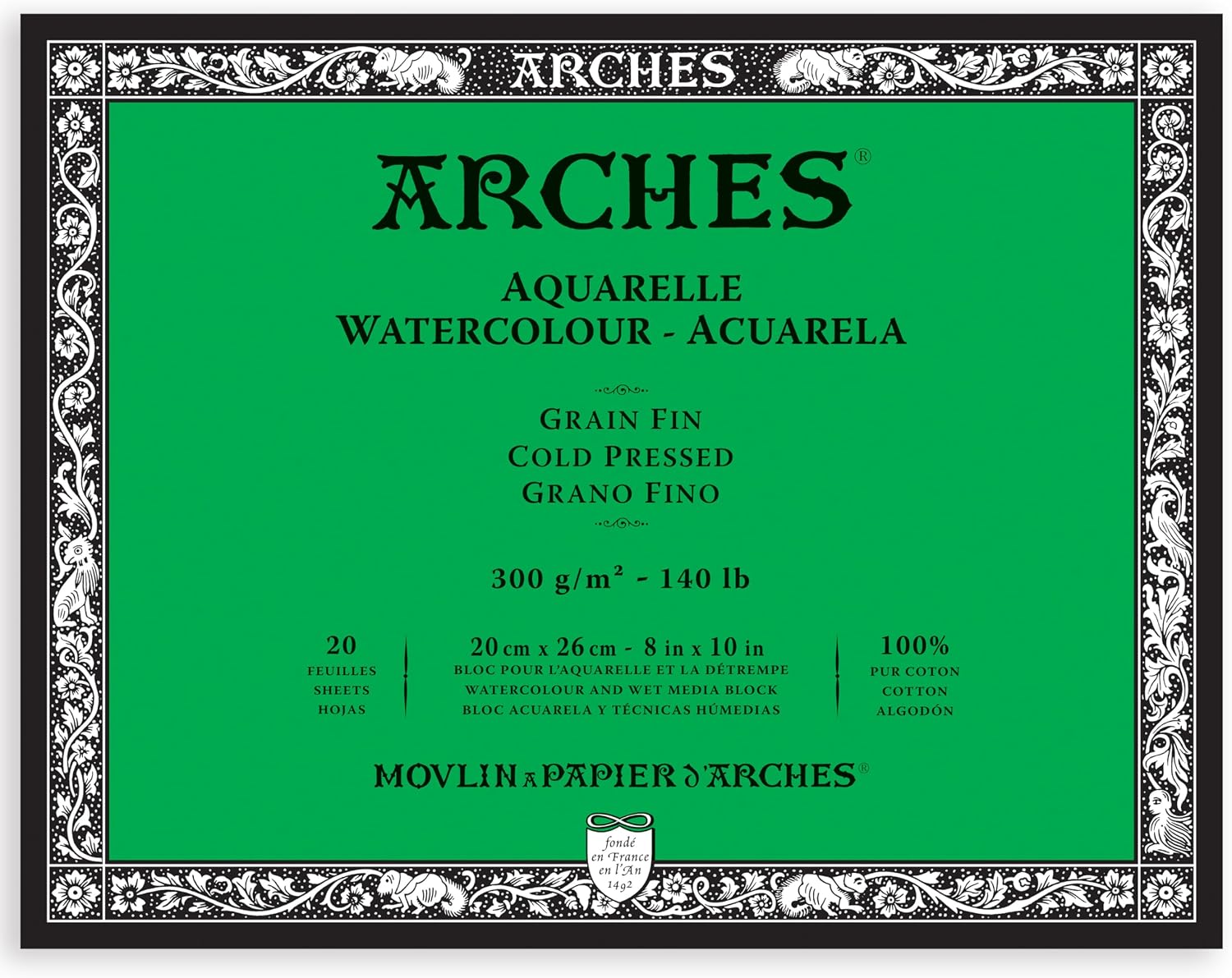
Check price on AmazonArches 140lb Cold-Press — The Professional Benchmark
The word “revelation” appears so consistently in Arches reviews across Artists Network community discussions, Jackson’s Art supply writing, and Handprint.com’s technical comparisons that it’s worth unpacking what specifically changes when you move to this surface.
Granulation reads correctly. On cotton rag with Arches’ surface sizing, granulating pigments settle into the texture in ways that wood-pulp paper simply does not support. The granulation — that deliberate, crystalline separation of pigment particles — lands as intended rather than washing flat. If you’ve invested in single-pigment granulating watercolors and felt underwhelmed by them, the paper is likely part of why.
Wet-on-wet has a working window. Arches cold-press retains a longer wet working time than wood-pulp alternatives, giving you a genuine window to drop in a second color, tilt the board, or soften an edge before the wash locks. This is the hardest technique to develop on lower-quality paper, because on poor surfaces the method fails even when the instinct is right.
Lifting is reliable. Blotting a damp passage, lifting with a dry brush, or scrubbing a dried glaze to recover a highlight all behave more predictably. The cotton fiber holds up; the surface doesn’t pill. Painters consistently report being able to make significant corrections — something that can feel almost miraculous after extended Canson XL experience.
Archival permanence matters if you’re selling work. Artwork Archive’s guide “Why Archival Materials Matter for Artists Selling Their Work” addresses this point directly: if a buyer is spending hundreds of dollars on an original, they reasonably expect it to outlast the transaction. Arches 140lb cold-press is pH-neutral, acid-free cotton rag — the standard museum conservators reference when evaluating works on paper. Canson XL is acid-free but is not rated to the same archival standard.
A note on the Arches block format. The Arches watercolor block — sheets glued on all four sides — eliminates the taping-and-board ritual entirely. You paint, let it dry, slide a palette knife under the top sheet to release it, and the finished work comes off flat. For painters who find stretching or taping paper a friction point that delays starting, the block format removes that barrier. Some minor warping can still occur mid-session with very wet techniques on large blocks, but it typically relaxes as the sheet dries while still attached.
Arches
$39.79
In stock on Amazon
Check price on AmazonThe Weight Question: 90lb, 140lb, or 300lb?
This question comes up consistently, and the short answer is: 140lb cotton is the correct default. Here’s why:
- 90lb (190 gsm) warps aggressively under any significant wash load. Unless you’re stretching it — soaking the paper flat on a board before painting, which adds meaningful prep time — 90lb sheets will buckle and create pooling irregularities that ruin washes. Jackson’s Art’s “A Guide to Watercolour Paper” echoes this, describing 90lb as a weight best suited to stretching-focused workflows or very light, dry-brush techniques.
- 140lb (300 gsm) can handle moderate wash work without stretching, especially on smaller sheet sizes up to around 11×15. On larger sheets or very wet techniques, tape or a block format is still advisable. This is the practical standard for most watercolorists because it balances performance with cost.
- 300lb (638 gsm) essentially does not warp under any normal painting conditions. It’s the choice for very large-scale work or techniques involving heavy soaking. The cost per sheet is high, so most painters reserve it for important finished pieces.
Beginners who start on 90lb wood-pulp sheets and experience warping often misattribute the problem to their technique rather than the paper — a discouraging and inaccurate diagnosis. Starting on 140lb removes one variable from an already complex learning curve.
Decision Rule: If X, Then Y
Here’s the plain version of the upgrade logic:
If you’re doing daily practice, studies, color mixing drills, or compositional thumbnails — Canson XL 140lb is the correct tool. Use it freely, cut it up, fill it. Its job is volume and freedom, not permanence.
If you’re at the transition point — ready to practice on cotton but not ready to commit Arches-per-sheet costs to every study — Strathmore 500 Series is the honest bridge. It teaches you how cotton behaves without Canson XL’s ceiling, and its two-sided surface is a genuine bonus for surface exploration.
If you’re painting finished work you intend to sell, exhibit, or frame — Arches 140lb cold-press is the baseline. The archival standard, the surface performance, and the professional expectation all align here. The Arches block format is worth the premium if taping is a friction point that delays your painting sessions.
The math that clarifies the decision: if a finished watercolor sells for $150–$500, the cost differential between a Canson XL sheet (roughly $0.45) and an Arches sheet (roughly $2.50–$4.00) is negligible against the sale price, the buyer’s expectation of archival quality, and the improved probability of a technically clean result. The upgrade pays for itself the first time you avoid repainting a commissioned piece because the surface failed under a correction pass.
Frequently Asked Questions
Is Canson XL good enough for finished watercolor paintings or only for practice?
Technically, you can complete a painting on Canson XL — but its wood-pulp construction limits lifting, granulation, and layering in ways that become visible in finished work. For pieces you intend to sell, exhibit, or frame, cotton-rag paper is the appropriate surface. Canson XL’s strongest role is high-volume practice where paper cost shouldn’t inhibit how freely you work.
What is the actual difference between Strathmore 300 and 500 Series for watercolor?
Strathmore 300 is a wood-pulp (cellulose) paper — the same fiber category as Canson XL — while Strathmore 500 is 100% cotton rag. That single difference produces significant performance changes: better lifting, longer wet working time, and more stable granulation. The 500 Series is a professional-grade surface; the 300 Series is a student-grade alternative. They are not incremental improvements — they’re different materials.
Does the Arches block prevent warping without taping?
Yes, with qualification. The four-side glued block holds the sheet flat during painting, eliminating the need to tape down individual sheets. Once dry, you slide a palette knife along the unsealed edge to release the top sheet. On heavy wash techniques with very large blocks, some minor warping can still occur mid-painting but typically relaxes as the sheet dries while still attached. For most standard painting sessions, the block format effectively replaces taping.
How many sheets do I realistically get from a Canson XL 11×15 pad if I cut pieces?
A standard 30-sheet pad yields 60 half-sheets at roughly 7.5×11 inches with one straight cut per sheet, or approximately 120 quarter-sheets at 5.5×7.5 inches with two cuts per sheet. The quarter-sheet size is particularly useful for daily warm-up studies and color-mixing exercises.
Is 140lb paper the right weight for beginners or should I go heavier?
140lb (300 gsm) is the practical default for most beginners and intermediate painters. It handles moderate wet-on-wet work on smaller sheet sizes without requiring stretching. Going to 300lb adds significant cost per sheet and is generally reserved for large-format finished work or very wet techniques. Starting at 90lb is not recommended unless you’re stretching sheets — the warping is significant enough to interfere with learning good wash technique.