Watercolor paper isn’t just a blank surface — it’s an active ingredient. The fibers it’s made from determine how your paint spreads, how long you have to push wet color around, whether your edges stay soft or harden immediately, and whether the finished piece holds up for decades or yellows and crumbles over time. At its core, the market splits into two material categories: cotton-rag paper, made from cotton fibers (the same material as high-quality fabric), and wood-pulp paper (also called cellulose paper), made from processed wood. Both are sold as “watercolor paper,” both come in the same surface textures, and both sit on the same shelf — which is exactly why it’s easy to spend months painting on the wrong one without realizing it. This article maps the real differences, shows you the cost math, and ends with a clear decision rule so you know which surface belongs under which kind of work.
What the Fiber Actually Does to Your Paint
The fundamental difference between cotton and wood-pulp paper isn’t about prestige — it’s about how each fiber type interacts with water.
Cotton fibers are long, irregular, and loosely interlocked at the surface. Bruce MacEvoy’s exhaustively researched material guide, published on Handprint.com under the title “Watercolor Supports: Paper,” explains that this fiber structure creates a surface that absorbs water slowly and releases it back to the brush in a controlled way. The practical result: you get a longer working time — the window in which paint stays wet and movable. Soft gradients, wet-on-wet blooms, and lifted highlights are all easier to achieve because the paper isn’t aggressively absorbing your wash the moment it lands.
Wood-pulp fibers are shorter, more uniform, and more tightly packed — and they’re treated with sizing (a gelatin or starch coating that controls absorbency) to compensate for their naturally thirsty nature. Jackson’s Art blog piece “The Difference Between Cotton and Wood Pulp Watercolour Paper” notes that without this sizing, cellulose paper would behave more like a paper towel. The catch: that sizing degrades faster than cotton’s natural structure, so wood-pulp paper’s behavior can shift subtly as it ages, or if it gets wet repeatedly during a long painting session.
There’s also an archival dimension. Cotton fiber is naturally pH-neutral and lignin-free. Wood pulp, in its natural state, contains lignin — the compound that causes paper to yellow and become brittle. Quality wood-pulp papers are processed to be acid-free, which slows this significantly, but as Artists Network’s guide “How to Choose Watercolor Paper” makes clear, “acid-free” and “archival” are not the same promise. Cotton paper, by its chemical nature, is genuinely archival in a way wood-pulp paper approximates but does not fully match.
The Real Performance Gap (and When It Actually Matters)
Here’s where intermediate painters tend to get surprised: the gap between cotton and wood-pulp paper is not linear. It shows up dramatically in some techniques and barely at all in others.
Where Cotton’s Advantage Is Decisive
Fine Art Tips’ article “Watercolor Paper: Cotton vs Cellulose” specifically identifies wet-on-wet work as the technique most sensitive to paper choice, and the reasons are structural. Cotton’s longer open time lets you charge color into a wet wash and watch it bloom naturally. On wood-pulp paper, the same move often produces hard, uncontrolled edges because the surface dries faster and less evenly.
Lifting and correction also favor cotton heavily. Cotton surfaces — especially cold-press cotton — allow you to lift dried paint with a damp brush or cloth and recover a meaningful amount of white. Wood-pulp paper tends to resist this; the fibers hold pigment more permanently and can pill or tear under scrubbing pressure.
Granulation behavior is the third decisive gap. Single-pigment Daniel Smith watercolors like Lunar Black or Sleeping Beauty Turquoise are formulated to granulate — to deposit visible pigment texture in the paper’s valleys. That behavior reads beautifully on the textured surface of a cold-press cotton sheet. On smoother wood-pulp paper, the same paint looks flat and the granulation is muted.
Multi-session work rounds out cotton’s advantages. Cotton holds up to repeated wetting and drying cycles without the warping or surface degradation that wood-pulp paper accumulates over long sessions.
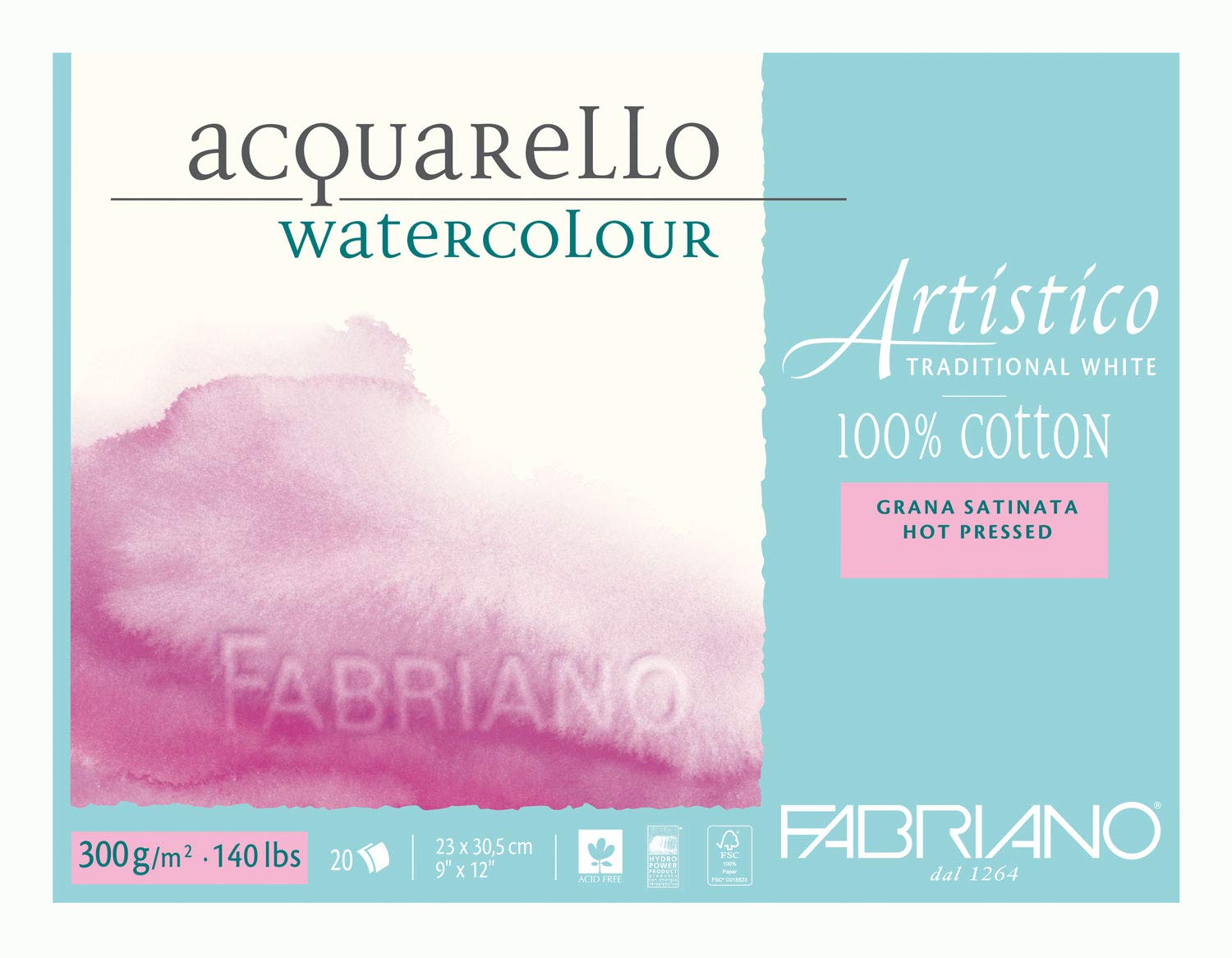
Fabriano 30002330
$39.39
In stock on Amazon
Check price on AmazonWhere Wood-Pulp Holds Its Own
If you’re laying down controlled strokes without a lot of water — tight botanical illustration, ink-and-wash linework, or quick studies that are more drawing than painting — the faster-drying, more consistent surface of a good wood-pulp sheet is perfectly functional.
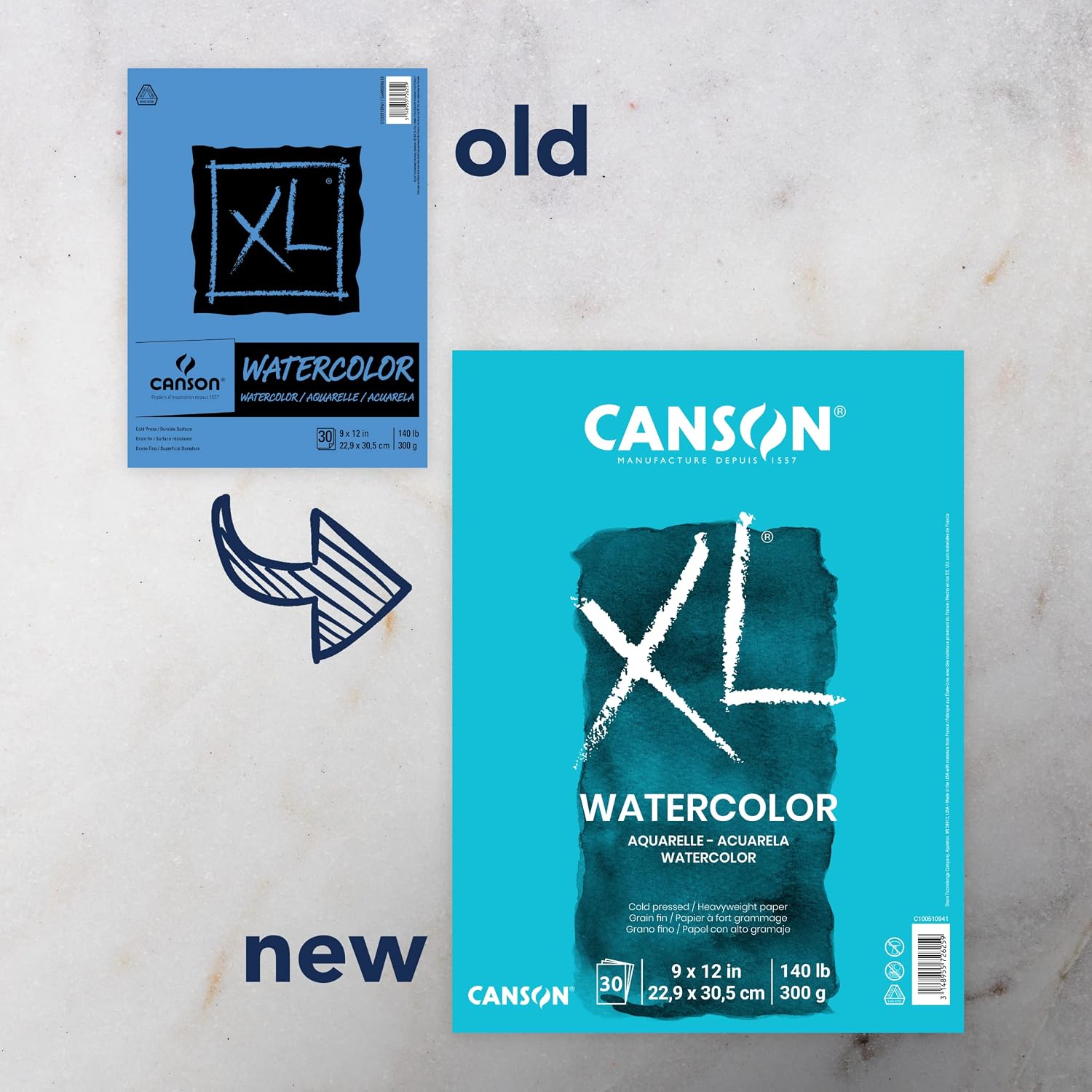
Practice volume is wood-pulp’s strongest argument. You need to make a lot of mistakes to learn watercolor. Running through 50 sheets of Canson XL or Strathmore 300 Series to develop muscle memory for brush loading costs a fraction of doing the same work on Arches or Fabriano Artistico.
Sketchbook and travel work also suit cellulose well. Wood-pulp watercolor pads are easier to find in compact travel formats, take light washes acceptably, and don’t require stretching for short sessions.
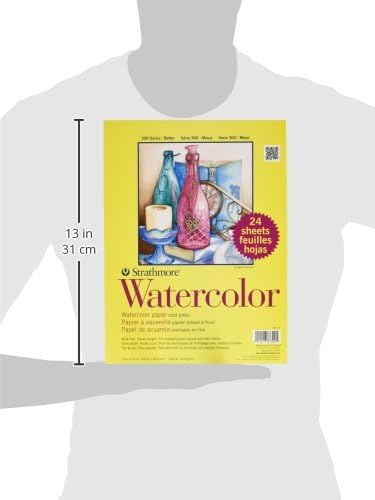
Strathmore
$10.83
In stock on Amazon
Check price on AmazonThe Middle Ground: Blended and Student-Grade Cotton Papers
Between pure cellulose and premium cotton sits a useful middle tier. Papers like Strathmore 400 Series use a cotton-cellulose blend that delivers genuine cotton behavior — including meaningful open time and basic liftability — at a price point well below full cotton sheets. Artists Network’s paper selection guide positions this category as the correct entry point for painters who are past pure practice work but not yet committing to finished, exhibition-ready pieces.
For painters doing developed studies with real finish intent — work they’ll evaluate seriously but may not sell — a student-grade cotton sheet from Fabriano Artistico or a comparable manufacturer gives them authentic cotton surface feedback without spending at the Arches price point on every session.
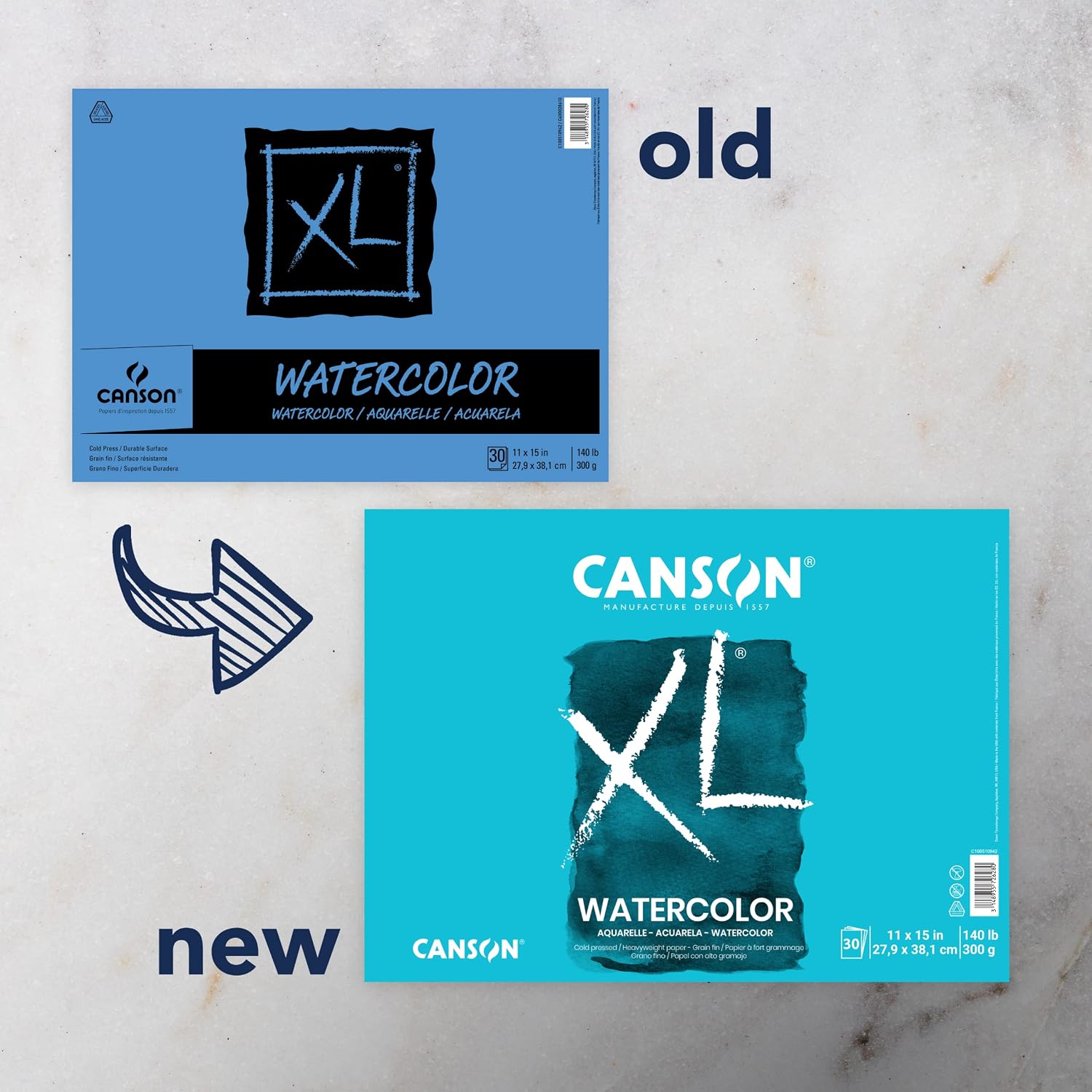
Canson
$19.69
In stock on Amazon
Check price on AmazonBy the Numbers
Pricing below is estimated from major art supply retailers as of mid-2026, with sheet cost calculated from pad and block pricing.
| Paper | Fiber | Weight | Approx. cost per sheet (22×30”) | Archival rating |
|---|---|---|---|---|
| Arches Cold-Press | 100% cotton rag | 140 lb / 300 gsm | ~$3.50–$4.50 | Museum-grade Fabriano 30002330 — $39.39 |
| Fabriano Artistico | 100% cotton rag | 140 lb / 300 gsm | ~$2.75–$3.75 | Museum-grade Fabriano 30002330 — $39.39 |
| Strathmore 400 Series | Cotton/cellulose blend | 140 lb / 300 gsm | ~$1.20–$1.80 | Mid-grade Canson — $19.69 |
| Canson XL Watercolor | Cellulose (acid-free) | 98 lb / 160 gsm | ~$0.40–$0.70 | Student/practice Strathmore — $10.83 |
The cost difference looks dramatic until you factor in paint waste. A $4 sheet of Arches that lets you lift, rework, and complete a finished piece versus a $0.60 sheet that costs you a failed wash and a tube of Daniel Smith (which retails at $38–$55 per 15ml tube) is a different equation entirely. The cost-per-use math favors cotton for any work you intend to keep, sell, or submit.
How to Build a Two-Surface Practice
The practical answer isn’t “always use cotton.” It’s “use the right surface for what the session is actually for.”
Exploratory studies, color mixing tests, technique drills: Wood-pulp. Canson XL watercolor pads or Strathmore 300 Series give you enough surface to work honestly without the anxiety of wasting expensive material. Keep a pad of these on your desk for daily warm-up work.
Developed studies with intent to evaluate: Strathmore 400 Series or a student-grade Fabriano Artistico cotton sheet. You get real cotton behavior — open time, liftability, granulation — without spending at full Arches prices on work that may not go anywhere.
Finished work, client work, pieces for sale or exhibition: 100% cotton, full stop. Arches cold-press is the industry default. Artists Network’s paper guide consistently identifies it as the reference standard against which other papers are compared. Fabriano Artistico Extra White is the preference of painters who want a brighter ground. Both are museum-archival and will outlast everything else in the studio.
Plein air and travel: Consider cotton watercolor blocks, which are glued on four sides and eliminate the need for stretching or tape. Jackson’s Art blog notes the block format as one of the most practical field solutions at the intermediate level, particularly for painters who need a rigid working surface without carrying a board.
The Upgrade Conversation: When to Stop Practicing on Student Paper
There’s a specific trap intermediate painters fall into: using wood-pulp paper for so long that they develop technique calibrated to its behavior, then switching to cotton and feeling like they’ve lost control. The faster, harder-edged behavior of cellulose becomes a kind of muscle memory.
Jackson’s Art blog flags this directly in their cotton vs. wood-pulp comparison — painters who want to develop sensitivity to wet-on-wet timing, lifting, and granulation should move some of their practice to cotton early, not just reserve cotton for “good” work. The intuition you build on cotton is the intuition that translates to finished pieces. Practicing exclusively on wood-pulp is practicing a slightly different sport.
A reasonable transition point: when you’re spending $30–$50 per painting session in paint, the paper cost becomes a smaller percentage of the total investment. At that stage, doing 70% of your work on student cellulose and 30% on cotton is a legitimate intermediate strategy. When you’re regularly completing work you’d consider showing or selling, the math tips fully toward cotton for anything with finish intent.
Clear Decision Rule
If you’re primarily building volume — practicing, testing color, developing control — wood-pulp paper is honest and efficient. Don’t feel guilty about it; this is what it’s made for.
If you’re making work you intend to keep, sell, frame, or develop beyond a single session, buy cotton. The lifting window, the archival stability, and the way premium pigments like Daniel Smith granulating colors actually behave on cotton are not theoretical advantages — they’re the difference between the paint doing the thing it was formulated to do and a muted approximation of that.
And if you’ve been painting exclusively on wood-pulp paper for more than a few months, put a block of Arches or Fabriano Artistico cold-press next to your practice pad and start doing one session per week on cotton. The surface will feel unfamiliar at first — more permissive, slower to commit — and that disorientation is exactly the calibration your technique needs.
If your goal is volume and skill-building: Canson XL Watercolor Pad [PRODUCT:budget]
Strathmore
$10.83
In stock on Amazon
Check price on AmazonIf your goal is quality studies on a real cotton surface at accessible price: Fabriano Artistico 140 lb Cold-Press Block [PRODUCT:intermediate]
Canson
$19.69
In stock on Amazon
Check price on AmazonIf your goal is finished, archival work — the standard: Arches Cold-Press 140 lb Watercolor Block [PRODUCT:advanced]
Fabriano 30002330
$39.39
In stock on Amazon
Check price on AmazonThe paper is the partnership. Give your paint a surface worth working with.