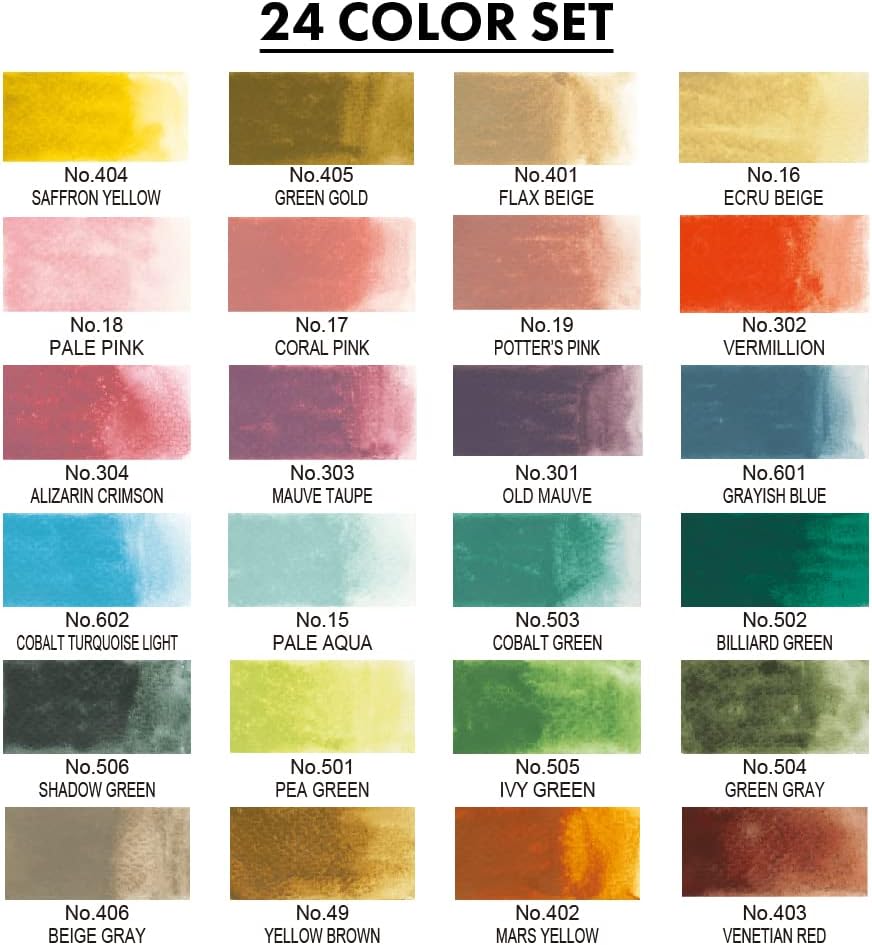
If you took a watercolor set to summer camp as a kid, set it down somewhere around 1995, and recently felt that old pull again — you are not alone. Watercolor pan sets (compact, pre-filled trays of dry or semi-moist paint that you activate by brushing a little water across the surface) are the dominant reentry point for returning artists, and the current market is genuinely better than anything available a generation ago. The three names that come up most often in that conversation are Kuretake Gansai Tambi, Prima Marketing Confections, and Winsor & Newton Cotman. They sit in overlapping price ranges, they all ship in attractive tins or trays, and they all receive enthusiastic reviews — but they are doing very different things for very different painters. This article maps those differences honestly so you can spend your money once and get back to making work.
| EDITOR'S PICKWinsor & Newton Cotman Watercol… | Mid-tierPrima Marketing 584252 Watercol… | Budget pickArt Philosophy Watercolor Confe… | |
|---|---|---|---|
| Pan count | 45 | — | — |
| Brush incl. | ✓ | — | — |
| Series | Cotman | The Classics | Tropicals |
| Brand | Winsor & Newton | Prima Marketing | Art Philosophy |
| Name | Studio Set | — | — |
| Price | $52.68 | $29.95 | $23.37 |
| See on Amazon → | See on Amazon → | See on Amazon → |
What You’re Actually Comparing: Pan Size, Pigment Grade, and Behavior
Before the brand breakdown, three specs matter more than anything else on the box.
Pan size determines how much paint you can load onto a brush in a single stroke. Standard half-pans (roughly 19 × 13 mm) are fine for small-format journaling; full pans (38 × 13 mm) reward looser, more gestural work. Kuretake’s Gansai Tambi pans are noticeably oversized relative to both — closer to a generous full pan — which is one of the first things returning artists mention when they open the set for the first time. More paint surface means fewer trips back to recharge the brush, which matters a lot when you’re relearning to work wet.
Pigment grade is the honest separator. Student-grade paints use more filler (typically dextrin or additional gum arabic) and lower-cost pigment blends to hit a price point. Artist-grade paints lead with single pigments or carefully chosen two-pigment mixes, publish lightfastness ratings (how resistant the color is to fading under light — rated I through IV, with I being permanent), and carry more pigment load per milliliter. The Cotman line sits squarely at the upper edge of the student tier, with some reformulations that approach semi-professional behavior. The Kuretake and Prima lines occupy different parts of the student-to-craft spectrum in ways worth naming directly.
Reactivation — whether a dried pan will dissolve cleanly when you wet it — varies by binder formula and matters enormously for pan sets that travel or sit between sessions.
By the Numbers
| Set | Pan count | Pan size | Approx. price range | Lightfastness published? |
|---|---|---|---|---|
| Kuretake Gansai Tambi 36 | 36 | Oversized full | $28–$38 | Partial (select colors) |
| Kuretake Gansai Tambi 48 | 48 | Oversized full | $45–$58 | Partial |
| Prima Confections (Classics / Pastel Dreams) | 18–24 | Standard half | $18–$30 | Not prominently disclosed |
| Winsor & Newton Cotman 45-pan Studio Set | 45 | Standard half | $55–$75 | Yes, per W&N spec sheets |
Prices reflect aggregated retail data as of May 2026. Single-tube and individual pan pricing vary by retailer.
The Three Sets, Compared Head to Head
Kuretake Gansai Tambi: The Returnee’s Workhorse
Art
$23.37
In stock on Amazon
Check price on AmazonKuretake’s Gansai Tambi line is Japanese in origin, built on a traditional water-based pigment formula that behaves more like a hybrid between gouache and watercolor than a conventional Western transparent watercolor. The colors are vibrant, they mix smoothly, and they rehydrate quickly. Owners consistently describe the reactivation as near-instant even after months of dry storage — a practical advantage for anyone whose set will sit between sessions. One of the quiet frustrations of returning to old supplies is picking up a brush and finding that half the pans have turned into colored plastic; Gansai Tambi largely sidesteps that problem.
The detail that comes up most in owner accounts is the labeling. Every pan in the Gansai Tambi line has the color name printed directly on the pan itself, not just on a removable sticker or the outer packaging. This seems minor until the first accidental tip — being able to reconstruct the tray without a reference sheet is a genuinely practical feature.
The 48-color set is a meaningful upgrade over the 24-count starter. The expanded palette adds earth tones, additional neutrals, and specialty colors (some metallics, some interference effects) that make Gansai Tambi appealing to illustrators doing character work or decorative painting. Owners who’ve bought both the 24 and 48 typically describe the 48 as the version they’d have bought first.
The honest tradeoff: as documented in Handprint.com’s comprehensive survey of watercolor pan and tube products, Gansai Tambi’s formula leans opaque-leaning rather than purely transparent, which affects glazing behavior on later washes. Lightfastness data is also inconsistently published across the range. Artists Network’s materials guidance recommends treating any unpublished color as a potential fading risk for work intended for display or sale, and substituting rated pigments for critical hues in finished pieces.
Best for: Returning artists who want immediate, enjoyable results with minimal frustration. The pan size, labeling, and reactivation behavior are calibrated exactly for someone rebuilding intuition after years away.
Art
$23.37
In stock on Amazon
Check price on AmazonPrima Marketing Confections: The Convenient Entry Point With Limits
Prima
$29.95
In stock on Amazon
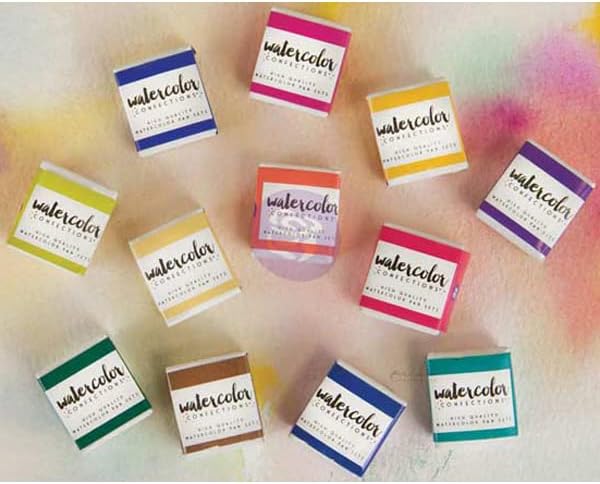
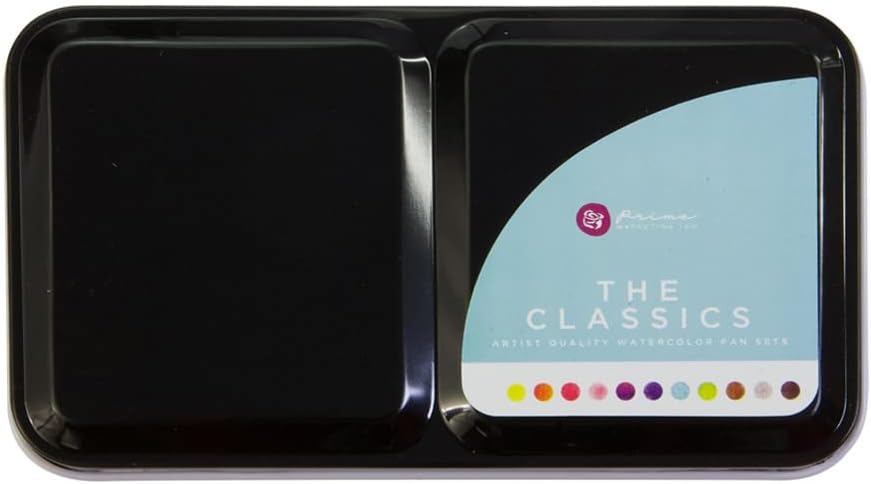
Check price on AmazonPrima’s Confections line — which includes the Classics tin, Pastel Dreams, and the Complexion palette — is designed for mixed-media and craft use first, fine-art use second. The packaging is appealing, the color selection in each tin is thoughtfully curated for its intended mood, and the paints reactivate without significant frustration. For journaling, card-making, or loose expressive work, they deliver genuine enjoyment at an accessible price.
The limits surface in layering. Artists who come to Prima from other watercolor lines describe the paints as behaving like student-grade on second and third washes: colors lift more than expected, edges don’t stay crisp, and glazing — applying a transparent wash over a dry layer to optically mix colors, a core watercolor technique — produces muddier results than the vibrant first-wash behavior suggests. That is not a flaw so much as a formula optimized for convenience and coverage rather than the transparency and controlled flow that traditional watercolor technique demands.
The Complexion tin is a legitimate exception within the line. Reviewers single it out for portraiture and figure work, largely because skin-tone mixing requires neutrals and muted hues where the formula’s heavier body becomes less of a liability. If portraiture is your reentry point, the Complexion palette earns its niche as a focused supplement.
Lightfastness is the significant gap across the Confections range. Jackson’s Art materials reviews consistently distinguish between paints with published ASTM lightfastness ratings and those without; Prima Confections falls into the latter category. Artwork Archive’s published guidance on lightfastness and archival standards for working artists is unambiguous on this point: if work will be sold, gifted, or displayed permanently, using pigments without published ratings is a risk accepted knowingly.
Best for: Journaling, mixed-media, and craft applications where layering depth is less important than immediate color pleasure and compact portability. Not recommended as a primary set for artists developing traditional transparent watercolor technique.
Prima
$29.95
In stock on Amazon
Check price on AmazonWinsor & Newton Cotman: The Researcher’s Set
Winsor
$52.68
In stock on Amazon
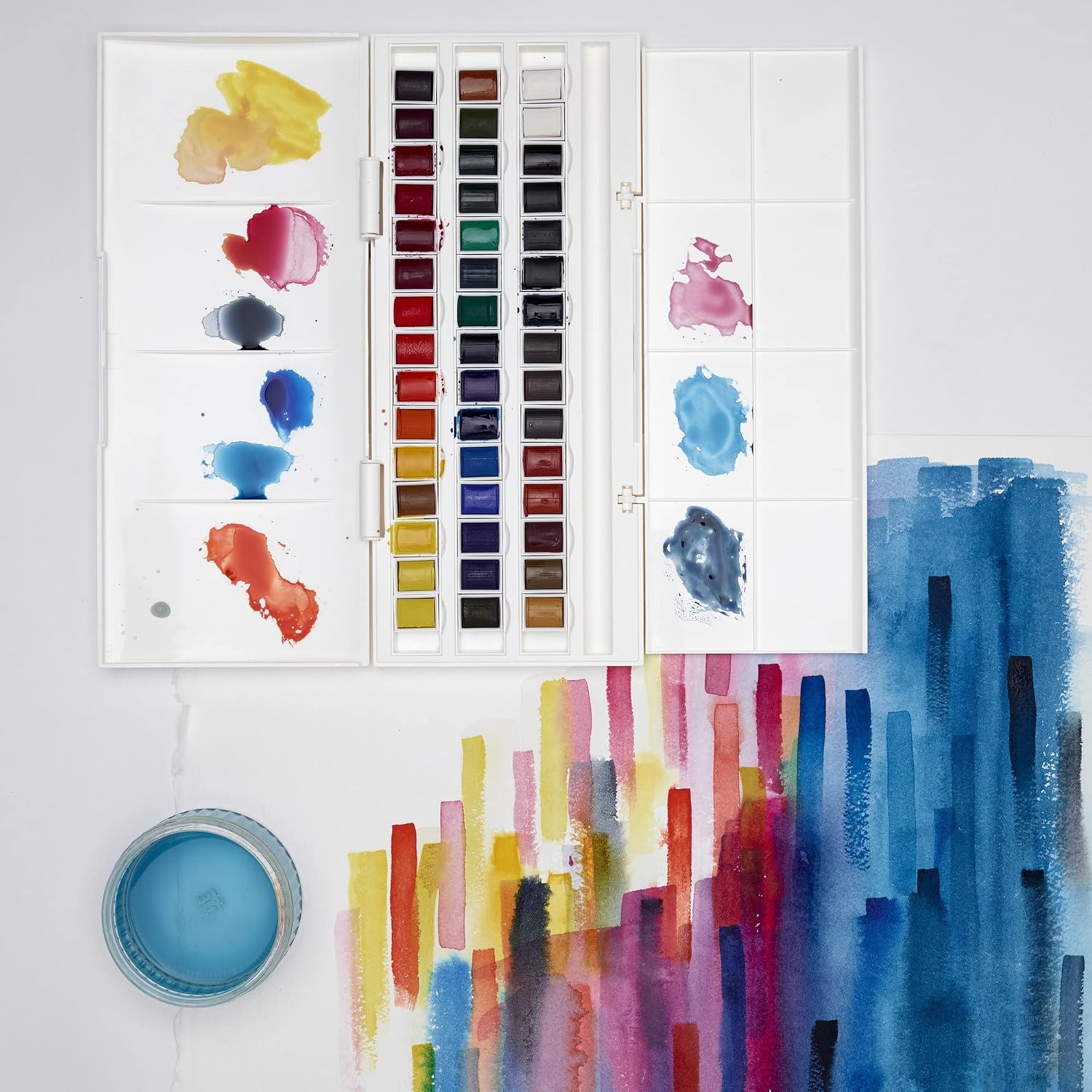
Check price on AmazonCotman buyers are a specific type. Multiple owners describe spending weeks reading before purchasing — the word “research” appears in their accounts far more than it does for either of the other two lines. What they are buying is institutional trust: Winsor & Newton has been publishing lightfastness data and pigment formulations continuously since the 1830s, and Cotman’s published product documentation lists the pigments used in each color alongside ASTM lightfastness ratings for each.
The 45-pan Studio Set includes duplicate pans — typically two each of the most-used colors like Ultramarine and Burnt Sienna. This reads as padding at first glance. The more useful interpretation: treat the duplicates as built-in expansion slots. Winsor & Newton sells individual Cotman half-pans separately, so a returning artist can replace one duplicate with a color that suits their actual subject matter — a Viridian, a Yellow Ochre, or a metallic for mixed-media work. That is not a workaround; it is the intended upgrade path.
Cotman’s formula behaves more like a classic transparent watercolor than Gansai Tambi does. It glazes cleanly, holds edges reasonably well on sized paper, and responds predictably to wet-into-wet technique — dropping wet paint into a wet wash to allow colors to bloom and merge. Jackson’s Art’s review of the Cotman line specifically notes its reliable performance in layered applications compared to craft-grade alternatives. The tradeoff is intensity: Cotman’s pigment concentration sits below Winsor & Newton’s Professional line and is noticeably less saturated than Gansai Tambi when applied straight from the pan. That is appropriate for artists working in traditional transparent washes; it is noticeable if bold, opaque-leaning results are the goal.
Best for: Methodical buyers who want published pigment data, rated lightfastness, and a customizable setup that supports technique development well past the intermediate stage.
Winsor
$52.68
In stock on Amazon
Check price on AmazonSurface Matters: Why Paper Changes Everything
All three sets will show their differences most dramatically on paper. Canson XL — the spiral-bound student pads that many returning artists reach for first — is a wood-pulp paper with sizing (a starch or gelatin coating that controls absorbency). It handles light washes acceptably but buckles under heavy water and tends to make all three brands behave less vibrantly than the manufacturer intends.
On cotton-rag paper such as Arches cold-press at 140 lb / 300 gsm, the picture changes substantially. Cotton fiber holds more water without distorting, allows longer working time for wet blending, and genuinely rewards the additional pigment load that Gansai Tambi and a loaded Cotman brush can deliver. Artists Network’s materials coverage describes the jump from wood-pulp to cotton paper as one of the highest-impact single upgrades available at any skill level — one that makes student-grade paint perform better and makes professional paint perform as intended.
The practical implication: if budget forces a choice between better paint and better paper, buy the better paper first. A modest pan set on Arches cold-press will outperform an expensive set on Canson XL in almost every measurable way.
Frequently Asked Questions
Is Kuretake Gansai Tambi worth the price over cheaper alternatives? Owners who have used budget alternatives describe Gansai Tambi’s pan size, pigment saturation, and reactivation consistency as meaningfully better. For a returning artist who wants to actually enjoy the experience, the Kuretake premium pays off quickly.
Are Prima Confections artist-grade or student-grade? Student-to-craft grade is the honest answer. The colors are vibrant in single-wash applications, but the formula does not support the layering and glazing that defines traditional watercolor technique. Treat them as a pleasure-to-use journaling set rather than a fine-art foundation.
What do the duplicate pans in the Cotman 45-pan set mean for the buyer? Built-in expansion slots. Winsor & Newton sells individual Cotman half-pans separately; replacing duplicates with colors suited to your subject matter is the intended upgrade path, not a workaround.
Can you rehydrate dried Gansai Tambi pans easily? Yes — this is one of the line’s most-praised characteristics. Owners consistently report that pans left unused for months reactivate quickly with a wet brush, without the cracking or crumbling that affects some dry-pan formulas.
Which set is best for travel and journaling? Kuretake Gansai Tambi for paint performance and labeling reliability. Prima Confections if you want the lightest tin and layering depth is not a priority. The Cotman 45-pan Studio Set is bulkier than either for pack-and-go use, though the smaller Cotman travel sets are a competitive option.
How much does paper quality actually matter? More than brand, according to consistent guidance from Artists Network and materials reviewers at Jackson’s Art. The difference between wood-pulp and cotton-rag paper is visible in every wash, with every brand tested here.
The Decision Frame
Kuretake Gansai Tambi 36 or 48 is the strongest starting point for most returning artists. The pan size, labeling, and reactivation behavior remove friction exactly where returning artists need it removed — in the first twenty minutes of every session.
Prima Confections Complexion palette earns a look as a supplementary tin if portraiture or skin-tone mixing is a specific focus, with the understanding that it is not a complete watercolor foundation.
Winsor & Newton Cotman 45-pan Studio Set rewards the buyer who arrived here after reading pigment specs. Swap the duplicate pans for colors that match your subject matter, add a pad of Arches cold-press, and you have a working studio setup that will support technique development through the intermediate stage and beyond.