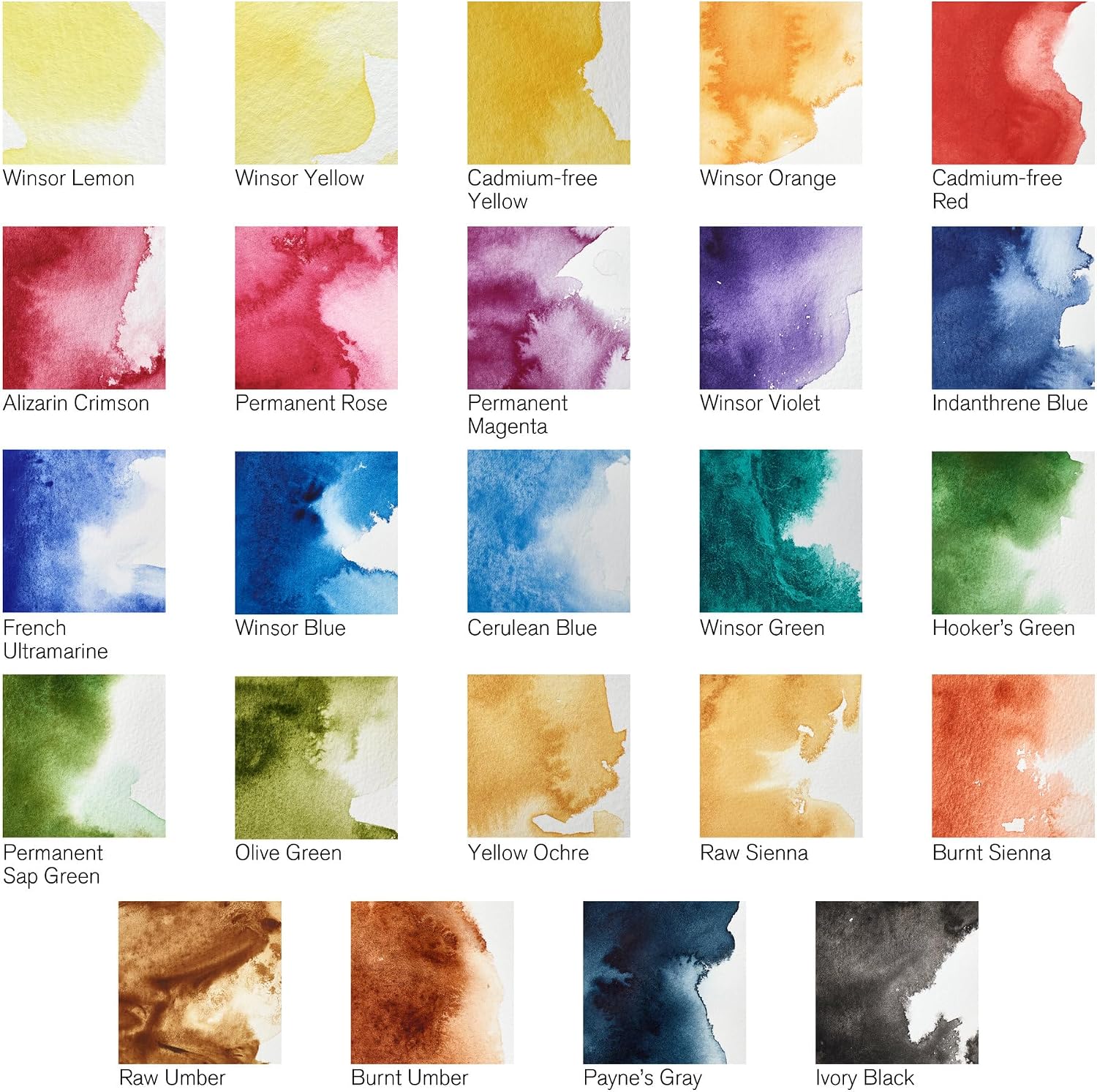
If you’ve ever sold a painting — or are getting close to that point — a quiet question eventually surfaces: what happens to this piece in five years? Lightfastness is the technical answer to that question. It describes how resistant a pigment is to fading when exposed to light over time. Some pigments hold their color for centuries under normal display conditions; others shift noticeably within a decade. For an artist selling work at any price point, that difference matters enormously — not just ethically, but commercially. A collector who notices fading has a legitimate complaint, and word travels fast in the communities where original art changes hands. This guide explains how lightfastness ratings work, which brands publish the most trustworthy data, and how to make smarter pigment choices without memorizing a chemistry textbook.
What Lightfastness Ratings Actually Mean (and Who Decides)
The most widely used standard in the US art materials market is ASTM D5067, published by ASTM International as a specification for artists’ watercolor paints. It assigns ratings on a five-point scale:
| Rating | Category | What it means in practice |
|---|---|---|
| I | Excellent | Negligible fading over 100+ years under museum conditions |
| II | Very Good | Minimal fading; acceptable for fine art |
| III | Fair | Noticeable change within 25–50 years; use with caution |
| IV | Poor | Significant fading possible within a decade |
| V | Very Poor | Not recommended for permanent work |
For artists selling work, the functional rule is simple: ASTM I or II only. ASTM III is the hard stop. Anything rated III, IV, or V belongs in sketch studies, color explorations, or reference swatches — not in work leaving your studio with a price tag.
The Blue Wool Scale, the older European standard still referenced by some manufacturers (particularly German and British brands), runs in the opposite direction: higher numbers equal better permanence, with ratings from 1 to 8. A Blue Wool rating of 6–8 is generally considered equivalent to ASTM I or II, per the detailed comparative analysis at handprint.com, which remains one of the most thorough independent references on watercolor pigments available.
A critical nuance: manufacturers test under controlled lab conditions — typically accelerated UV exposure using a xenon arc lamp — not under the varied conditions of real-world display. Real-world factors like UV-filtering glazing, humidity, and ambient light intensity all affect actual longevity. Published ratings are a reliable comparative floor, not an absolute guarantee.
Single-Pigment vs. Multi-Pigment Mixes: The Hidden Lightfastness Risk
Here’s where intermediate practitioners often lose ground: a paint labeled “Permanent Rose” or “Saffron” might earn an ASTM I rating as a whole, but that rating only reflects the batch’s overall behavior — not each individual pigment inside it. A multi-pigment mix can contain one fugitive (light-unstable) component that fades faster than the others, causing an unpredictable color shift rather than even fading. The result is a piece that doesn’t fade uniformly — it changes character.
This is why pigment codes matter. Every tube of quality watercolor will list the Color Index Names (CINs) on its label: codes like PB29 (Ultramarine Blue), PR254 (a highly lightfast red), or PY150 (a transparent, lightfast yellow). Single-pigment paints — those carrying only one CIN — are inherently more predictable. If that one pigment has an ASTM I rating, you know exactly what you’re committing to.
Artistsnetwork.com’s watercolor pigment guide notes that experienced painters frequently restructure their palettes around single-pigment primaries specifically because mixing behavior and fading behavior both become more predictable. The tradeoff is that pre-mixed convenience colors often look richer straight from the tube; you trade that convenience for archival confidence.
A few pigment codes worth knowing for archival work:
- PB29 (French Ultramarine) — ASTM I, beautiful granulation, widely available
- PB15:3 (Phthalo Blue, green shade) — ASTM I, staining, high tinting strength
- PR177 (Anthraquinone Red) — ASTM I or II depending on brand
- PY150 (Nickel Azo Yellow) — ASTM I, transparent, excellent for glazing
- PG7 (Phthalo Green) — ASTM I, very staining, use sparingly in mixes
- PV19 (Quinacridone Violet/Rose) — ASTM I in most brands; check label
Fugitives to avoid in sellable work: PR83 (Alizarin Crimson, traditional), many PR4 reds, and any lake pigment without a verified ASTM I or II rating.
Brand-by-Brand: Where the Data Is Honest and Where to Read Carefully
Not all manufacturers are equally transparent. Here’s how the major professional brands stack up on disclosure, based on published product information and independent reviews.
Daniel Smith Extra-Fine Watercolors publish ASTM ratings on every tube label and on their product information pages. Their 2025 pigment data shows the vast majority of their catalog at ASTM I or II, and they’re unusually forthcoming about which colors in their “PrimaTek” mineral range — paints made from semi-precious stone pigments — carry III ratings. That transparency earns trust. Daniel Smith’s line is also notable for single-pigment clarity: the CIN appears prominently on packaging. At $30–$60 per 15ml tube, the cost-per-use math favors buying a smaller set of well-chosen singles over a large set of convenience mixes.
Schmincke Horadam Aquarell uses the Blue Wool Scale and publishes detailed pigment data in their product catalog. Jacksonsart.com’s lightfastness explainer notes Schmincke as among the most rigorous European brands for permanence documentation. Their ”++++” star rating system maps to Blue Wool 7–8, roughly equivalent to ASTM I. The Horadam sets are formulated for high pigment load and minimal filler, which translates to strong tinting strength and reliable wash behavior.
Winsor & Newton Artists’ Watercolour uses their own “Permanence” rating (A through D, where A = Permanent and D = Fugitive) alongside ASTM designations. Their published product information sheets, updated in 2024, are detailed and accessible. A-rated colors are safe for work intended to sell. The W&N line includes several convenience mixes — notably in their earth and landscape ranges — where multi-pigment formulas are common. Reading the label rather than trusting the name is essential here.
Sennelier l’Aquarelle deserves a specific note: their honey-based binder produces famously luminous washes and excellent reactivation, but their permanence data has historically been less consistently displayed than Daniel Smith or Schmincke. Some colors in their range carry Blue Wool ratings of 5 or 6 (still acceptable) while a handful of traditional-recipe colors sit lower. For artists selling work, Sennelier rewards careful label-checking rather than brand-wide trust.
Old Holland Classic Watercolours sit at the premium tier of the market and publish pigment codes and lightfastness data, but their catalog skews toward traditional pigment formulas — including some historic pigments with more variable permanence. The payoff is exceptional color depth and unique handling; the tradeoff is that due diligence on individual colors is non-negotiable.
The Archival Paper Side of the Equation
Lightfast paint on unstable paper is only half-solved. Archival watercolor work requires cotton-rag, acid-free paper — specifically because wood-pulp paper yellows and degrades over time regardless of how lightfast your pigments are. Per the materials documentation from Arches (published by Canson Group), their cold-press cotton-rag paper is pH-neutral and sized for permanence, meeting standards expected of conservation-grade work.
By the numbers:
- Arches 140lb (300gsm) cold-press: 100% cotton, acid-free, internally sized — industry reference for archival watercolor
- Fabriano Artistico: 100% cotton, acid-free, available in hot/cold/rough press
- Strathmore 400 Series: wood-pulp content varies by line; not archival for sellable work
- Canson XL: wood-pulp, not rated archival — excellent for practice, not for pieces leaving your studio
The upgrade logic here mirrors pigments: Strathmore 400 and Canson XL pads are the right choice for studies and exploration. When work is intended for sale, Arches or Fabriano Artistico are the professional baseline. A single sheet of Arches 140lb costs roughly $2–$4 depending on format and supplier — a trivial fraction of what a sold piece earns.
Building Your Archival-First Palette: The Decision Framework
If you’re actively selling work or planning to within the next year, here’s the practical decision map:
If you’re restructuring your palette from scratch: Start with six to eight single-pigment Daniel Smith or Schmincke Horadam colors covering warm/cool primaries, a reliable neutral, and an earth. Confirm ASTM I or II on every tube before purchase. Ignore convenience colors until the core palette is solid.
If you’re auditing an existing palette: Pull every tube and look up the pigment code. Cross-reference with the lightfastness data at handprint.com — their pigment database is the most granular free resource available. Flag any ASTM III or unrated colors and retire them from work intended to sell.
If you’re pricing work and need to justify premium materials to buyers: Artworkarchive.com’s guide on pricing and protecting art value notes that archival material choices directly support price justification — collectors buying original work increasingly ask about longevity. “Painted on Arches with ASTM I-rated pigments throughout” is a legitimate and marketable claim.
If budget is a constraint: A 15ml tube of Daniel Smith Ultramarine Blue (PB29, ASTM I) costs roughly $14–$18 and lasts through many paintings. The cost-per-use math makes professional-grade single pigments competitive with student-grade paints once you account for tinting strength — you use less of a high-pigment-load professional paint to achieve the same intensity.
The clearest summary: paint sold to collectors deserves the same material integrity you’d want if the positions were reversed. Lightfastness ratings exist precisely to make that standard objective and verifiable. ASTM I, single-pigment where possible, cotton-rag paper — that’s the baseline. Every purchasing decision that moves toward that standard is an investment in your reputation as much as in your materials.
Sources referenced in this article: ASTM International, Standard Specification for Artists’ Watercolor Paints (ASTM D5067); handprint.com, “Watercolor Pigments: Lightfastness and Permanence”; jacksonsart.com, “Lightfastness in Watercolour Paints Explained”; artworkarchive.com, “How to Price Your Art and Protect Its Value”; artistsnetwork.com, “Understanding Watercolor Pigments”; Winsor & Newton Artists’ Watercolour Product Information Sheets (2024); Daniel Smith Watercolor Pigment Information Pages (2025).