If you have spent any time shopping for artist-grade acrylic paint, you have probably run into the phrase pigment load — the amount of actual color pigment packed into each tube relative to the filler, binder (the acrylic polymer that holds everything together), and extenders. Higher pigment load means more color per stroke, stronger tinting power, and paint that behaves more like you expect when you mix. It also usually means a higher price tag. Two brands dominate this conversation for painters moving out of student-grade territory: Liquitex Professional Heavy Body and Golden Heavy Body. Both are professional-grade acrylics, both come in thick, buttery formulas that hold brush marks and palette-knife texture, and both sit in the $10–$30-per-tube range depending on color and size. The honest question is not which one is “better” — it is which one fits your current studio practice, mixing habits, and budget math. This guide gives you the comparison framework to decide.
| EDITOR'S PICKLiquitex BASICS Acrylic Paint S… | Mid-tierWinsor & Newton Galeria Acrylic… | Budget pickWinsor & Newton Galeria Acrylic… | |
|---|---|---|---|
| Tube size | 22ml | 60ml | 60ml |
| Number of colors | 48 | 10 | 6 |
| Set size | 48 x 22ml | 10 x 60ml | 6 x 60ml |
| Series | BASICS | Galeria | Galeria |
| Total paint volume | 1056ml | 600ml | 360ml |
| Price | $61.85 | $34.07 | $22.90 |
| See on Amazon → | See on Amazon → | See on Amazon → |
What “Professional Grade” Actually Means for Acrylics
The student-to-professional upgrade in acrylics is not just marketing language. Student-grade paints — Liquitex Basics, Craft Smart, and similar lines — use lower concentrations of pigment and often rely on cheaper filler pigments or multi-pigment blends to hit price points. Professional-grade formulas use higher pigment concentration, better-quality pigments with verified lightfast ratings, and less filler. The result is paint that covers more evenly, mixes more predictably, and stays true to color over decades on the wall.
Both Liquitex Professional and Golden Heavy Body meet the core professional benchmarks:
- ASTM D4302 compliance — the industry standard for artist-grade acrylic paint quality, covering viscosity, lightfastness labeling, and film integrity
- Lightfastness ratings of I or II across most of their lines (I = excellent, II = very good, per ASTM D4303 testing)
- Single-pigment formulations across the majority of colors, which matters enormously for clean mixing
Per both brands’ published technical data sheets — the Liquitex Professional Heavy Body Acrylic Paint Technical Data Sheet (2024) and the Golden Artist Colors GOLDEN Heavy Body Acrylic Product Information Sheet (2024) — neither line uses titanium white or bulk filler pigments to pad out colors in ways that dull mixes. That baseline is shared. The differences live in the details.
Pigment Load, Viscosity, and Color Behavior: The Real Differences
Pigment concentration is where spec-sheet readers and forum painters spend most of their time, and for good reason. Handprint.com’s analysis of acrylic paint chemistry — published in the site’s long-running reference section on acrylic paints, pigment load, vehicle, and film formation — notes that pigment load varies significantly by color family even within a single brand. Cadmium-based pigments are naturally dense and opaque, while phthalo-based pigments are so powerful that you need very little to tint a mix. What matters practically is how each brand handles the low-density pigments: the quinacridones, the dioxazines, the earth tones.
Golden Heavy Body: Maximum Pigment Intensity
Golden Heavy Body is widely credited — including in the Jacksons Art Acrylic Paint Buyer’s Guide (2025) — with some of the highest pigment concentration available in a commercial acrylic line. The result is paint that painters and reviewers consistently describe as intensely saturated straight from the tube, with tinting strength that can feel almost aggressive for anyone used to lower-load formulas.
This is excellent for expressive painting, large-format work, and situations where you want color that holds its own when thinned significantly with medium or water. The trade-off: Golden’s formula is stiff, slow to move, and can feel resistant for fine detail or glazing without deliberate thinning. The pigment intensity rewards painters who have built real color-mixing intuition and can dial in proportions by feel.
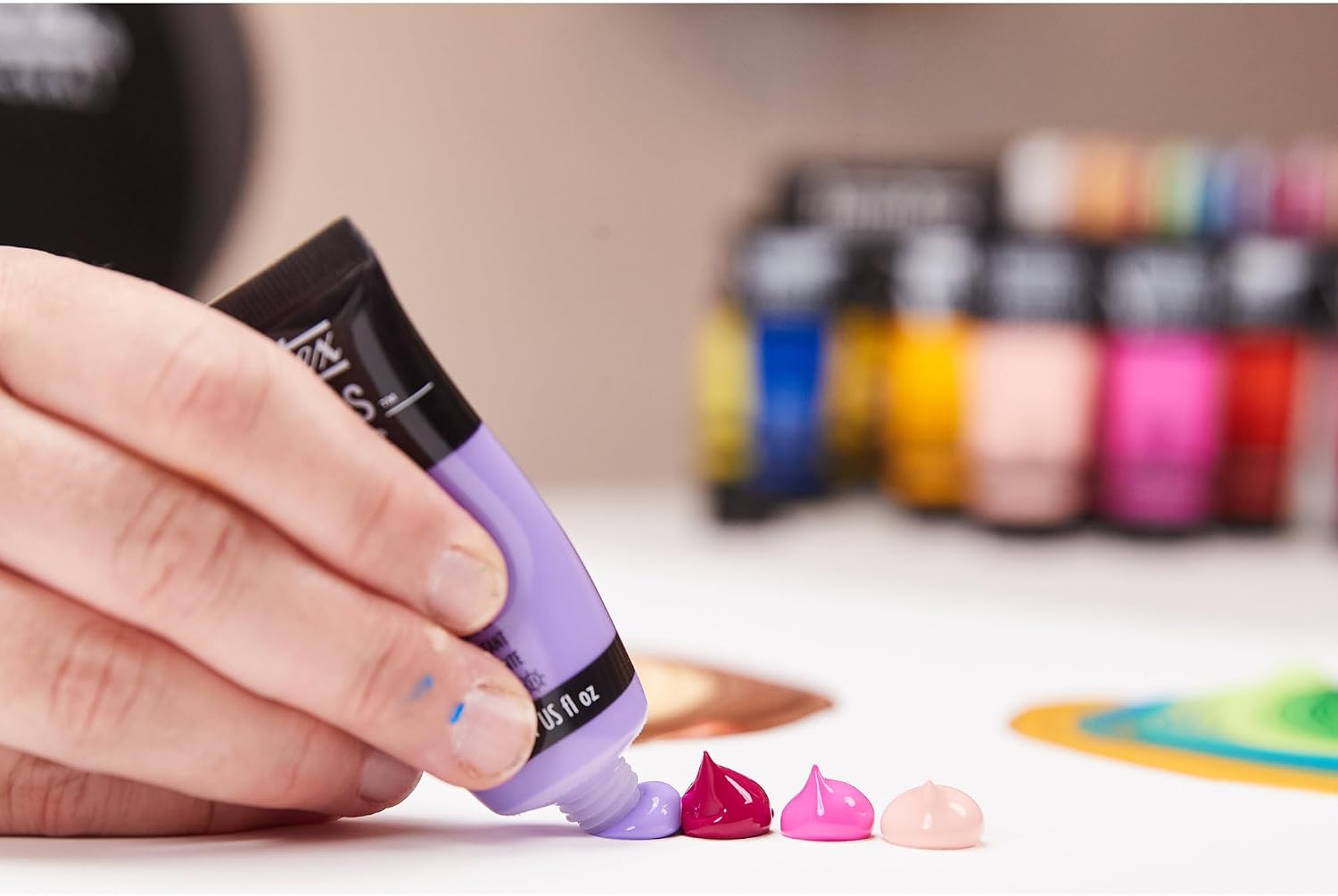
Liquitex
$61.85
In stock on Amazon
Check price on AmazonLiquitex Professional Heavy Body: Approachable Precision
Liquitex Professional Heavy Body sits at a slightly lower pigment concentration for some colors, but its formula is designed for a smoother, more flowing response straight from the tube. Fine Art Tips, in their overview of pigment concentration in artist-grade acrylics, notes that Liquitex’s binder-to-pigment balance gives it a more workable feel in the mid-range viscosity that many painters find easier to control for blending.
Artists Network, in their comparative review of professional acrylic paints (2024), consistently notes that Liquitex Professional mixes cleanly and predictably, making it a strong choice for painters who rely heavily on mixed color rather than tube color. The response curve from “add a tiny bit” to “this color is now dominant” is gentler than Golden’s, which painters working on portraits, atmospheric landscapes, or complex mixed tones often prefer.
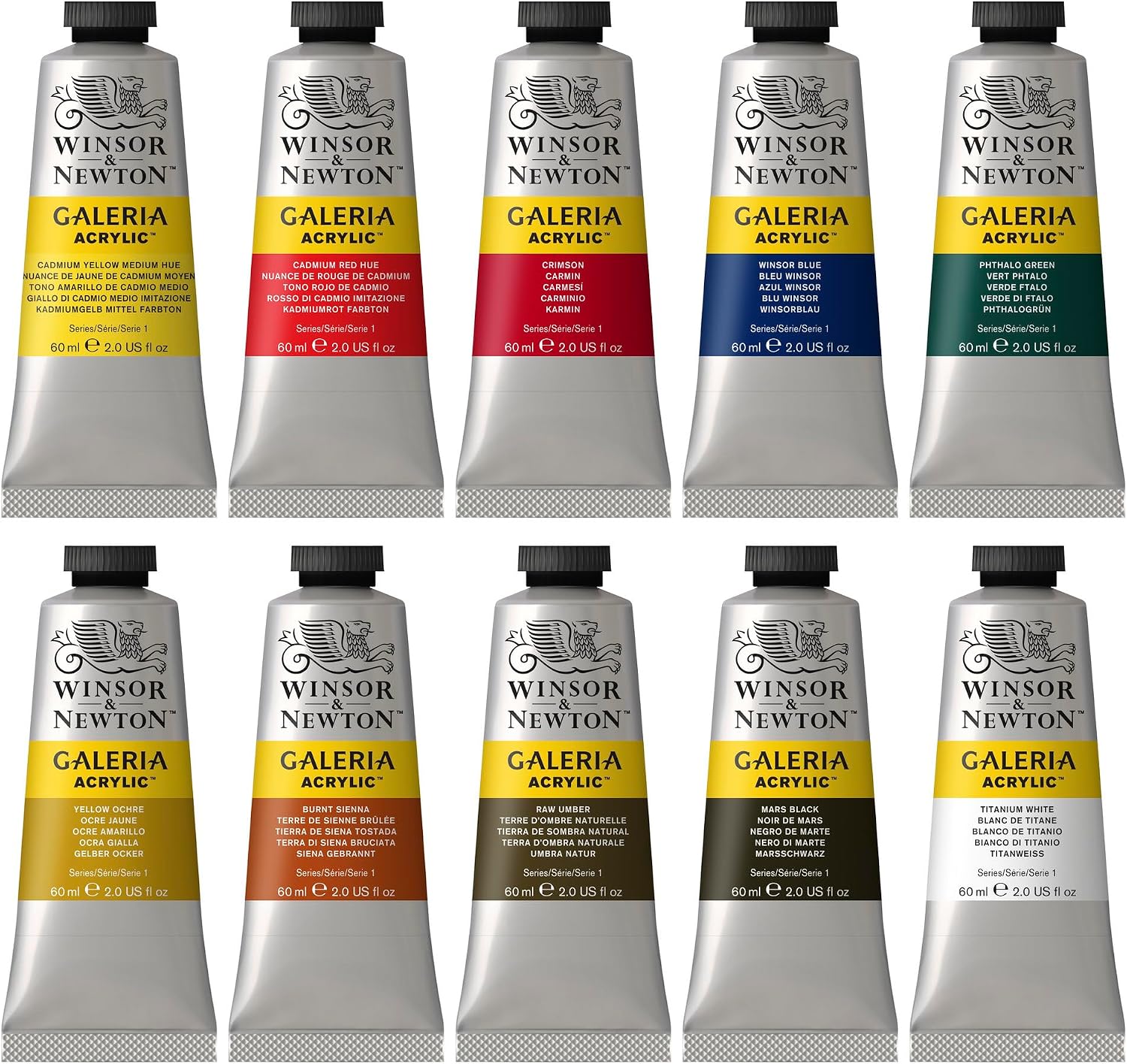
Winsor
$34.07
In stock on Amazon
Check price on AmazonPigment Codes: What to Check on Every Tube
Both brands publish pigment codes on every tube — this is non-negotiable at the professional level. A tube labeled “Phthalo Blue (Green Shade)” should show PB15:3 on the label. If you see two or three codes, you are buying a multi-pigment blend, which limits your control over what happens when that color meets another paint on your palette. Handprint.com’s pigment reference pages are the most thorough publicly available resource for cross-checking these codes against known pigment behavior before you buy.
Winsor
$34.07
In stock on Amazon
Check price on AmazonBy the Numbers: Price-Per-Milliliter Math
| Feature | Liquitex Professional Heavy Body | Golden Heavy Body |
|---|---|---|
| 2 fl oz (59 ml) mid-range color, approx. 2026 pricing | ~$12–$17 | ~$14–$22 |
| Cost per ml (mid-range) | ~$0.20–$0.29 | ~$0.24–$0.37 |
| Single-pigment coverage | ~85% of line | ~90%+ of line |
| ASTM lightfastness I or II | Yes, across most colors | Yes, across most colors |
| Unique color count | ~100+ | ~110+ |
Prices sourced from aggregated retail listings, May 2026. Exact pricing varies by retailer and color series.
The cost-per-ml math favors Liquitex in most direct comparisons at standard retail. But the gap narrows when you factor in tinting strength. If Golden’s higher pigment load means you use 20–30% less paint to achieve the same color saturation in a mix, the actual cost-per-use can equalize or even flip. This is the argument Golden loyalists make, and it is not wrong — it depends entirely on how you paint. Painters working at large scale with a controlled limited palette tend to find Golden’s cost math favorable. Painters who work smaller or who mix inconsistently often find Liquitex the better value in practice.
Mixing Behavior: Where the Decision Gets Practical
For painters who work from a limited palette and mix most of their colors, this section is the most consequential.
Golden’s intensity is a feature and a liability. Because the pigment concentration is high, a small amount of Golden’s Phthalo Green goes a very long way. Experienced mixers appreciate this — it means precise, repeatable mixes with less waste. Less experienced mixers sometimes find that a single extra brushstroke of a high-load color overwhelms a carefully constructed neutral. The learning curve is real, but it pays off in color accuracy over time. The Handprint.com analysis of acrylic paint pigment load consistently places Golden colors among the most powerful in terms of tinting strength per unit volume.
Liquitex Professional’s slightly more moderate concentration makes mixing more forgiving. The trade-off is that you may use slightly more paint to achieve full saturation. For commercial illustrators, portrait painters, or anyone who works with complex layered neutrals, that forgiveness is worth the small premium in volume used.
Open time — how long the paint stays workable before skinning over — is comparable between the two brands in standard formulations. Both dry significantly faster than oils. Neither brand offers a slow-dry formula in their standard heavy body line; that is a separate product category for both. If extended blending time is your priority, both brands sell dedicated slow-dry mediums that address this without requiring a change in your core paint.
Lightfastness and Archival Considerations for Artists Selling Work
If your work sells or will sell, lightfastness ratings are not optional reading. A painting that fades under gallery lighting within a decade is a professional and ethical problem.
Both Golden and Liquitex Professional publish lightfastness data per ASTM D4303, and both use the I/II rating system on labels. Per the published technical data sheets from both brands, the vast majority of colors in each line carry a Lightfastness I rating — meaning they are tested to show minimal color change under prolonged light exposure. A small number of colors in each line — particularly some fluorescents and a handful of organic pigment formulations — carry Lightfastness II ratings, which are still considered acceptable for fine art use but warrant a note in your records if you are selling work with archival guarantees.
The practical advice, per guidance from Artwork Archive on documenting materials for professional artists: always record the specific pigment code and lightfastness rating for paints used in work intended for sale. This protects you in conversations with collectors and galleries, and it is a practice that distinguishes working professionals from hobbyists regardless of which brand is on the palette.
The Upgrade Path Decision: If X, Then Y
Here is the clear decision frame based on where you are right now.
Moving Up from Student Grade: Stay in a Familiar Ecosystem
If you are upgrading from Liquitex Basics or another student-grade line, Liquitex Professional Heavy Body is the natural first step. The color names, tube sizes, and product logic are consistent with what you know. The pigment load is a genuine step up, the single-pigment formulations will immediately improve your mixing, and the price premium over student grade is real but not punishing. Start by replacing your most-used colors — your phthalo blue, your quinacridone magenta, your titanium white — with Liquitex Professional tubes and rebuild your palette one color at a time.
Winsor
$34.07
In stock on Amazon
Check price on AmazonWorking Large or Expressive: The Case for Golden
If you are working large, working expressively, or already mixing from a limited palette with confidence, Golden Heavy Body is worth both the price step up and the learning curve. The pigment intensity rewards painters who know what they want from a mix. Artists Network’s comparative review of professional acrylics notes that painters with years of experience on both lines consistently describe Golden’s saturation and tinting power as feeling like the higher-ceiling material, even against Liquitex Professional. The cost-per-use math also favors Golden at meaningful scale.
Liquitex
$61.85
In stock on Amazon
Check price on AmazonCommercial Illustrators and Mixed-Practice Painters
If you are a commercial illustrator who mixes acrylics with other media or picks up painting inconsistently between projects, Liquitex Professional is the more versatile choice. The slightly more forgiving mixing behavior and broad retail availability make it easier to work with after time away from the palette, with less wasted paint during the reorientation phase.
Winsor
$34.07
In stock on Amazon
Check price on AmazonThe Bottom Line
Liquitex Professional and Golden Heavy Body are the two clearest benchmarks in professional acrylics, and neither is a wrong answer. Liquitex Professional is the more approachable upgrade — slightly more forgiving in mixing, slightly lower cost per tube, and familiar to anyone who started in the Liquitex ecosystem. Golden Heavy Body is the higher-ceiling choice — more pigment intensity, stronger tinting power, and a formula that rewards painters who have built real color-mixing intuition.
Buy your primary palette in one brand and stick with it long enough to learn how it moves. The painters who get the most out of professional-grade paint are not the ones who have tried every brand — they are the ones who know one brand well enough to predict exactly what a mix will do before they touch the canvas.
Liquitex Professional Heavy Body
Golden Heavy Body Acrylics