If you’ve ever tried to paint fine linework or intricate illustration detail on a rough or textured watercolor paper, you already know the frustration: the brush skips across the grain, edges bleed unpredictably, and anything resembling a crisp line turns soft and vague. That’s where hot press watercolor paper comes in. “Hot press” refers to how the paper was finished — it was pressed through heated rollers during manufacturing, which flattens the surface fibers and produces a smooth, almost plate-like texture. Compare that to cold press (lightly textured, the most common student and general-purpose surface) or rough (heavily toothy, great for expressive brushwork). For illustrators, botanical artists, cartographers, and anyone who needs clean edges and fine detail, hot press is the professional default.
This guide compares three papers that consistently come up at the intermediate-to-professional level: Fabriano Artistico Extra White Hot Press, Arches Watercolor Hot Press, and Strathmore 500 Series Hot Press. You’ll get a clear breakdown of surface behavior, cost math, and a decision rule at the end so you can spend confidently — not experimentally.
| EDITOR'S PICKArches Watercolor Block | Mid-tierFabriano Studio Watercolor Pad | Budget pickStrathmore 140-305 500 Series R… | |
|---|---|---|---|
| Sheet size | 12"×16" | 9"×12" | 5"×7" |
| Sheets | — | 50 | 25 |
| Weight | — | 140 lb | 140 lb |
| Format | Block | Pad | Ready Cut |
| Surface | Hot Press | Hot-Press | Hot Press |
| Price | $59.66 | $27.48 | $16.06 |
| See on Amazon → | See on Amazon → | See on Amazon → |
What Makes Hot Press Behavior Different (and Why It’s Tricky)
Hot press sounds like the easy surface — smooth equals predictable, right? In practice, it’s the opposite. Because there’s no tooth to hold pigment in place, wet paint sits on the surface longer before absorbing, which means blooms, backruns, and flow effects happen faster and are harder to control. That same quality also makes glazing cleaner and detail work sharper once you understand the timing.
The key variables to understand before you commit to a paper:
Sizing — the gelatin or synthetic coating applied to paper fibers — controls how quickly water soaks in. Heavily sized paper gives you more working time, allowing manipulation before the paint sinks. Lightly sized paper drinks water fast, which can frustrate detail work but rewards loose, luminous washes. According to Handprint.com’s reference resource on watercolor supports (titled Watercolor Supports: Hot Press Papers), sizing is arguably the single biggest factor in how a hot press surface behaves, and it varies significantly between brands even at the same weight.
Weight (gsm) affects how much the sheet buckles when wet. For hot press, 300gsm (140lb) is the practical minimum for anything beyond small studies; 640gsm (300lb) is nearly bulletproof but commands a serious price premium.
Cotton vs. wood pulp content determines archival life. Cotton-rag paper is acid-free at the fiber level and resists yellowing over decades — it’s the archival standard for work you intend to sell or exhibit. Wood pulp papers, even if buffered to a neutral pH, may yellow over time, particularly under UV exposure.
The Three Papers, Honestly Assessed
The comparisons below are organized as H3 subsections, each terminated with a tier marker so the comparison structure is explicit. All three papers are 100% cotton, meaning all three qualify as professional-grade archival surfaces — what separates them is surface behavior, price, and best use case.
Fabriano Artistico Extra White Hot Press
Fabriano’s Artistico line is 100% cotton, internally and externally sized, and available in a natural white and an extra white variant — the brighter optical white is preferred by illustrators working with high-contrast linework or botanical detail. The hot press surface has a reputation in the illustration community for being slightly more receptive than Arches, meaning paint moves and settles a bit more readily. Some artists prefer this quality for loose ink-and-wash work; others find it less forgiving for tight technical illustration.
According to the Jackson’s Art Blog guide titled A Guide to Watercolor Paper, Fabriano Artistico offers a particularly smooth, almost silky surface that handles both wet-on-wet and fine-line work with good lifting characteristics — meaning you can pick up wet paint cleanly with a damp brush to correct or lighten areas. The Jackson’s Art Blog resource also notes that the Fabriano sizing allows slightly longer working windows, which makes it more forgiving for artists transitioning up to hot press from cold press surfaces.
Fabriano’s own technical documentation for the Artistico Extra White line specifies internal sizing at the fiber level combined with external surface sizing, a combination that accounts for its distinctive feel compared to single-sized alternatives.
Best for: Ink-and-wash illustration, mixed media (ink, gouache, and watercolor together), botanical work where smooth color transitions and fine line must coexist. Also the most versatile of the three for combined media workflows.
Watch for: Certain granulating pigments — such as heavily mineralic Daniel Smith colors — may granulate less dramatically on Fabriano than on the harder Arches surface. If granulation texture is part of your visual language, test on both before committing.
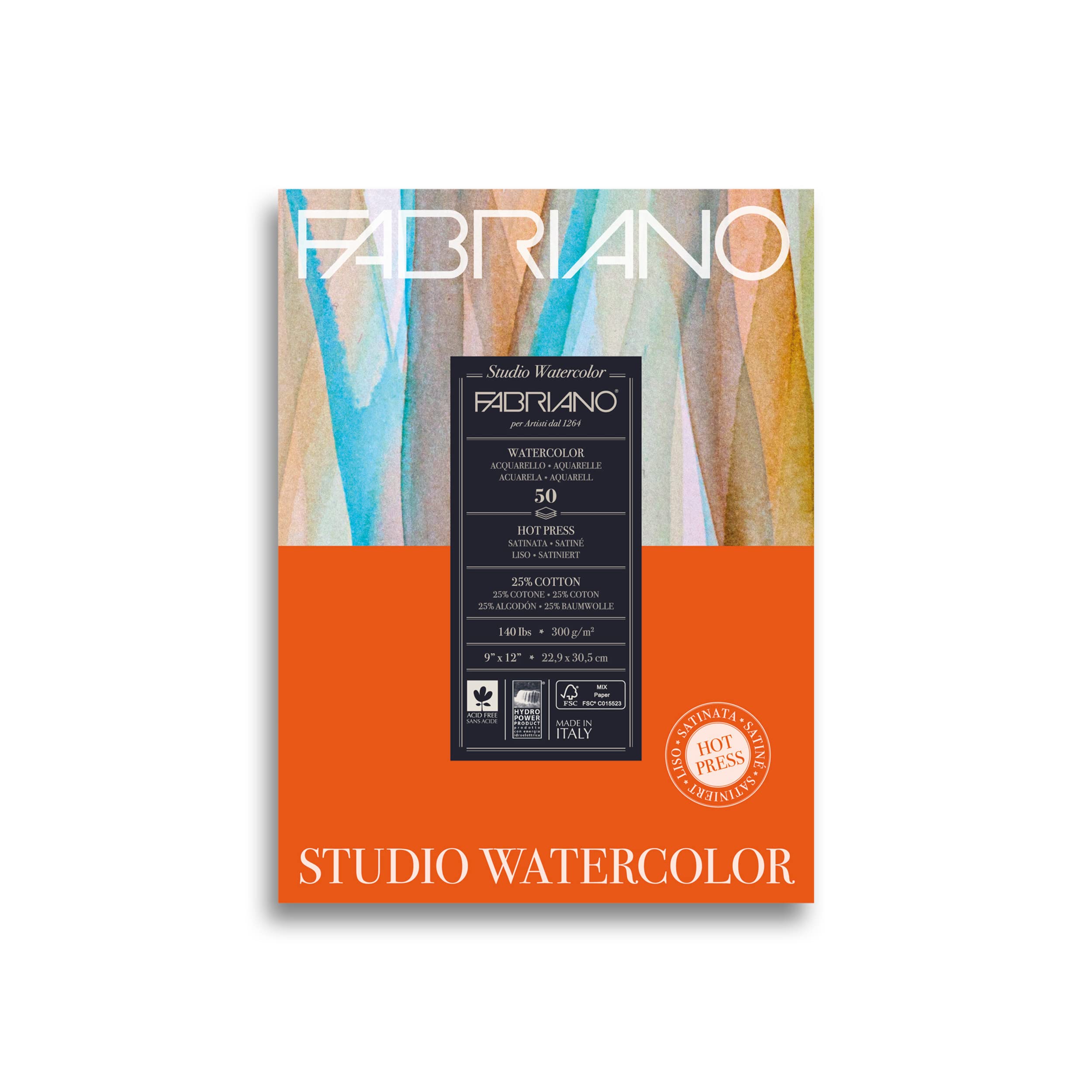
Fabriano
$27.48
In stock on Amazon
Check price on AmazonArches Watercolor Hot Press
Arches is the benchmark. It has been mold-made at the Arches mill in France for centuries, and its 100% cotton, gelatin-sized hot press sheet is what most professional watercolor illustration references assume you’re using when they describe technique. According to Arches’ own product specification documentation for their watercolor blocks and sheets, the paper uses external gelatin surface sizing applied during manufacturing, producing a surface that sits noticeably harder and more resistant than Fabriano.
Paint sits on top of Arches longer before sinking in, giving you more working time per brushstroke. Handprint.com’s Watercolor Supports: Hot Press Papers analysis identifies Arches hot press as among the most heavily externally sized cotton papers commercially available, which produces both its signature long working time and its well-documented resistance to overworking. You can scrub at Arches and it won’t pill or fiber-lift the way softer papers do. That durability comes with a tradeoff: the hard surface means mistakes are harder to hide (lifting is less complete than on Fabriano), and the learning curve for timing wet applications is steeper.
Artists Network, in its practitioner resource Choosing Watercolor Paper, notes that Arches is the go-to recommendation for technical illustration, architectural rendering in watercolor, and fine-art work intended for sale or exhibition — largely because its archival credentials and surface consistency are trusted by galleries and collectors. Sheet-to-sheet and batch-to-batch consistency is noticeably tighter than competitors, which matters when you’re working in a series or producing client-facing illustration work.
Best for: Finished illustration work for sale or exhibition. Precise edges, controlled washes, work in series. The professional standard that galleries and collectors recognize.
Watch for: Price is meaningfully higher per sheet than Fabriano or Strathmore. The hard surface also punishes impatience — if you’re still developing your timing on hot press, expect a steeper adaptation period than with either alternative.
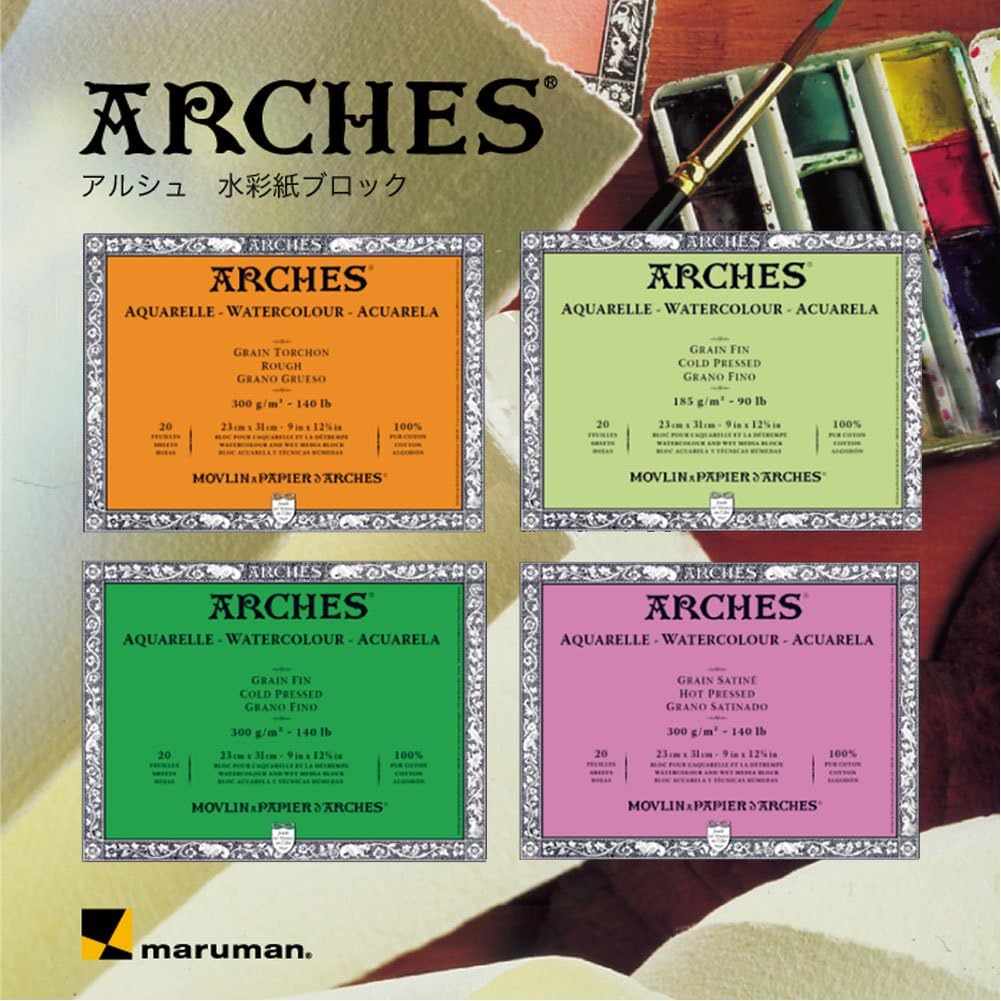
Arches
$59.66
In stock on Amazon
Check price on AmazonStrathmore 500 Series Hot Press
Strathmore’s 500 Series sits at a different position in the market. It’s 100% cotton and acid-free, making it the most accessible price point of the three without dropping to wood-pulp student territory. The surface is smooth but noticeably softer than Arches — closer to Fabriano in feel, with a sizing formula that practitioners in the illustration community describe as more immediately absorbent than either alternative.
Strathmore’s 500 Series product information specifies the paper as designed for mixed-media and illustration workflows where transparency and fine detail coexist. It handles ink cleanly, accepts gouache without excessive sinking, and is frequently recommended by educators as the bridge paper for students moving from cold press to hot press. The softer, more absorbent surface rewards confident mark-making and suits workflows that involve significant iteration — studies, client approvals, and multiple rounds of revision before a final piece.
Artists Network’s Choosing Watercolor Paper resource and the Jackson’s Art Blog’s watercolor paper guide both position mid-range 100% cotton papers like the Strathmore 500 as appropriate professional-grade options for process work and volume illustration, distinct from the exhibition-focused positioning of Arches.
Best for: Commercial illustration at volume, developing hot press technique, managing budget on iterative client work. Full cotton, archival quality, genuinely professional — the right tool when you’re burning through paper at speed.
Watch for: Reviewers consistently note the 500 Series surface doesn’t have the same ceiling as Arches or Fabriano for final finished work. Excellent for process and professional-grade studies, but for a showpiece or gallery-bound painting, most professionals still reach for Arches or Fabriano sheets.
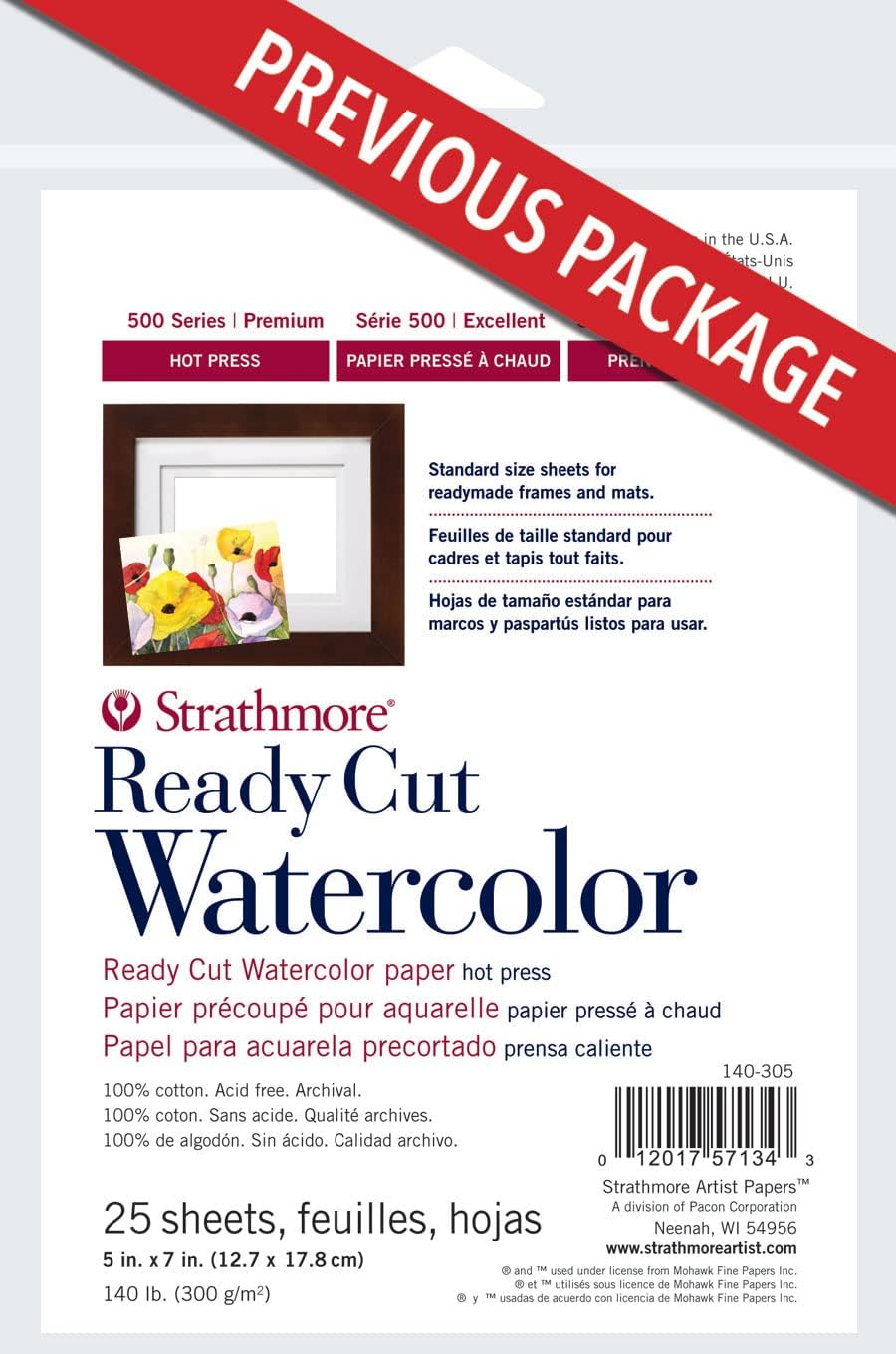
Strathmore
$16.06
In stock on Amazon
Check price on AmazonBy the Numbers
| Paper | Cotton | Weight Options | Surface Sizing | Approx. Price Per Sheet (22×30 in) |
|---|---|---|---|---|
| Arches Hot Press | 100% cotton | 140lb, 300lb | Heavy external gelatin | ~$8–$12 |
| Fabriano Artistico XW HP | 100% cotton | 140lb, 300lb | Internal + external | ~$6–$9 |
| Strathmore 500 Series HP | 100% cotton | 140lb | Lighter internal sizing | ~$3–$5 (pad pricing) |
Prices reflect 2026 market retail averages across major art supply retailers. Per-sheet cost from pads or blocks will vary by retailer and format.
The Cost-Per-Use Math
If you’re working on finished illustrations you intend to sell at $200–$800 per piece, the difference between an $8 Arches sheet and a $4 Strathmore sheet is noise — it’s less than 2% of your sale price. The better question is whether the surface is limiting your output quality or your process confidence.
If you’re doing illustration work at volume — editorial work, licensing drafts, commission sketches — and your process involves significant iteration before a final, the math flips. You don’t need Arches for every round of revision. Many working illustrators run a hybrid workflow: Strathmore 500 for studies and client approvals, Arches or Fabriano for the final piece that leaves the studio. Artists Network’s practitioner coverage of professional illustration workflows documents this split approach as a common practice among working commercial illustrators.
The one move to avoid regardless of budget: buying rough or cold press paper and assuming you can get hot-press-style detail out of it with fine enough brushes. Surface texture is structural, not cosmetic — it’s in the fiber, not the finish. If detail and clean edges are core to your visual voice, hot press isn’t a luxury upgrade. It’s the correct tool.
The Decision Rule
If you’re producing finished illustration work for sale or exhibition and you need the industry-standard surface: Arches Hot Press. The archival credentials, surface consistency, and professional reputation justify the price premium. This is the benchmark everything else is measured against.
If you do ink-and-wash, mixed media, or botanical illustration and want a slightly more forgiving surface with excellent cotton quality: Fabriano Artistico Extra White Hot Press. More receptive than Arches, a beautiful surface for combined media, and easier to adapt to if you’re transitioning from cold press.
If you’re illustrating at volume, developing your hot press technique, or managing budget on commercial work: Strathmore 500 Series Hot Press. Full cotton, acid-free, genuinely professional — just not the final-destination surface that Arches or Fabriano are for exhibition-grade work.
All three papers are available individually and in blocks or pads at major art suppliers. Start with a single sheet or small pad before committing to a full block — hot press behavior varies enough that what suits one artist’s workflow can frustrate another’s. One sheet of Arches and one of Fabriano side by side is the fastest way to know which surface your hand agrees with.