If you’ve started taking acrylics seriously — past the starter-kit stage, looking at real studio materials — you’ll run into two names almost immediately: Golden Heavy Body and Liquitex Professional Heavy Body. Both are what the industry calls professional-grade heavy body acrylics, meaning the paint is thick enough to hold brushstrokes and palette-knife peaks straight out of the tube, like soft butter, rather than flowing or spreading on its own. That texture difference matters enormously for how the paint blends, layers, and dries. This article is for the painter who’s ready to buy a first set of one or the other — and wants to know, before spending $60–$120, which brand actually fits how they work. We’ll compare texture philosophy, blending behavior, tube size realities, pigment quality, and cost — and give you a clear decision rule at the end.
| EDITOR'S PICKLiquitex Professional Heavy Bod… | Mid-tierWinsor & Newton Galeria Acrylic… | Budget pickGOLDEN Heavy Body Acrylics | |
|---|---|---|---|
| Tube Count | 6 | 10 | 6 |
| Tube Size | 59 ml (2 oz) | 60 ml (2 oz) | — |
| Paint Type | Heavy Body | Galeria Acrylic | Heavy Body |
| Set Name | Classic Set | Tube Paint Set | Intro Set |
| Brand Line | Professional | Galeria | Professional |
| Volume Total | 354 ml (12 oz) | 600 ml (20 oz) | — |
| Price | $47.31 | $34.07 | $25.96 |
| See on Amazon → | See on Amazon → | See on Amazon → |
The Texture Gap Is Real — and It’s a Design Choice, Not a Quality Difference
This is where most first-comparison articles shortchange you: Golden and Liquitex aren’t simply two versions of the same thing at different prices. They have genuinely different textural philosophies, and that difference shapes every painting session.
Golden Heavy Body: Stiff, Committed, Mark-Preserving
Golden Heavy Body is famously stiff. According to product documentation at Jackson’s Art (jacksonsart.com, Golden Heavy Body Acrylics product listing), the consistency is dense and buttery, engineered to retain every mark — impasto ridges, palette knife strokes, even individual bristle tracks. Painters who work with heavy texture, layering, or sculptural surfaces gravitate toward Golden partly because the paint doesn’t want to move once it’s placed. Artists Network’s guide “Choosing the Right Acrylic Paint” notes that Golden’s pigment-to-binder ratio is among the highest in the professional tier, which contributes to that stiffness and to the paint’s reputation for color depth after drying.
The stiffness is a feature, not a flaw — but only if your work calls for it. Impasto painters, palette knife workers, and anyone building surface relief will find Golden’s body cooperates with their intent. For painters who need edges to stay exactly where they land, Golden delivers that reliability in a way softer-bodied paints cannot.
Liquitex
$47.31
In stock on Amazon
Check price on AmazonLiquitex Professional Heavy Body: Smooth, Workable, Transition-Friendly
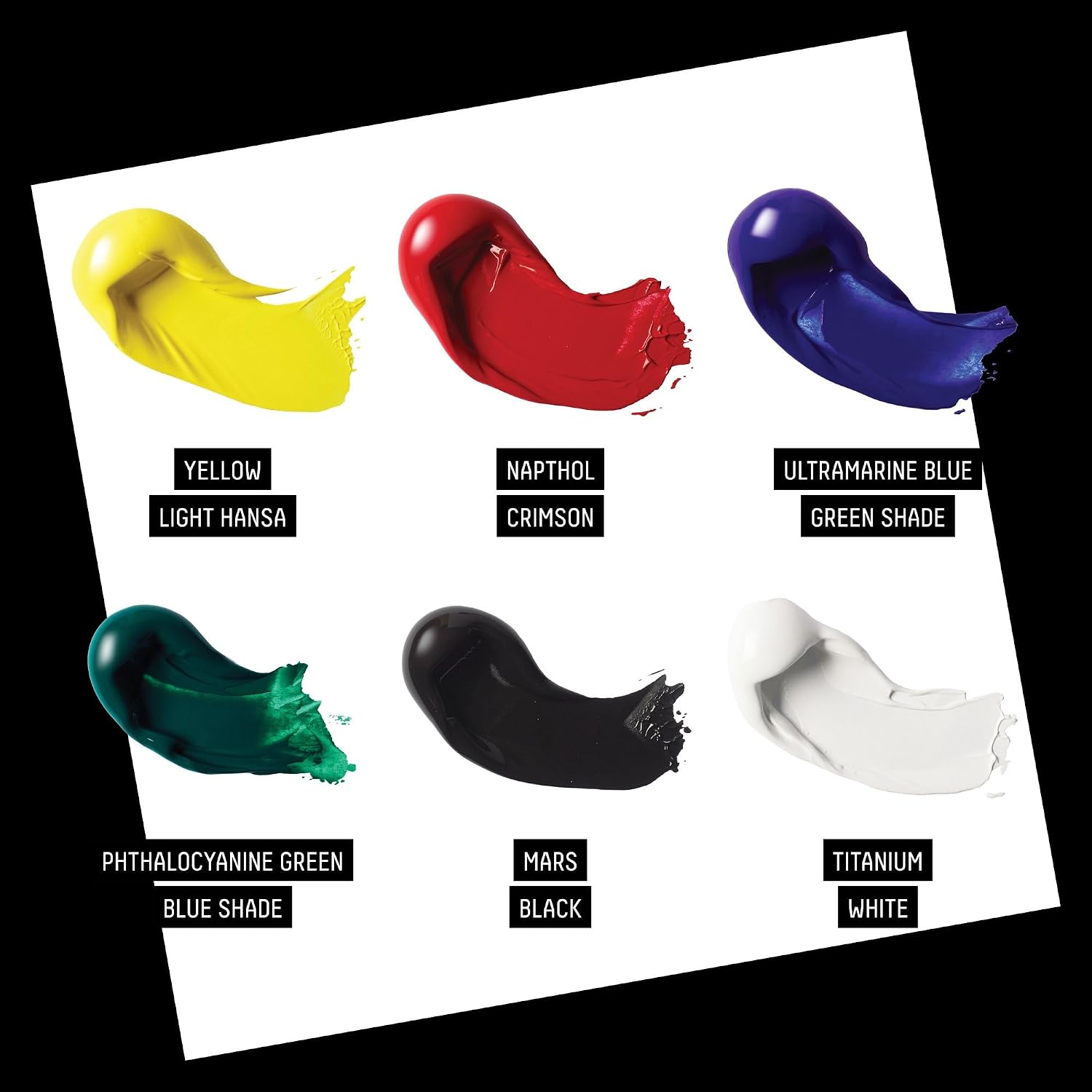
Liquitex Professional Heavy Body sits in a different spot on the firmness spectrum. It’s still a genuine heavy body — it holds peaks and is distinctly thicker than any student-grade acrylic — but independent reviewers and Jackson’s Art product notes consistently describe it as smoother and more cooperative during blending. Liquitex Professional stays workable slightly longer and transitions between colors on canvas without the drag or tearing that stiffer paints can create when you’re softening an edge.
This isn’t a flaw in Golden; it’s a difference in intent. Golden is built for marks that stay. Liquitex Professional is built for marks that move. For canvas painters focused on gradient transitions, glazed layers, or blended color fields, Liquitex’s texture works with the brush rather than against it. Fine Art Tips’ acrylic mediums and body consistency guide (finearttips.com) affirms that moderate-body professional acrylics tend to outperform ultra-stiff formulas in wet-into-wet blending, precisely because they don’t skin over at the leading edge of a stroke as quickly.
Winsor
$34.07
In stock on Amazon
Check price on AmazonWinsor & Newton Galeria: The Honest Middle Ground
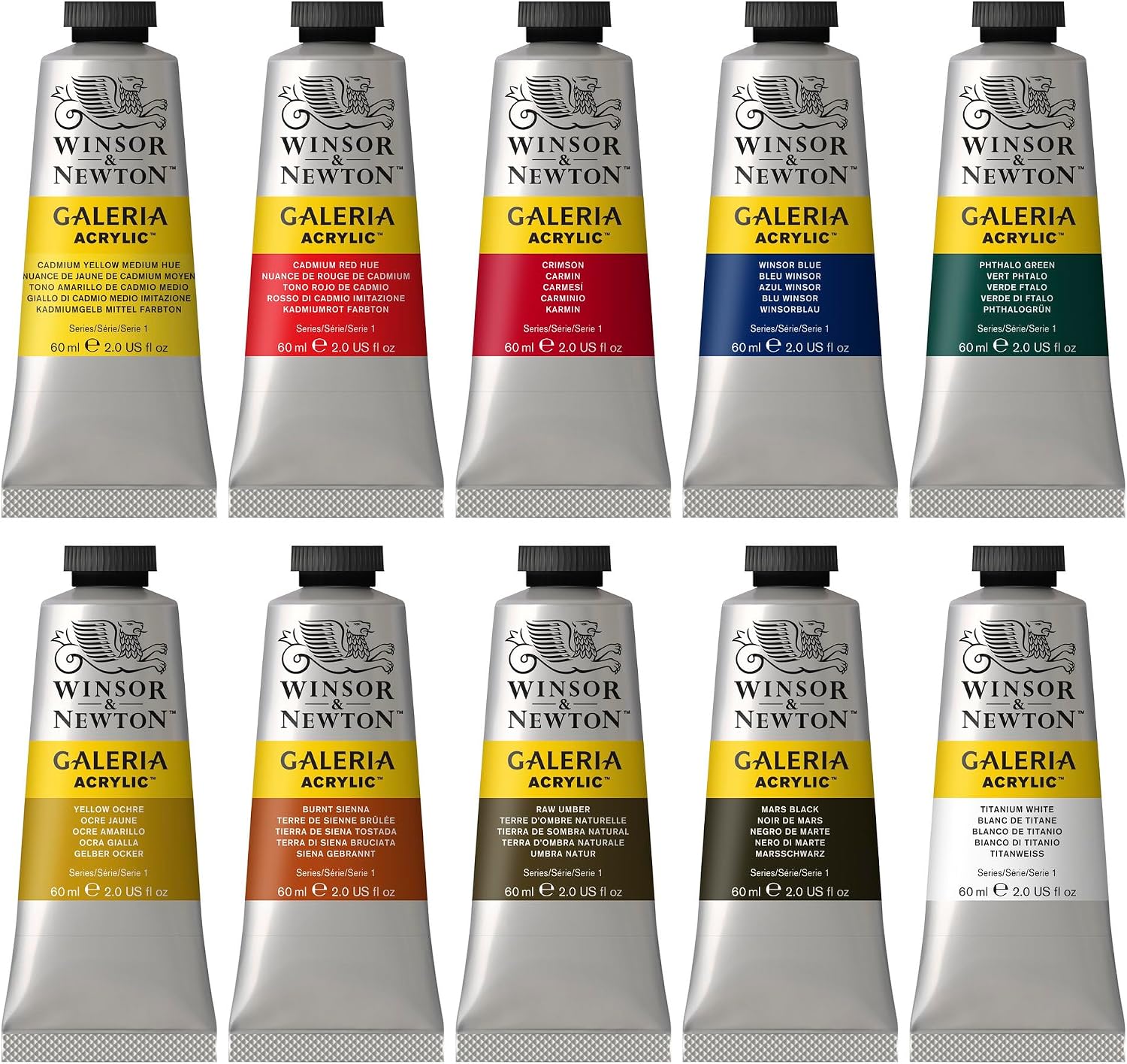
Galeria appears frequently in this conversation because many painters cite its slower drying time as a reason they haven’t felt the need to upgrade. That’s a legitimate reason to stay. Galeria is positioned above student-grade acrylic with a workable pigment load and a longer open time that many painters find more forgiving than Golden or Liquitex Professional, which are known to skin over quickly in dry or warm studio conditions.
Where Galeria shows its limits: pigment concentration is lower than Golden or Liquitex Professional, which affects mixing depth and layering richness. Fewer single-pigment options are available across the line, meaning more potential for muddiness in complex mixes. The slower dry time is a genuine advantage for direct blending — but it also extends the wait between glazing layers. Artists Network’s acrylic comparison guidance positions Galeria in a legitimate middle tier: above student paint, but with real performance limits in layering-intensive or large-canvas work.
GOLDEN
$25.96
In stock on Amazon
Check price on AmazonWhat the Intro Sets Actually Deliver (and the Tube Size Reality)
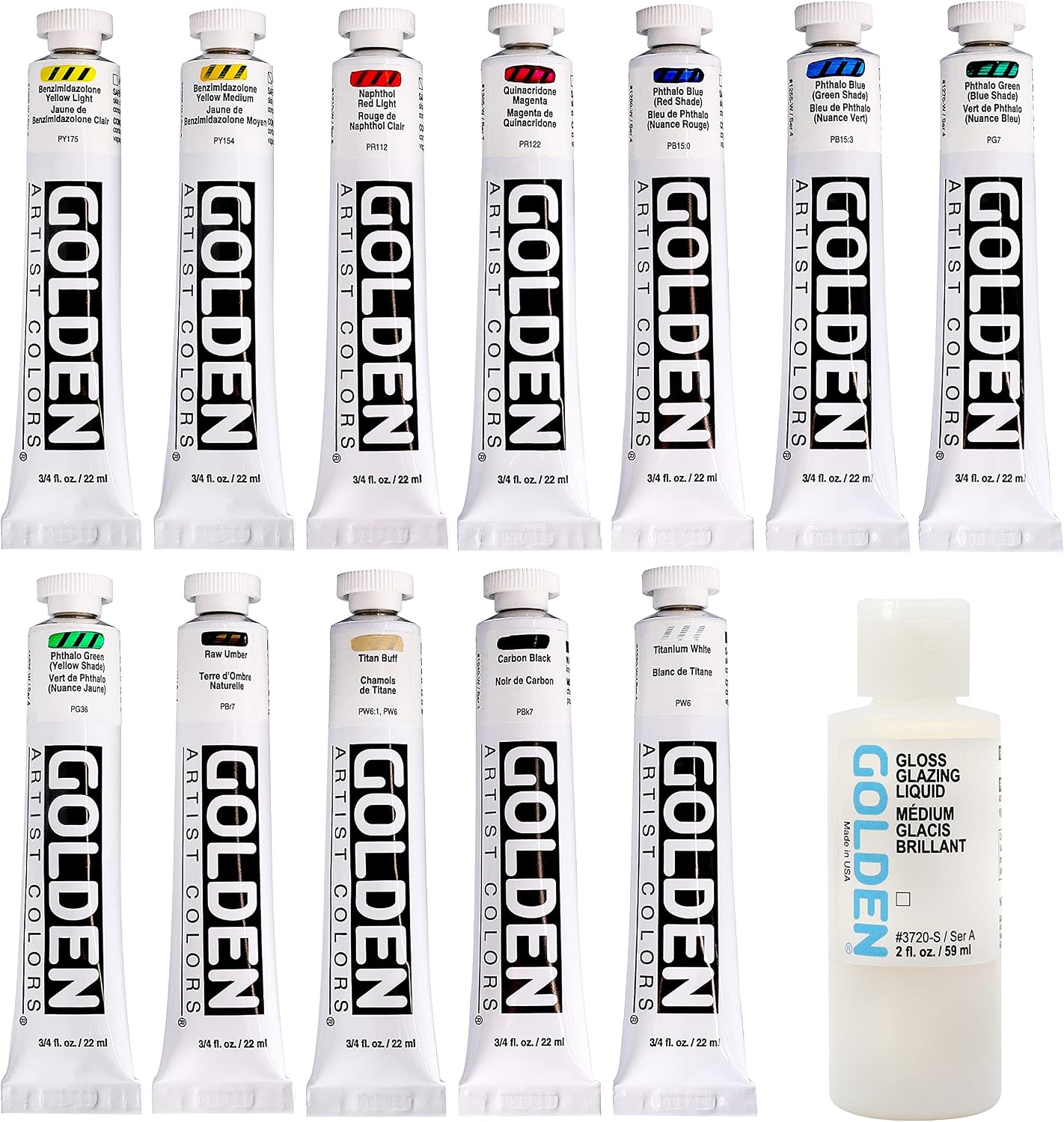
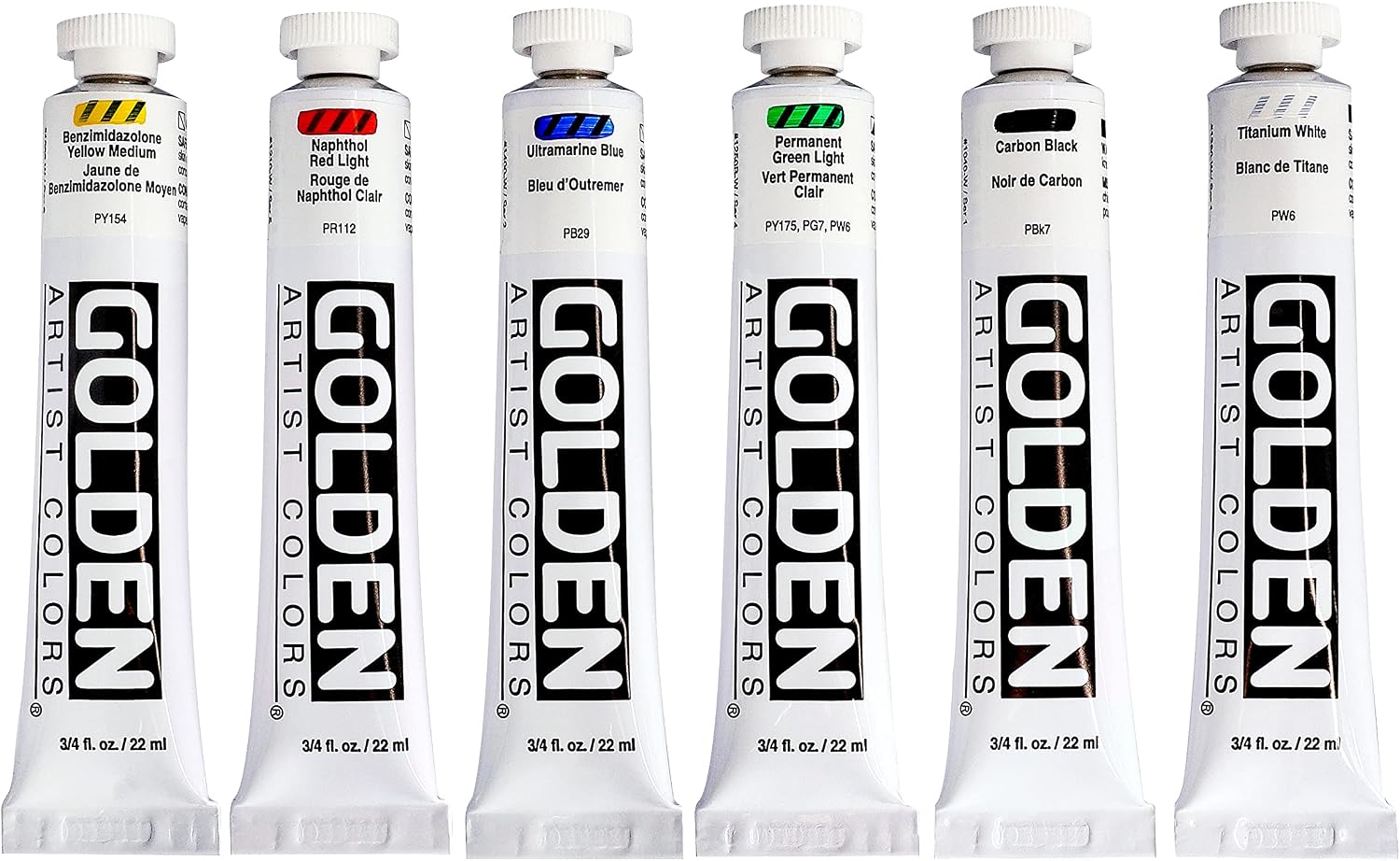
When you buy a Golden Heavy Body introductory or mixing set, you’re typically getting six 22ml tubes. Reviewers note this consistently and without prompting: the tubes feel small. Not shockingly small — 22ml is a known professional tube format — but notably smaller than the 59ml tubes Liquitex sells in its standard sets. This matters for how you should frame the purchase before spending the money.
At 22ml per tube, a Golden intro set is genuinely a trial vehicle, not a long-term value proposition. Jackson’s Art product documentation (jacksonsart.com, Golden Heavy Body Acrylics range) confirms that Golden’s smaller tube format allows painters to evaluate a color’s behavior before committing to the full 59ml or 148ml sizes. If you go in expecting a studio supply that’ll last six months of regular work, you may be disappointed. If you go in expecting a serious material audition — a way to feel Golden’s body, test its opacity and pigment saturation, and decide whether the larger investment is warranted — the intro set delivers exactly that.
Liquitex Professional Heavy Body standard sets typically come in 59ml tubes, which changes the math considerably.
| Format | Volume | Approx. paint per session | Estimated moderate-canvas sessions |
|---|---|---|---|
| Golden Heavy Body intro tube | 22ml | ~2–3ml per color | 7–10 sessions |
| Liquitex Professional Heavy Body | 59ml | ~2–3ml per color | 20–28 sessions |
| Winsor & Newton Galeria | 60ml | ~3ml per color | 18–25 sessions |
Estimates based on moderate coverage of a standard 12×16″ canvas. Heavy impasto use reduces these figures significantly.
Fine Art Tips’ body consistency guide notes that high pigment-load paints often require less volume per square inch to achieve equivalent coverage — which partially offsets Golden’s smaller tube volume in practice. But it only partially offsets it. If budget efficiency over time is your priority, Liquitex Professional’s 59ml standard size gives you more working sessions per dollar at similar quality.
Pigment Quality, Transparency, and the Single-Pigment Advantage
Both Golden and Liquitex Professional use professional-grade pigments with published pigment codes — which is exactly what you want when buying serious materials. Pigment codes (PB29 for ultramarine blue, PR254 for a warm red, and so on) tell you what’s actually inside the tube, rather than relying on marketing color names that vary between brands and mean nothing about mixing behavior.
Bruce MacEvoy’s pigment reference at Handprint.com (handprint.com, “Watercolor Pigments” and acrylic pigment sections) is the definitive public resource for cross-referencing how specific pigments behave — their transparency rating, granulation tendency, tinting strength, and lightfastness class. Before buying any professional acrylic, cross-referencing the pigment codes against Handprint.com is a useful step that most beginners skip and most intermediate painters eventually adopt.
Liquitex Professional Heavy Body has earned a strong reputation for transparency in glazing-oriented pigments. For painters who build work through glazed layers — applying thin, transparent color over dried paint to shift hue or value without covering it — the paint’s moderate binder content keeps pigment particles more visibly suspended rather than buried in opacity. Artists Network’s acrylic guide notes that Liquitex Professional’s glazing behavior is one of the properties that most clearly distinguishes it from student-grade lines in the same manufacturer’s catalog.
Golden Heavy Body is known for exceptional opacity in pigments where opacity is the goal — colors like Titanium White and Cadmium Yellow Medium hold their coverage even in thin applications. Jackson’s Art’s Golden documentation (jacksonsart.com, Golden Heavy Body pigment information) notes that certain Golden colors use single pigments with exceptionally high tinting strength, which shows up clearly when mixing: a small amount of Golden color shifts a mix significantly, and mixes tend to stay clean rather than going gray or brown.
For painters focused on color theory practice and palette discipline, Golden’s 12-color and 6-color mixing sets have earned consistent praise for producing strong, clean mixing results from a limited palette — which is precisely what a well-curated single-pigment set is designed to do. Artists Network’s guide to limited-palette acrylics highlights this as a pedagogical advantage: learning to arrive at any color from a small, known set of single-pigment paints is a skill that compounds indefinitely.
Frequently Asked Questions
Are the Golden Heavy Body intro set tubes large enough to actually evaluate the paint?
Yes — but frame the purchase correctly. At 22ml per tube, you’ll get enough paint across 7–10 moderate working sessions to genuinely understand how Golden handles, mixes, and dries. What you won’t get is a long-term studio supply. Buy the intro set as an audition; budget for 59ml or 148ml tubes once you know which colors earn a permanent palette spot.
What is the practical difference between Golden and Liquitex Heavy Body for canvas blending?
Golden’s stiffer body means brushstrokes commit faster — edges stay where you put them, which is ideal for impasto and deliberate mark-making but less forgiving when softening gradients. Liquitex Professional stays cooperative slightly longer and transitions more smoothly between colors, which painters consistently describe as better suited to blended or layered canvas work.
Is Winsor & Newton Galeria close enough to heavy body that I don’t need to upgrade?
For direct painting at moderate complexity, Galeria is genuinely capable — and its longer open time is a real advantage many painters value. The gap opens when you need deep pigment saturation for layering, want clean single-pigment mixes, or are producing work for sale where lightfastness documentation matters professionally.
Why does Liquitex Professional cost more than Liquitex BASICS — what do I actually get?
Higher pigment concentration (richer mixes, deeper coverage, less paint used per session), more single-pigment formulations with published pigment codes, and fully documented lightfastness ratings. Jackson’s Art product comparisons (jacksonsart.com, Liquitex range overview) indicate that the pigment load gap between BASICS and Professional is measurable in mixing depth and transparency behavior — it is not a marginal difference.
How many paintings can I realistically get from a 59ml Liquitex Professional tube?
For a standard 12×16″ canvas worked in moderate layers, expect roughly 20–28 working sessions per color — more if you’re glazing or working thin, fewer if you’re applying heavy impasto or covering large grounds. The cost-per-session math makes the Professional tubes competitive with student-line tubes once you account for how much less paint you need to achieve equivalent saturation.
Should I start with a 6-color mixing set or a 12-color set when trying professional acrylics for the first time?
For understanding paint behavior and mixing logic, a 6-color limited palette — two warm and two cool primaries plus white and black, ideally all single-pigment — will teach you more than a 12-color set where half the tubes are pre-mixed convenience colors. The 12-color set makes sense when you’re past that stage and building a working studio palette you already understand.
The Decision Rule
Golden Heavy Body is the right starting point if your work involves surface texture, impasto, palette-knife marks, or any technique where you need paint to stay exactly where you place it. Buy the intro set first to confirm the body suits you; invest in larger tubes once you know which colors earn a permanent spot.
Liquitex Professional Heavy Body is the right starting point if you’re a canvas painter focused on blending, glazing, or layered color transitions. The 59ml standard tubes give you enough volume to properly evaluate the brand across multiple sessions, and the smoother body will work with you rather than against softening edges.
Winsor & Newton Galeria remains a legitimate choice if your work is primarily direct and single-layer, and you value the longer open time above deeper pigment saturation. Upgrade when you hit the ceiling — when mixes go muddy, when glazes feel opaque, or when you need to document lightfastness for sold work.
Both Golden and Liquitex Professional are honest, serious professional materials. The difference isn’t quality — it’s philosophy. Golden rewards deliberate, committed mark-making. Liquitex Professional rewards fluency and transition. The first six tubes will tell you which one matches the painter you’re becoming.