If you’ve been painting for a year or two and your studio shelf is starting to look like a brand experiment, you’re probably asking the same question a lot of intermediate painters ask: is there actually a meaningful difference between the mid-priced acrylics, or am I just paying for packaging? Acrylic paint — at its simplest — is pigment suspended in a polymer binder. The ratio of pigment to binder, and the quality of those raw materials, is what separates a student-grade tube from a professional one. This article compares three paints that live in the interesting middle ground: Winsor & Newton Galeria, Liquitex BASICS, and Liquitex Heavy Body. By the end, you’ll have a clear picture of what each one is actually built for — and a simple decision rule for choosing.
| EDITOR'S PICKLiquitex BASICS Acrylic Paint S… | Mid-tierWinsor & Newton Galeria Acrylic… | Budget pickWinsor & Newton Galeria Acrylic… | |
|---|---|---|---|
| Tube count | 48 | 10 | 6 |
| Size per tube | 22ml | 60ml | 60ml |
| Total volume | 1056ml | 600ml | 360ml |
| Series | BASICS | Galeria | Galeria |
| Color count | 48 | — | — |
| Price | $61.85 | $34.07 | $22.90 |
| See on Amazon → | See on Amazon → | See on Amazon → |
What You’re Actually Comparing: Grade, Body, and Pigment Load
Before the head-to-head, it helps to understand what the labels mean.
Galeria is Winsor & Newton’s student-to-intermediate line — positioned as a step below their Professional Acrylics. It uses a mix of single-pigment and multi-pigment formulations depending on the color, and carries a medium-to-heavy body consistency. According to Winsor & Newton’s official Galeria technical documentation, the line uses the same lightfastness testing standards as their professional range, and most colors achieve a rating of “Excellent” or “Very Good” on the Blue Wool scale.
Liquitex BASICS is explicitly a student-grade line — Liquitex states this clearly in their own product documentation. It is formulated with lower pigment loads and more filler, which is what lets the brand sell a large tube set at a price that makes professional painters wince and budget-conscious painters cheer. The consistency is soft and smooth, closer to a soft-body acrylic than a heavy body.
Liquitex Heavy Body is the brand’s flagship professional-grade acrylic. It has a thick, butter-like consistency designed to hold brushstrokes and palette-knife marks. Pigment loads are substantially higher than either of the other two options here. According to Liquitex’s official Heavy Body product documentation, this line uses 100% acrylic polymer emulsion binders and undergoes ASTM D5098 testing for artist-grade acrylics — the same standard applied across professional lines from other major manufacturers.
Grade and Consistency at a Glance
| Feature | Galeria | Liquitex BASICS | Liquitex Heavy Body |
|---|---|---|---|
| Grade | Student-Intermediate | Student | Professional |
| Consistency | Medium-Heavy | Soft | Heavy |
| ASTM Rating | Not ASTM-certified | Not ASTM-certified | ASTM D5098 |
| Pigment load | Moderate | Lower | High |
| Typical price per 200ml | ~$12–16 | ~$7–10 | ~$18–26 |
Where Each Paint Actually Shines
Galeria: The Smooth Blender for Representational Work
Galeria has earned a clear reputation among painters doing detailed, realistic work — particularly portraiture and animal subjects. The absence of visible brushstrokes is a consistently noted feature, and that’s not accidental. Galeria’s medium consistency and relatively forgiving open time — the window before the paint becomes unworkable — make it well-suited to smooth transitions, layered fur textures, and graduated skin tones where you want the paint to blend without a fight.
Jackson’s Art Supplies, in their published guide to acrylic paint grades and consistency on jacksonsart.com, notes that student-to-intermediate lines occupy a real and useful space for painters who need volume without sacrificing workability — particularly in techniques where the paint is thinned or layered rather than applied thickly. That tracks with how Galeria performs in practice: it covers well when thinned, and it doesn’t dry as fast as some professional-grade heavy bodies, giving blenders more time to work.
The pigment story is nuanced. Galeria’s color range includes solid single-pigment options — Burnt Sienna (PR101), Ultramarine Blue (PB29), and several earth tones perform well in layering. But some of the more complex hues use multi-pigment mixes, which matters for color mixing: multi-pigment paints introduce more variables when you’re combining colors on the palette, and results can be muddier than a comparable single-pigment combination. Handprint.com, in their technical analysis of acrylic lightfastness and pigment quality, notes that single-pigment paints are almost always more reliable mixing partners, especially in glazing and layering workflows. Using Galeria’s single-pigment colors as your core palette and reserving the multi-pigment mixes for convenience mixing is a practical way to work around this.
Best for: Representational painters — portraiture, wildlife, fine detail on medium to large canvases — who want cooperative blending behavior without stepping up to full professional prices.
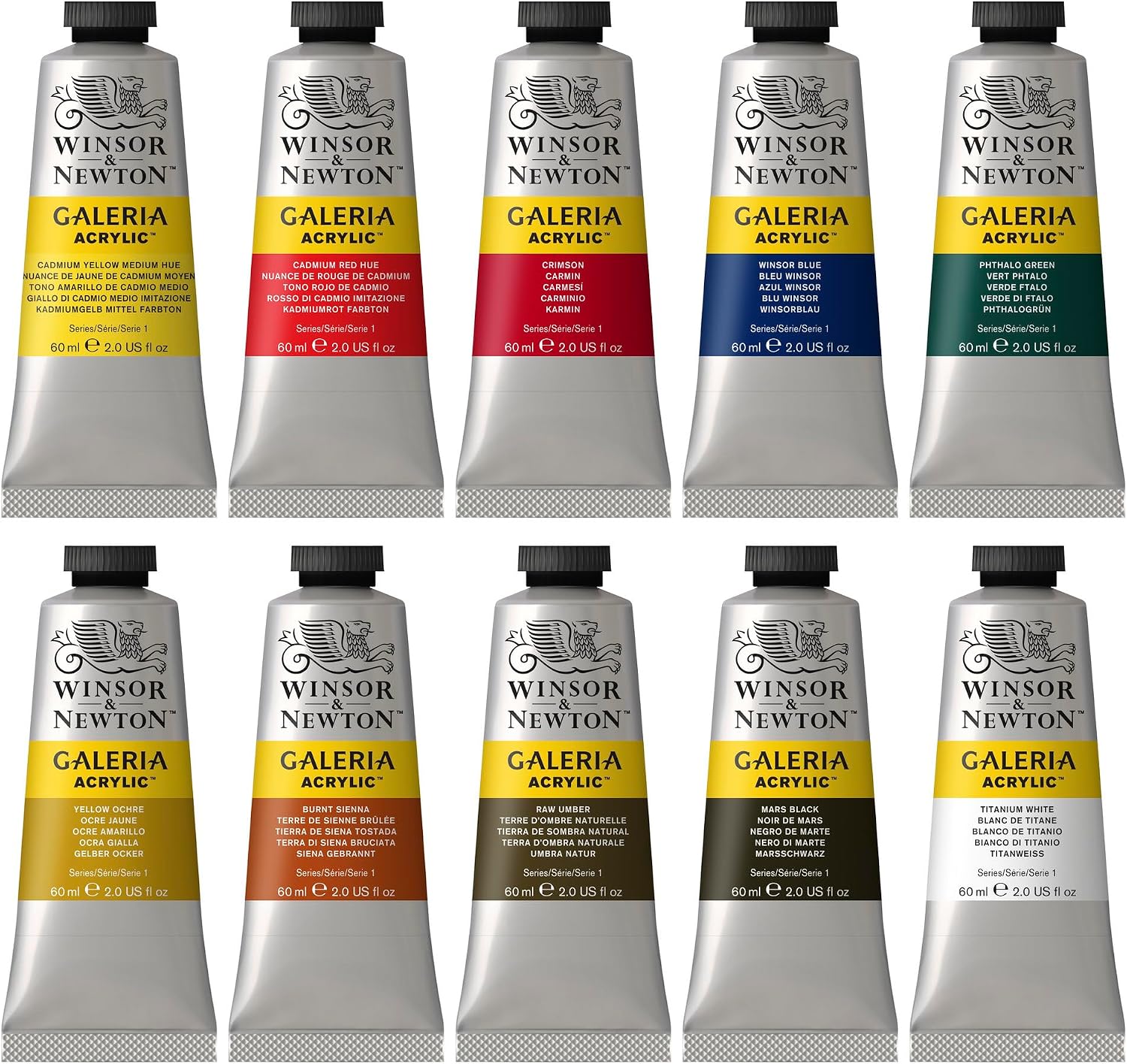
Winsor
$34.07
In stock on Amazon
Check price on AmazonLiquitex BASICS: The Underestimated Workhorse
BASICS gets unfairly dismissed. A significant portion of the negative feedback, when examined closely, traces back to technique problems rather than product failures — over-thinning without a medium, applying too thin a layer on an absorbent or unprimed surface, or expecting heavy-body coverage from a soft-body formulation. If you’re thinning BASICS with plain water past roughly 30% and applying it to bare canvas, you’re outside the paint’s design parameters. That’s a user error, not a product defect.
Within its parameters, BASICS does real work. Artists Network, in their published coverage of acrylic paint grades on artistsnetwork.com, has noted that student-grade paints frequently outperform expectations in small-format work, where reduced body consistency actually assists fine-line control. That finding aligns with what BASICS users in the card-altering and miniature-painting communities have established through extended practice. When your substrate is small — a 2.5 × 3.5 inch surface, for example — your paint consumption is low, pigment saturation per layer matters less than color accuracy and fine motor control, and BASICS handles both adequately.
If you’re using BASICS on large canvases and expecting vibrant color in one or two coats, you’ll be frustrated. If you’re using it for underpaintings, small-format illustration, or high-volume study work where you’re burning through paint quickly, it earns its place. The key is deploying it correctly: always use a proper acrylic medium if you need to dilute beyond a light wash, and prime your surfaces before you paint.
Best for: High-volume small-format work — illustration, card altering, miniature painting, practice studies — where economy matters and application scale suits the paint’s softer body.
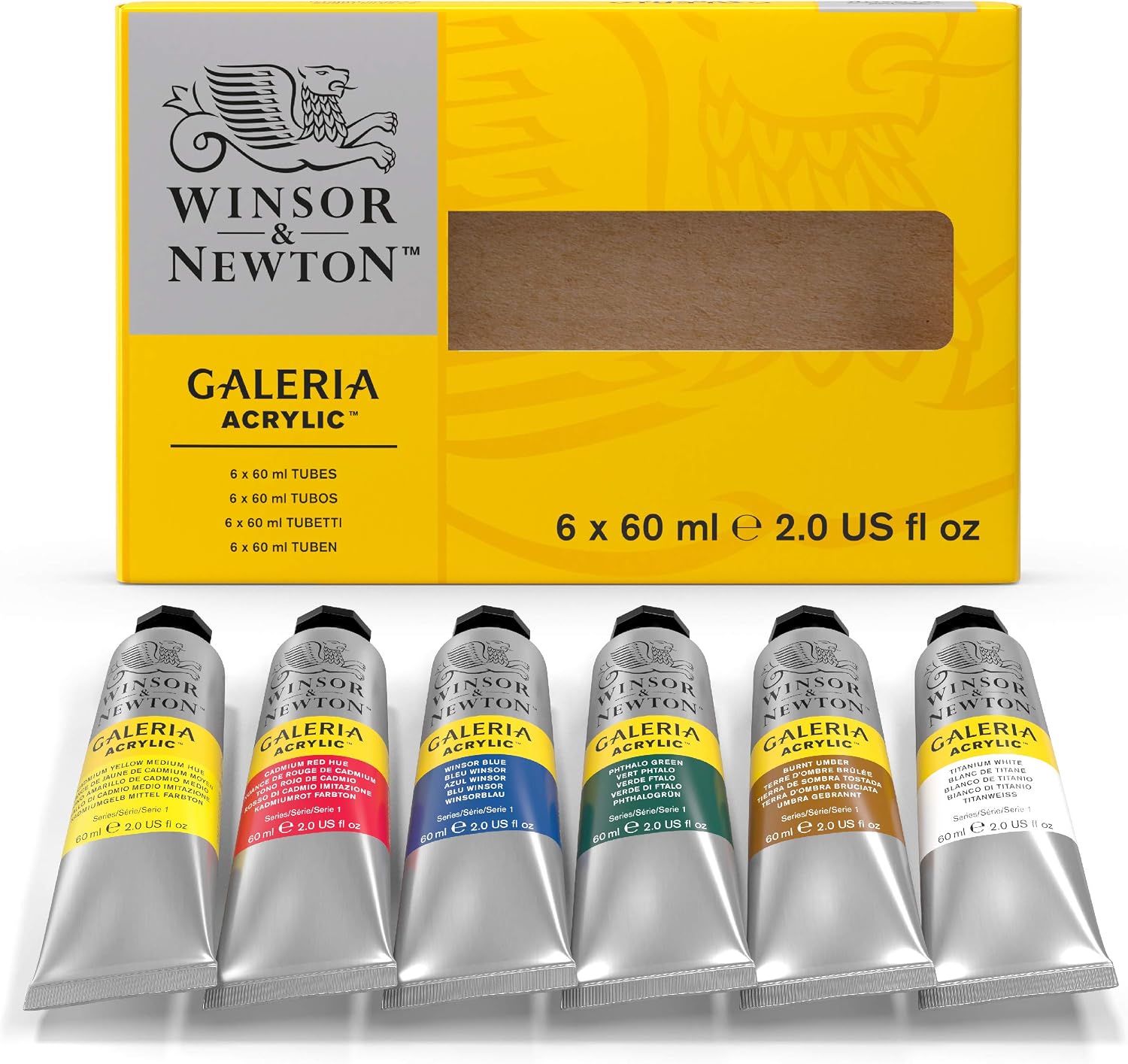
Winsor
$22.90
In stock on Amazon
Check price on AmazonLiquitex Heavy Body: The One Experienced Painters Keep Coming Back To
Heavy Body is the most interesting paint in this comparison because it occupies a genuinely different category than the other two. Painters who make the transition to Heavy Body consistently describe noticing a meaningful step up in color intensity — fewer layers to achieve saturation, colors that stay truer as they dry. More tellingly, painters who reach this level of quality tend to stay there. Heavy Body functions less as a stepping stone and more as a long-term standard.
According to Liquitex’s official Heavy Body product documentation, the line’s ASTM D5098 certification means colors have been independently tested for lightfastness, permanence, and consistency — important for anyone selling work or building a portfolio that needs to hold up over time. Handprint.com, in their technical analysis of acrylic lightfastness ratings, frames this kind of independent certification as a meaningful threshold: it doesn’t guarantee every individual pigment is excellent, but it guarantees that someone other than the manufacturer verified the claims. That distinction matters when a painting has to last decades.
The thick consistency is both a strength and a constraint. Heavy Body is exceptional for impasto work, textural mark-making, and palette-knife techniques where you want paint to sit on the surface and hold its shape. It is also excellent for direct, confident brushwork where you want strokes to read clearly. But for smooth blending and tight representational detail at very small scale, the body can work against you — it requires more intentional brush technique or the addition of a glazing medium to thin without losing adhesion.
The cost-per-use math also improves at scale: higher pigment load means you use less paint to cover the same area, and over months of studio time, a professional-grade tube often stretches further than a student-grade equivalent at twice the volume. Artists Network, in their coverage of professional acrylic grades on artistsnetwork.com, notes this economic dynamic as a reason intermediate painters consistently underestimate the value of making the step up.
Best for: Painters who have been using student-grade or intermediate paint for twelve or more months and are consistently bumping against coverage or vibrancy limitations — and for anyone whose work is sold or exhibited, where lightfastness documentation matters.
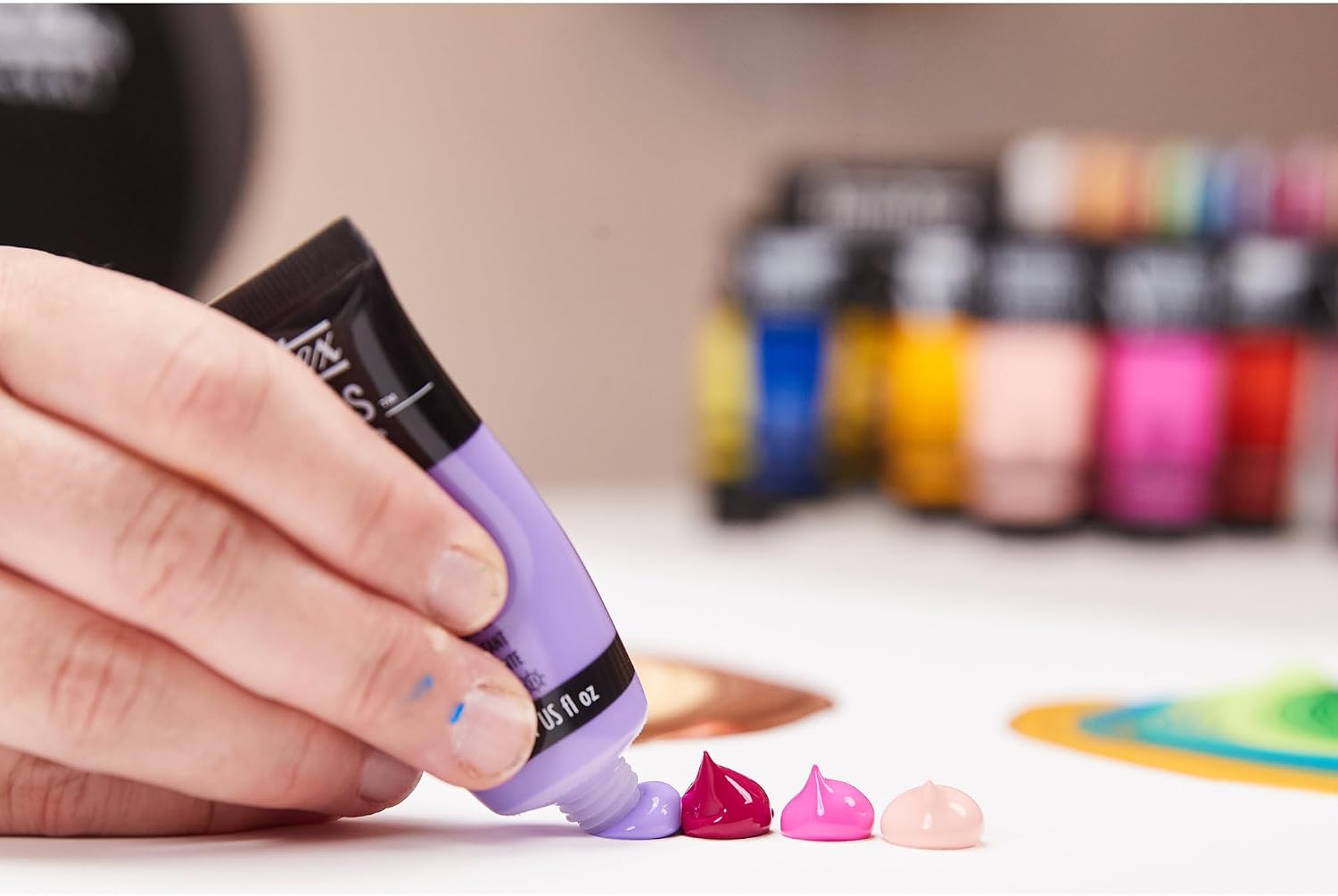
Liquitex
$61.85
In stock on Amazon
Check price on AmazonMixing These Paints Together
A common question: can you run Galeria and Liquitex BASICS on the same palette? Yes, with a caveat. All three are water-based acrylic polymer systems and are chemically compatible — you can mix across brands without the adhesion or cracking risks that cross-medium mixing (acrylics with oils, for instance) introduces. The practical issue is body consistency: mixing a heavy-body paint with a soft-body paint changes the working consistency of the blend, and layering them on canvas means the two paints may dry to slightly different surface sheens. For most working painters, this is a non-issue. For painters selling work or submitting to juried exhibitions where surface consistency matters, it’s worth testing on a panel before committing to a finished piece.
Jackson’s Art Supplies, in their published guidance on acrylic compatibility on jacksonsart.com, confirms that cross-brand mixing within the same medium type — acrylic to acrylic — carries no meaningful chemical risk, and that consistency variation is the primary practical consideration to manage.
The Decision Framework
Here’s the honest “if X, then Y” breakdown:
If you’re doing representational, blended work — portraiture, wildlife, fine detail on medium to large canvases — and you want a paint that cooperates with smooth transitions without jumping to full professional prices, Galeria is the right call. It’s formulated for exactly that workflow, and the smooth blending behavior painters describe is a direct result of its body and open time characteristics.
If you’re doing high-volume small-format work — illustration, card altering, miniature painting, studies — and economy matters because you’re burning through paint on a small surface, BASICS earns its place, provided you use it correctly. No over-thinning with plain water; use a proper acrylic medium if you need to dilute; prime your surfaces. The negative experiences with BASICS are technique failures, not product failures.
If you’ve been using BASICS or Galeria for twelve or more months and you keep bumping against coverage or vibrancy limitations, the jump to Heavy Body is the right move and it’s worth it. The step up in pigment density changes what’s possible, and the ASTM certification matters if any of your work is going to be sold or exhibited.
Frequently Asked Questions
Is Liquitex BASICS good enough for serious work, or only for students? BASICS is student-grade by formulation, but “serious work” is defined by output, not by paint grade. On large canvases with bold color requirements, BASICS will limit you. On small-format surfaces with high detail requirements, it performs adequately. Know your application and choose accordingly.
What is the actual pigment difference between Galeria and Liquitex Heavy Body? Both lines use quality pigments, but Heavy Body carries a substantially higher pigment-to-binder ratio and is ASTM D5098 certified. Galeria is not ASTM-certified. Per published specifications from both manufacturers, Heavy Body achieves deeper saturation per layer and carries more rigorous lightfastness documentation.
Can I mix Galeria and Liquitex BASICS on the same palette? Yes — they’re chemically compatible acrylics. The practical trade-off is consistency variation in the blend. For most working applications, this is a non-issue.
Is Liquitex Heavy Body worth the price jump if I already own BASICS? If coverage and vibrancy are your current frustrations, yes — the jump is worth it. If volume and economy are your current priorities and your application is small-format, stay with BASICS until the scale of your work changes.
Which works best for small-scale detail work like illustration or miniature painting? BASICS’ softer body consistency assists fine-line control at small scale, and the lower price makes high-volume detail work economical. Galeria is also workable for this application. Heavy Body’s thick consistency can be harder to manage at very small scale without a diluting medium.
How do these three compare for color vibrancy on dark canvas? Heavy Body wins clearly — higher pigment load means better opacity and vibrancy over dark grounds. Galeria performs adequately with multiple layers. BASICS will require the most coats to achieve saturation over a dark surface and is not the optimal choice for this specific use case.