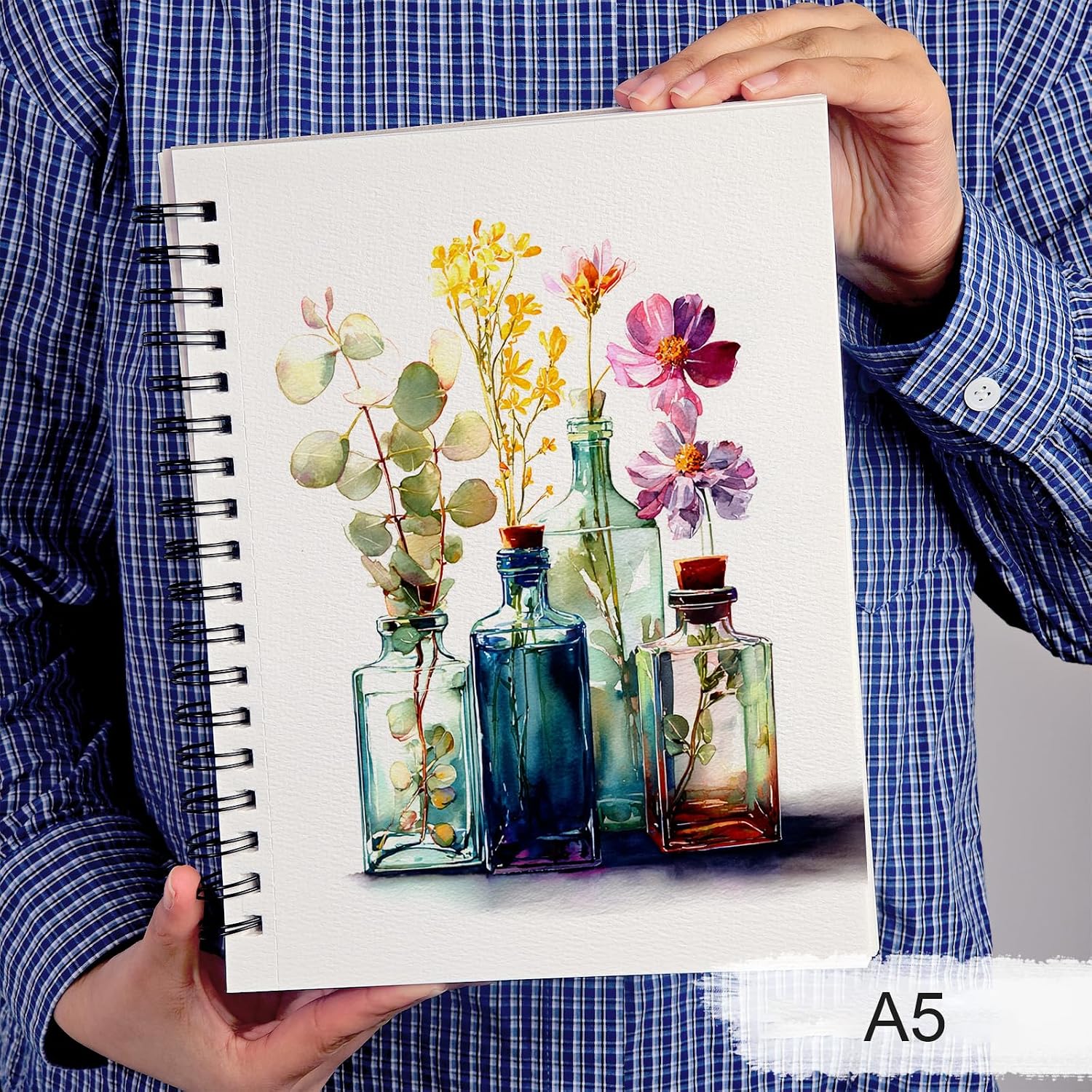
Watercolor paper is not just a surface — it’s the first material decision that determines whether a painting succeeds or struggles. Unlike drawing paper or even acrylic paper, watercolor paper has to manage water: absorbing it, holding pigment in suspension, and allowing you to lift color back off or push wet paint into wet paint without tearing or warping into an unusable mess. The key variable that determines how a sheet handles all of that is fiber content — specifically, whether the paper is made from cotton rag (long, strong fibers that absorb water evenly and hold up to repeated reworking) or wood pulp / cellulose (shorter fibers that are cheaper to produce but buckle more easily and resist lifting). Price tracks that distinction closely, but not perfectly — which is exactly what makes this comparison worth doing.
Below, we’re looking at four paper options that span a surprising range of price and quality: KOVIEDE, Canson XL, the Strathmore 500 Series Ready Cut, and Arteza watercolor sketchbooks. If you’ve been painting on whatever came in your starter set and you’re ready to understand why certain papers behave differently — and whether a premium paper is actually worth the jump — this is the breakdown you need.
Cotton vs. Cellulose: The Variable That Explains Everything
Before comparing brands, it’s worth locking in the framework. Handprint.com, in their extensive guide titled Watercolor Supports: Paper Manufacturing and Sizing, describes cotton paper as significantly more absorbent and dimensionally stable than wood pulp alternatives because cotton fibers swell uniformly when wet — they don’t create the uneven tension that causes warping. Cotton paper is also sized differently: most quality cotton sheets use internal sizing (the sizing agent is distributed throughout the sheet, not just on the surface), which means the absorbency holds up even after scrubbing or heavy lifting.
Wood pulp papers, even quality ones rated at 140 lb (300 gsm — a measure of paper weight per square meter, which correlates roughly with thickness and durability), have a surface sizing that wears down under repeated brush passes. Jackson’s Art, in their article The Difference Between Cotton and Wood Pulp Watercolor Paper, notes this is why cellulose papers tend to pill or tear when you lift, and why wet-on-wet work (dropping wet paint into a wet area to let it bloom) produces less controlled results on cellulose than on cotton.
The practitioner implication: Cotton content — not brand name, not price alone — is the variable that determines whether a sheet can handle lifting, wet-on-wet work, and multi-layer glazing. Everything else is downstream of that.
The Four Papers: Side-by-Side at a Glance
| Paper | Fiber Content | Weight | Texture | Approx. Price/Sheet |
|---|---|---|---|---|
| KOVIEDE 140lb | 100% Cotton | 300 gsm | Cold press | ~$0.40–0.55 |
| Canson XL 140lb | Cellulose | 300 gsm | Cold press / rough | ~$0.25–0.35 |
| Strathmore 500 Ready Cut | 100% Cotton | 300 gsm | Hot/cold dual-side | ~$0.80–1.10 |
| Arteza Watercolor Sketchbook | Cellulose blend | 140–300 gsm varies | Cold press | ~$0.30–0.50 |
Per-sheet estimates based on pad sizes available as of May 2026; costs vary by sheet count and retailer.
Comparing the Options: Budget Through Premium
KOVIEDE 140lb Cotton — High-Volume Practice on Real Cotton
KOVIEDE is the name that keeps surfacing in artist communities with a degree of surprise that’s notable. Owners consistently describe a paper that performs well above its price point — specifically citing wet-on-wet handling and color vibrancy as comparable to papers priced significantly higher. The pattern is consistent enough that it deserves serious investigation rather than dismissal.
What explains the performance? Published specs confirm 100% cotton content with a cold-press texture — a lightly textured surface that holds granulating pigments well without the aggressive tooth of rough press. The sizing appears to be internal, based on how owners report the paper responding after lifting: the surface doesn’t degrade noticeably after multiple passes, which is the tell-tale sign of through-sized cotton versus surface-sized cellulose. Handprint.com’s Watercolor Supports guide identifies internal sizing as the primary factor behind cotton paper’s ability to withstand reworking — and KOVIEDE’s reported behavior matches that profile.
The honest caveat: KOVIEDE does not have the same archival documentation as Arches or Fabriano. There is no published lightfastness testing program tied to the manufacturing process. For practice work, studies, and finished pieces sold locally, that is a reasonable tradeoff at the price. For work sold to collectors where archival longevity must be documented, established brands with published specifications remain the more defensible choice. But for the intermediate practitioner doing 80% practice and 20% finished work, KOVIEDE belongs in serious consideration.
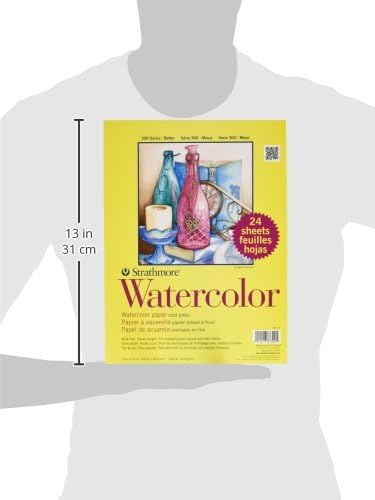
Strathmore
$10.83
In stock on Amazon
Check price on AmazonCanson XL 140lb Cellulose — Honest Limitations, Real Purpose
Canson XL is the paper that artists are most likely to have already used — and most likely to have complicated feelings about. It’s widely available, reliably priced, and marketed as a watercolor paper suitable for serious work. The reality is more nuanced.
Canson XL is a cellulose paper. Artists Network, in their guide How to Choose Watercolor Paper, explains that cellulose sheets have a surface sizing that protects them during initial washes but degrades under repeated brush pressure. Lifting is limited. Heavy wet-on-wet work causes more buckling than equivalent cotton sheets. Canson XL warps noticeably with very wet techniques unless the sheet is taped to a board or used in block format.
Here’s the reframe that actually makes Canson XL useful rather than frustrating: treat it as high-volume practice paper, not finished-work paper. If you’re working through compositional studies, value sketches, color mixing tests, or the first dozen iterations of a technique you’re building muscle memory around, Canson XL is cost-effective and honest. Jackson’s Art, in their Watercolor Paper Comparison Guide, points out that many instructors deliberately use student-grade cellulose paper for exercises precisely because it forces decisiveness and penalizes overworking — which is a genuine pedagogical advantage. Where Canson XL falls short is when you expect it to behave like cotton in wet-on-wet or lifting applications and it doesn’t. Knowing that mismatch exists before you buy is the information this guide is here to provide.
Strathmore
$10.83
In stock on Amazon
Check price on AmazonStrathmore 500 Ready Cut — The Two-Sided Discovery on Documented Cotton
The Strathmore 500 Series is well-documented as a 100% cotton professional paper — no surprises there. What is surprising, and what owners of the Ready Cut format consistently mention, is that the two sides of the sheet behave noticeably differently. One side presents a typical cold-press texture with moderate tooth. The other reads closer to hot press — smoother, with less texture and faster pigment absorption. One frequently cited description among owners is finding “two papers in one,” which is an accurate characterization.
This is almost certainly a function of how the sheet is manufactured and finished on each side during drying and calendaring — the pressing process that sets surface texture. It is not an advertised feature, but it is a consistent and practically useful one. If you work across multiple styles — detailed illustration on a smooth surface one day, loose expressive washes on a textured surface the next — the Strathmore 500 Ready Cut gives you both in a single purchase.
The buyer tip: Mark the cold-press side (typically the felt side, which shows more texture) and the smoother side before you begin, so you’re making the choice deliberately rather than randomly. At its price point, the Strathmore 500 costs more per sheet than KOVIEDE. For artists doing finished work where surface texture is a compositional decision, the dual-side behavior and the published cotton credentials justify the difference.
ARTEZA
$26.99
In stock on Amazon
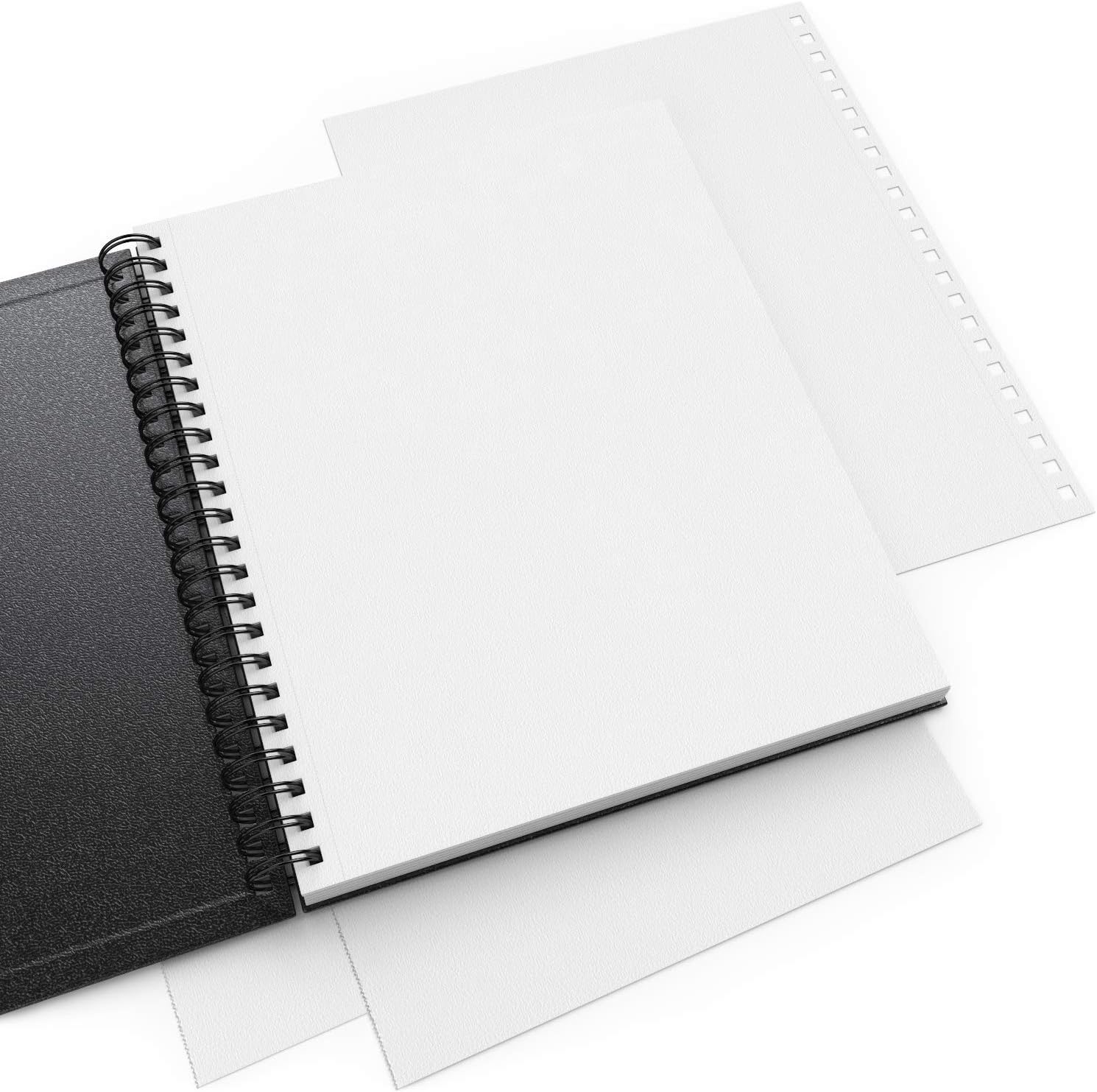
Check price on AmazonArteza Watercolor Sketchbooks — Cellulose Format for Practice Volume
Arteza watercolor sketchbooks occupy a similar tier to Canson XL, and owners make that comparison explicitly — describing the paper behavior as roughly equivalent. Arteza’s sketchbook papers are generally cellulose or cellulose-blend, not 100% cotton, though the exact composition varies by product line and is not always published clearly in specification sheets.
For intermediate practitioners, the Arteza sketchbook format is genuinely useful for one specific purpose: daily practice and travel sketching, where the bound format and lower stakes per page reduce the psychological barrier to experimentation. The paper’s limitations under lifting and heavy water application are the same as Canson XL. But a sketchbook you carry and fill without precious-paper anxiety has real value in building practice volume — and practice volume is what actually develops intuition faster than any other variable.
The honest upgrade signal: when you find yourself frustrated that your Arteza or Canson XL sketchbook paper isn’t giving you the results you want in wet-on-wet passages or lifting, that frustration is information. It means your technique has outgrown the paper’s capability, and it’s time to move to cotton.
Strathmore
$10.83
In stock on Amazon
Check price on AmazonFrequently Asked Questions
Is KOVIEDE watercolor paper really comparable to Arches or Winsor & Newton cotton paper? Based on owner reports, KOVIEDE performs comparably in wet-on-wet handling, lifting, and color vibrancy. The difference is documentation: Arches and Winsor & Newton Professional have decades of published lightfastness and archival testing. KOVIEDE does not. For practice and non-archival finished work, the performance gap is reportedly small. For archival collector work, established brands with published specifications remain the more defensible choice.
What is the practical difference between 140lb cellulose and 140lb cotton watercolor paper for lifting and layering? Weight (140lb / 300 gsm) tells you about thickness and resistance to buckling, but fiber content determines lifting capability. Cotton paper — with internal sizing — allows multiple lifting passes without surface degradation. Cellulose paper’s surface sizing wears down under repeated brush passes, making lifting progressively less effective and causing pilling or tearing. Handprint.com’s Watercolor Supports: Paper Manufacturing and Sizing identifies this as the most significant functional difference between the two categories.
Does Canson XL watercolor paper warp or buckle with wet-on-wet techniques? Yes, more than cotton papers. Reviewers consistently note buckling under heavy water application. Standard workarounds include taping the sheet to a board before painting or using Canson XL’s block format, which is glued on all four sides to reduce warping. Neither approach fully eliminates the issue under very wet applications.
Are Arteza watercolor sketchbooks cotton or cellulose, and does it matter for intermediate work? Arteza sketchbook papers are generally cellulose or cellulose-blend. For intermediate work involving lifting, wet-on-wet, or multi-layer glazing, the cellulose construction creates real limitations. For compositional sketching, color studies, and daily practice where you’re not pushing water-heavy techniques, the limitations matter less.
Does the Strathmore 500 Ready Cut really have two different sides, and which should I use? Yes — owners consistently report that the two sides behave differently, with one side reading closer to cold press and the other closer to hot press. The cold-press side suits loose wash work, granulating pigments, and expressive technique. The smoother side suits detailed illustration, fine line work, and pigments you want to stay crisp. Mark both sides before you start and choose based on the work in front of you.
Is Strathmore 300 Series good enough for serious practice or only for absolute beginners? Strathmore 300 is cellulose and positions below the 500 Series — appropriate for high-volume practice and foundational exercises. If your practice involves wet-on-wet work or lifting as part of the skill you’re actively building, the paper’s limitations will interfere with learning the technique correctly. In those cases, the 500 Series cotton makes more sense even for practice sessions.
The Decision Rule
Here’s the practical if/then that makes this actionable:
- If you’re doing high-volume practice, studies, or color tests: Canson XL or Arteza sketchbooks are cost-effective and honest about what they are. Use them without apology for what they do well.
- If you want cotton performance at a lower entry price and you’re not producing archival collector work: KOVIEDE is the strongest value play in the category based on consistent owner reports. It’s the pick to try before committing to larger Arches or Fabriano orders.
- If you’re working on finished pieces across both detailed and loose styles: Strathmore 500 Ready Cut gives you dual-surface versatility on documented 100% cotton — and the two-sided behavior is a feature, not a quirk.
- If you’re selling finished work to collectors and archival documentation matters: Stay with Arches cold press or Fabriano Artistico, where the lightfastness and manufacturing records exist in published form.
The upgrade path is clear: practice volume on cellulose → KOVIEDE for serious study and semi-finished work → Arches or Fabriano for collector-grade finished pieces. Most intermediate practitioners are underusing that middle tier. KOVIEDE is worth placing there deliberately.