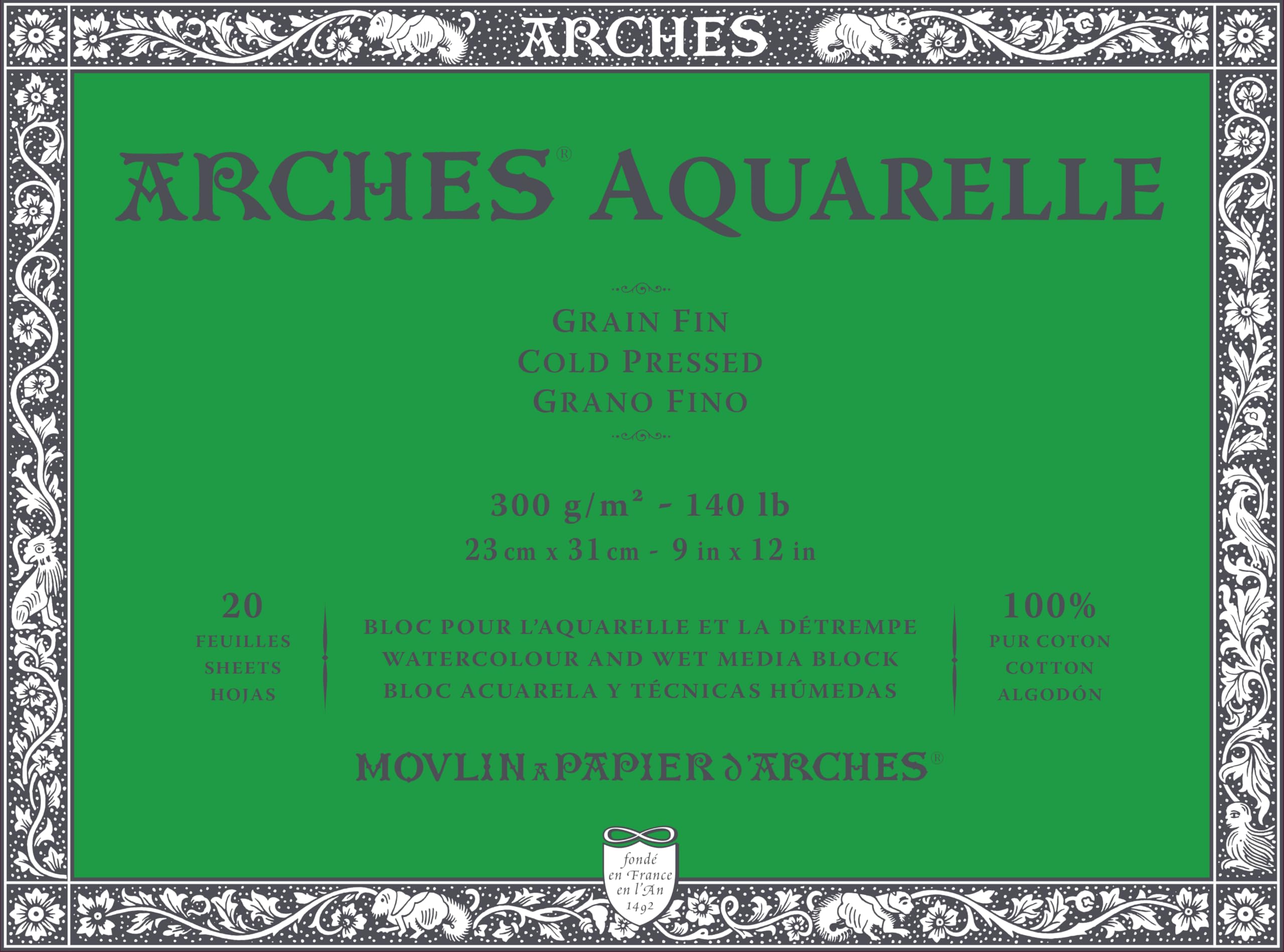
If you’ve been painting with watercolor long enough to feel frustrated by buckling paper or washed-out colors, you’ve probably heard the name Arches. Arches is a French mill that has been making watercolor paper since 1492 — yes, the year Columbus sailed — and it remains the benchmark that most serious watercolorists measure everything else against. The paper is made from 100% cotton rag (plant fiber from cotton, not wood pulp), which means it absorbs water differently, holds pigment more vividly, and won’t yellow or become brittle over decades the way wood-pulp paper does. That last quality matters enormously if you’re selling or exhibiting your work.
What trips people up isn’t whether to buy Arches — it’s which format to buy. The paper comes as a block (sheets glued on all four sides so they can’t warp while wet), a pad (sheets bound on one edge, like a sketchbook), and a travel pad (a smaller, lightweight version designed for painting on location). Each format costs differently, behaves differently, and rewards a different kind of practice. This guide breaks down the tradeoffs so you can stop second-guessing and just paint.
| EDITOR'S PICKArches Watercolor Paper Block | Mid-tierArches Watercolor Pad 10x14 Inc… | Budget pickArches Aquarelle Watercolor Pad | |
|---|---|---|---|
| Format | Block | Pad | Pad |
| Surface | Cold Press | Hot Press | Hot Pressed |
| Size | 8"x10" | 10"x14" | 9"x12" |
| Sheets | — | — | 12 |
| Cotton | — | — | 100% Cotton |
| Price | $39.79 | $29.95 | $21.94 |
| See on Amazon → | See on Amazon → | See on Amazon → |
What You’re Actually Paying For: The Arches Baseline
Before comparing formats, it helps to understand why Arches commands a premium in the first place. According to the Arches Watercolor Paper Technical Data Sheet published by the Canson Group, Arches paper is cold-pressed (lightly textured surface), internally and externally sized with natural gelatin, and made on a cylinder mold — a slower, more controlled manufacturing process than Fourdrinier machine-made papers. The gelatin sizing is particularly important: it creates a harder surface layer that lets you lift color, rework edges, and scrub out mistakes without destroying the sheet beneath.
The watercolor paper reference at Handprint.com, maintained by painter and materials researcher Bruce MacEvoy, notes that Arches is among a small group of papers where lifting and reworking are genuinely reliable, not just possible in theory. That’s the value you’re paying for: a paper that doesn’t punish you for changing your mind mid-painting.
The Three Weights — and Why They Change the Format Conversation
Arches sells in three weights: 90 lb (185 gsm), 140 lb (300 gsm), and 300 lb (640 gsm). Weight is a practical proxy for thickness and stiffness.
- 90 lb / 185 gsm: Lightest and least expensive per sheet; will buckle significantly with wet washes unless pre-stretched or used in a block
- 140 lb / 300 gsm: The studio workhorse; moderate buckling in block form, manageable in loose sheets if taped or clipped
- 300 lb / 640 gsm: Near-board thickness; rarely needs stretching; noticeably more expensive but reacts almost like watercolor board
For most intermediate painters, 140 lb is the practical decision point across all three formats. The format discussion below assumes 140 lb unless noted otherwise.
Format Comparison: Block, Pad, and Travel Pad
The three formats differ in how they handle water, how they fit into different working rhythms, and what they cost per sheet. The sections below address each format in turn, with honest tradeoffs and a tier marker indicating where each sits in a buying decision.
The Arches Block
A watercolor block is a stack of sheets — typically 20 sheets — glued on all four edges, leaving only a small gap where you can insert a palette knife to release a finished painting. Because the sheet is held taut on all sides while wet, it dries flat without buckling. No stretching, no tape, no soaking time.
Who it’s built for: Painters who work in a fixed studio, complete one painting at a time from start to finish, and want a ready-to-go surface with zero prep overhead.
The case for it: The Guide to Watercolour Paper published by Jacksons Art consistently recommends the block format for painters who find paper stretching either time-consuming or intimidating. The glued edges hold the sheet in place through even very wet washes — the kind of full saturation you’d use for blooms or wet-on-wet backgrounds. When the painting is fully dry, you slide a palette knife around the gap and the sheet releases cleanly.
The honest tradeoffs:
-
You can only actively work on one painting at a time. The sheet underneath can’t be accessed until the top sheet is released. Painters who batch-work — illustrators running parallel editorial pieces, for example — are locked into serial production with a block.
-
The cost-per-sheet math punishes heavy testing. Arches blocks (common sizes: 9×12 and 12×16 inches at 140 lb) are priced so that each sheet costs meaningfully more than the equivalent from a pad. If you’re working through color studies, value sketches, or brush tests you don’t intend to keep, you’re burning premium substrate.
-
Blocks don’t travel elegantly. They’re rigid, thick, and awkward in a bag. Fine for the studio; a nuisance at a plein air session.
Bottom line: The right choice if you work in a studio on finished pieces, hate the ritual of stretching paper, and paint through a sheet completely before moving to the next one.
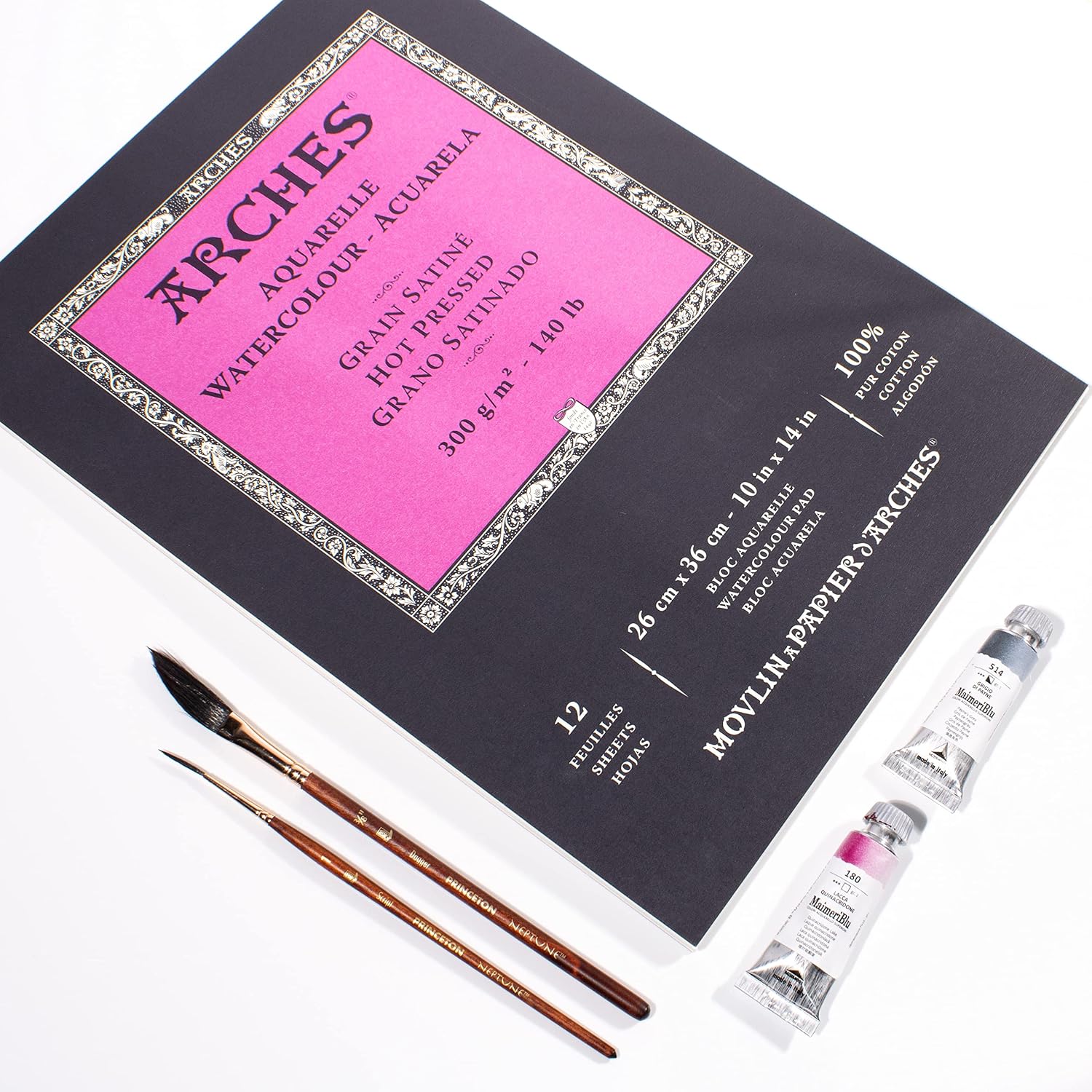
Arches
$29.95
In stock on Amazon
Check price on AmazonThe Arches Pad
An Arches watercolor pad is a gummed or spiral-bound collection of loose sheets — typically 12 to 20 sheets — where only one edge is bound. You tear or slide sheets out individually and work them however you want: tape them to a board, clip them to a rigid surface, wet-stretch them, or work loose if you’re using a heavier weight.
Who it’s built for: Painters who want flexibility — working multiple pieces at once, cutting sheets to smaller sizes, sharing paper across a class, or maintaining a tighter cost-per-sheet ratio.
The case for it: The Best Watercolor Paper buyer guidance editorial published by Artists Network points to pads as the better value for painters who do a lot of studies or who are still calibrating how much paper they need for a given project size. Because sheets are separate, you can pull three or four at once, tape them all to a board, and work in parallel — a significant workflow advantage for illustrators building out a series or anyone doing color studies alongside a main piece.
Sheets from an Arches pad are the same quality paper as the block — same cotton rag, same gelatin sizing, same surface texture. You’re not buying an inferior product; you’re just taking responsibility for managing flatness yourself.
The honest tradeoffs:
-
You have to manage buckling. Loose 140 lb sheets will buckle noticeably with wet washes. Solutions include wet-stretching (soaking the sheet, then stapling or taping it to a board and letting it dry taut before painting), taping all four edges to a rigid surface, or stepping up to 300 lb stock. Each approach adds time and setup. For painters already comfortable with stretching, this is a non-issue. For painters who skip it, buckled paper at a critical wet-on-wet moment is genuinely frustrating.
-
Spiral-bound pads can leave impression marks on sheets stored underneath. A minor issue, but worth knowing if you’re particular about keeping unworked sheets pristine.
-
No restocking mid-pad. When you’re out, you’re out — unlike a block where you always know exactly how many sheets remain in a neat stack.
Bottom line: The better value for high-volume painters, illustrators working multiple pieces, and anyone who already knows how to manage paper flatness. The cost savings over blocks are meaningful at scale.
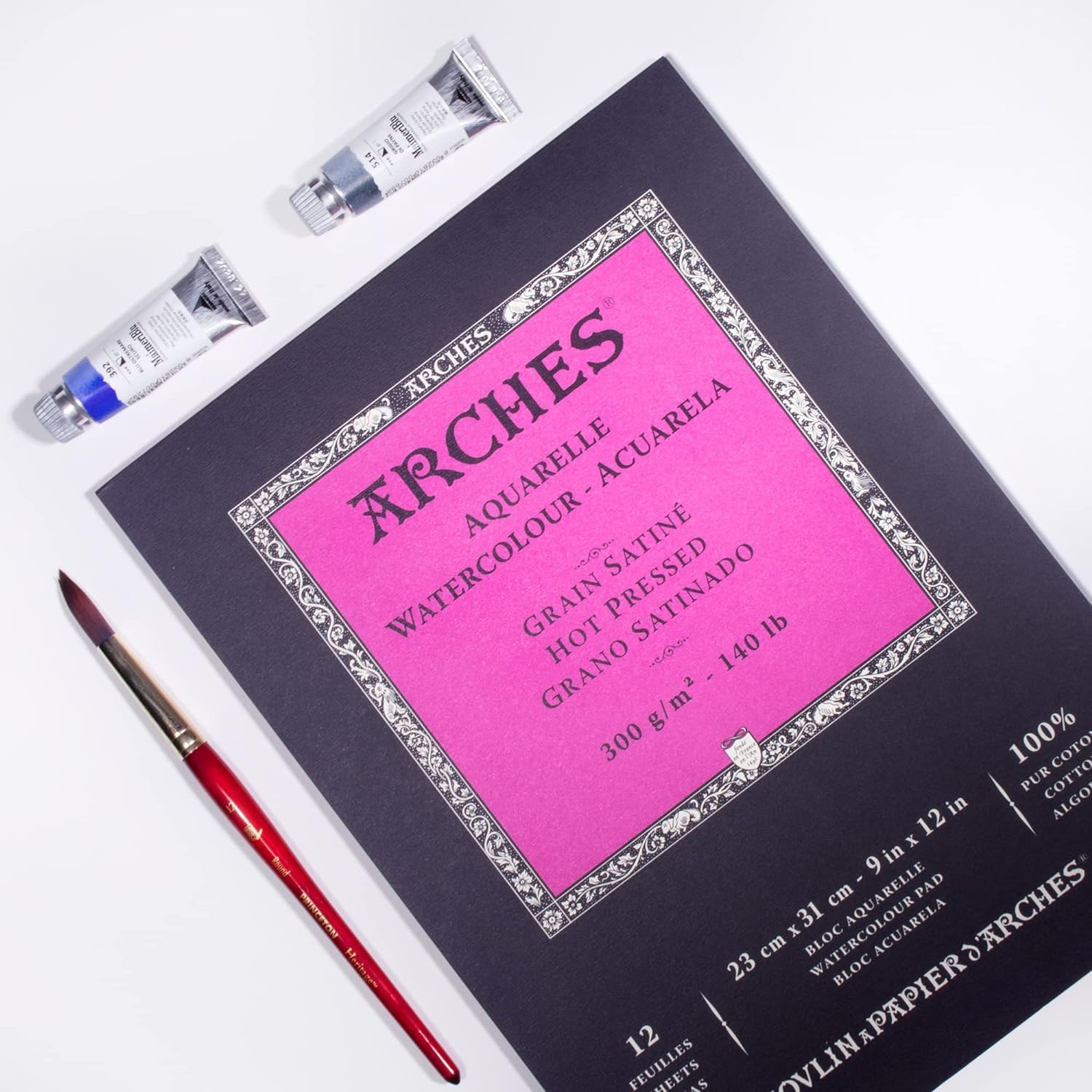
Arches
$21.94
In stock on Amazon
Check price on AmazonThe Arches Travel Pad
The Arches travel pad is a smaller, lighter, wire-bound or gummed pad — common sizes include 5×7 and 9×12 inches — designed for location painting, travel sketching, and quick field studies. The paper stock is the same Arches cotton rag; only the size and binding differ from the studio pad.
Who it’s built for: Plein air painters, travel sketchers, urban sketchers, and anyone who wants the quality of Arches without carrying studio-sized paper into the field.
The case for it: The How to Choose Archival Art Materials editorial published by Artwork Archive notes that many painters make the mistake of using student-grade paper for location work, then regretting it when a field study turns out to be worth keeping. The travel pad solves that problem: you’re painting on the same archival surface you’d use in the studio, so a lucky plein air session produces a genuine keeper rather than a nice-but-fugitive sketch. The compact format also means you can work a sheet thoroughly wet without the severity of buckling that would plague a full-size loose sheet, since less water is going down on a smaller surface area.
The Bruce MacEvoy paper reference at Handprint.com describes the heavy-weight Arches stock as behaving “almost like watercolor board” under aggressive washes — a quality that carries through even on smaller travel-format sheets, making them more forgiving for the bold, fast brushwork that location painting demands.
The honest tradeoffs:
-
The cost-per-square-inch is the highest of all three formats. Small pads are priced for convenience, not economy. High-volume location painters will burn through money quickly at travel-pad pricing.
-
Small format limits compositional scope. If your typical finished work is 11×14 or larger, the travel pad is a different creative mode, not a substitute for your studio format. Some painters love the imposed constraint; others find the small studies don’t translate directly to their finished work.
-
Small precious sheets can produce tight, hesitant brushwork. Paradoxically, painting on expensive small paper sometimes leads to cautious marks — the opposite of the loose, confident approach that plein air painting rewards. Worth being honest with yourself about before committing to a format as your primary location paper.
Bottom line: Ideal for painters who do sustained, regular location work and want those sessions to produce archival results. Not the right choice as a primary studio format — the economics don’t hold up at scale.
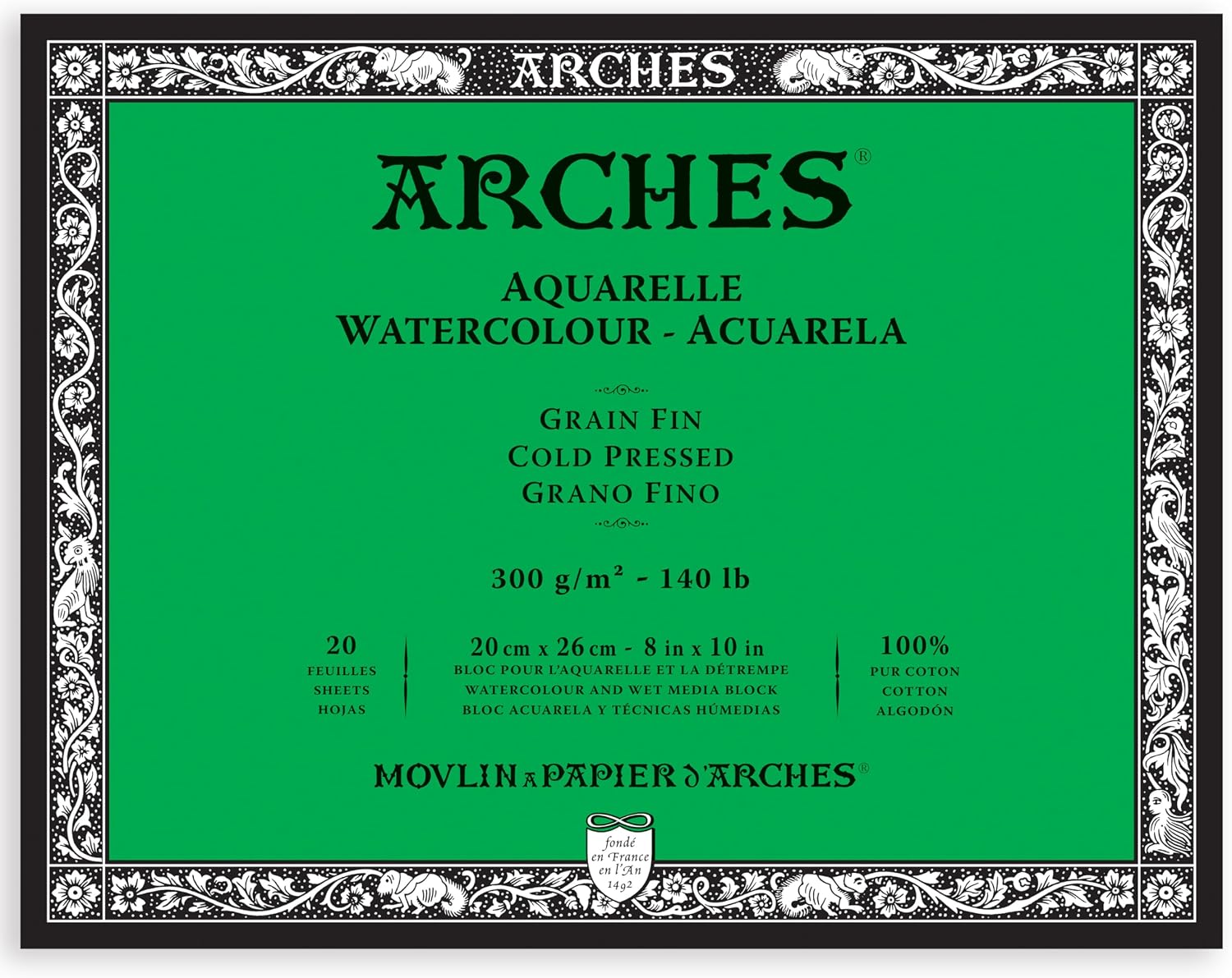
Arches
$39.79
In stock on Amazon
Check price on AmazonThe Decision Framework: If X, Then Y
Use this to cut through the noise:
If you’re a studio-based painter completing one piece at a time and hate setup rituals → buy the block. Pay the per-sheet premium; zero-prep convenience and guaranteed flat drying are worth it for finished work.
If you batch-work, run multiple studies in parallel, or are cost-conscious about burning through paper on experiments → buy the pad. Handle flatness with tape or wet-stretching and pocket the savings. The Artists Network Best Watercolor Paper editorial and the Jacksons Art Guide to Watercolour Paper both reinforce that the pad format’s flexibility makes it the practical choice for painters producing volume.
If your practice includes regular location or travel work and you want those sessions to produce archival results → add a travel pad as a second format alongside your primary studio supply. Don’t make it your only format if studio work is also part of your practice — the cost-per-square-inch math won’t serve you at studio scale.
One weight note worth adding: If you move to the pad format and find that wet-stretching feels like too much friction, consider stepping up to 300 lb Arches sheets in pad form. The cost per sheet is higher, but the near-zero-buckling behavior of 300 lb stock — described in the Handprint.com paper reference as approaching watercolor board in its stability — combined with the workflow flexibility of loose sheets is a combination that many experienced painters eventually land on as their permanent setup.
Whatever format you choose, you’re working on paper with a documented history of archival performance going back centuries. The format decision is a workflow decision, not a quality decision. Now you have the information to make it deliberately.